
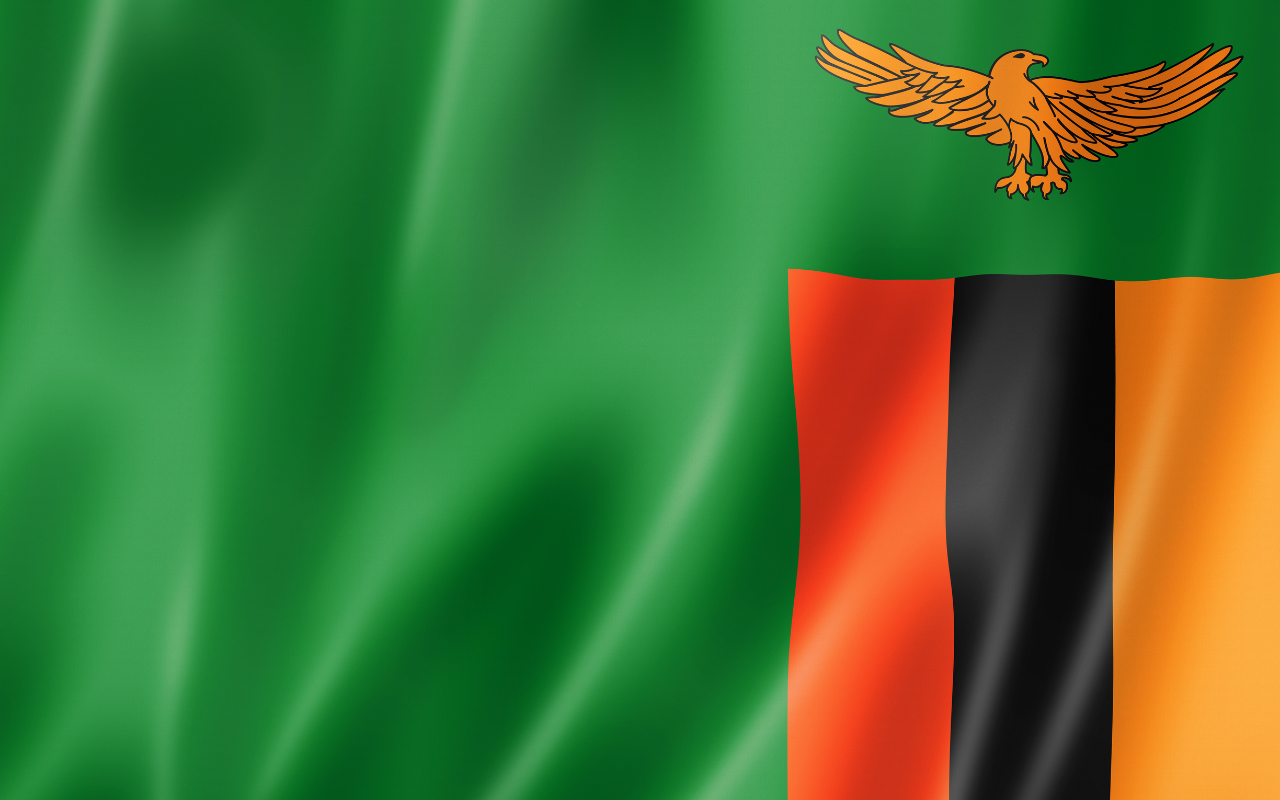
Zambia goes to the polls on 13 August 2026. The record, the candidates, the economy and the stakes — covered without fear or favour.
polling day · 13 August 2026

Zambia votes on 13 August 2026. Before we throw the man out, an honest reckoning with what President Hakainde Hichilema actually did — the wins, the wounds, and the things a second term has no excuse not to fix.
Read the full scorecard
Zambia's Electoral Commission has declared Hakainde Hichilema president-elect for a second term with about 61 per cent of the vote, over Brian Mundubile's 38 per cent, as the opposition rejects the count.

The Committee to Protect Journalists and the #KeepItOn Coalition urged Zambian authorities and telecoms operators to keep internet access open through the 13 August election, as Amnesty International called for a detained journalist's release.

Edgar Lungu died in June 2025 and was not buried for more than a year while his family and the Zambian state fought through the South African courts. The dispute shadowed the campaign and, the BBC reported, turned an expected walkover into a contest.

Zambians voted on Thursday in a general election fought on the cost of living and the record of the past five years. Polls opened at 06:00 and close at 18:00, with counting to follow.

President Hakainde Hichilema pledged to widen the Great East Road into a dual carriageway and build the Chipata-Lundazi road, alongside a 100MW solar project and hospital upgrades in Eastern Province.

The Zambia Police Service has opened a review of operations in Mongu and Kalabo where teargas was discharged at a Tonse-Pamodzi Alliance rally, a week before the 13 August vote.

The Electoral Commission of Zambia began moving ballot papers to district centres on 2 August, with distribution running to 10 August and verification witnessed by parties, civil society and the media.

Chief Justice Mumba Malila says Zambia's judiciary will decide disputes from the 13 August general election without fear or favour, and inside the statutory 90-day window.

Fourteen candidates are on the ballot for Zambia’s 13 August presidential election. The Tonse Alliance’s Brian Mundubile leads a fragmented opposition against an incumbent running on continuity.

An analysis of Zambia's 13 August election as a referendum on President Hakainde Hichilema's economic record, drawing on Reuters wire reporting, the International Monetary Fund, S&P Global Ratings and official debt-restructuring figures.

Brian Mundubile has pledged more than 300,000 jobs through 12 farming blocks as the Tonse-Pamodzi Alliance brings the campaign to Lusaka, drawing on rally reporting and analysis by The Zambian Observer and allAfrica.

Former Zambian Vice-President Guy Scott has died at 82 after an illness. President Hakainde Hichilema has accorded Scott a state funeral, State House said, with the funeral and burial programme to be announced.

President Hakainde Hichilema told rallies across Muchinga Province that four years of development would deliver a bigger UPND vote on 13 August, according to ZANIS, The Zambian Observer and CNBC Africa.

President Hakainde Hichilema campaigned across the Copperbelt on jobs and free education, and pressed a contractor on stalled Kabwe roads, in a two-day swing before Zambia's 13 August general election, according to State House and Zambia News and Information Services.

President Hakainde Hichilema pledged in Kapiri Mposhi that the recapitalisation of the Tanzania-Zambia Railway Authority will be actualised at a cost of US$1.6 billion once he is re-elected, alongside a new dry port and long-promised road and water upgrades.

President Hakainde Hichilema has pledged that a re-elected government will supply mining equipment to registered small-scale gold-mining cooperatives in Chitambo district, Central Province, part of a wider campaign push to formalise artisanal mining ahead of the 13 August election.

President Hakainde Hichilema has warned that illegal and unsafe mining risks fuelling armed militias in Zambia, as Zambia Army Special Forces are deployed to Kikonge Mine in Mufumbwe District in a crackdown on illegal mining.

The Electoral Commission of Zambia says presidential ballot printing is on track at about 4.7 million of a targeted 9 million papers, and has dismissed allegations that extra, pre-marked ballots are being printed for selected constituencies ahead of the 13 August general election.

President Hakainde Hichilema urged Zambezi District residents to vote for the UPND in the 13 August election, saying the party's economic record — debt restructuring, a return to growth and a steadier kwacha — is reason to sustain it in government.

President Hakainde Hichilema carried the UPND re-election campaign into Mwinilunga and Solwezi on 1 July 2026, pressing a jobs-and-roads record and warning supporters not to back independent candidates ahead of the 13 August general election.

The Electoral Commission of Zambia has begun printing ballot papers in Dubai for the 13 August 2026 general election, starting with presidential papers, and has taken stakeholders to verify the process.

Opposition presidential candidate Brian Mundubile has pledged to retain Zambia's free-education policy if he wins the 13 August 2026 general election, signalling continuity on a flagship UPND reform.

The High Court has set aside an Electoral Commission of Zambia decision barring the Candle symbol from 2026 ballots, resolving a dispute Kwacha News earlier reported when a court stayed the order.

President Hakainde Hichilema has launched his re-election campaign for the 13 August 2026 general election, standing as the UPND candidate with Vice-President Mutale Nalumango as running mate.

Tanzania’s government has suspended political rallies nationwide until further notice, citing security threats, three years after President Samia Suluhu Hassan lifted a six-year ban — a reversal opposition parties call unlawful, set against Zambia’s open campaign before its 13 August 2026 election.

Vice-President Mutale Nalumango said the government has stabilised Zambia’s economy and is now shifting focus to growth and jobs, a message delivered seven weeks before the 13 August general election and set against first-quarter GDP growth of 7.7 percent, easing debt and cooling inflation.

Finance Minister Situmbeko Musokotwane and opposition candidate Mundubile have clashed over the value of Zambia's forex reserves, with the economy now the campaign's battleground.

South Africa's Supreme Court of Appeal has set aside an order that would have let Zambia repatriate Edgar Lungu for a state funeral, ruling that the burial decision rests with his family. The government says it disagrees but will not appeal, ending a year-long dispute.

The European Union will deploy more than 70 observers to scrutinise Zambia's 13 August general election, its sixth such mission and a marker of deepening EU interest in the Copperbelt.

Ethiopia's National Election Board says Prime Minister Abiy Ahmed's Prosperity Party won 438 of 501 House of Representatives seats in the 1 June 2026 election — a vote marred by insecurity that shut 143 polling stations and by the exclusion of Tigray.

Fourteen presidential candidates have been validly nominated for Zambia's 13 August 2026 general election, run under the 50%-plus-one rule with a run-off if nobody clears the threshold. An explainer on the field, the law and the campaign period.

President Hakainde Hichilema has assured the nation that Zambia’s tradition of peaceful, fair and credible elections will hold for the 13 August 2026 general election, speaking at a Seventh-day Adventist Church fellowship in Lusaka.

An Electoral Commission of Zambia advisory requiring presidential candidates to campaign by an official timetable has drawn a legal caution from the Law Association of Zambia and defiance from the Tonse Pamodzi Alliance, whose Chipata rally was blocked by police.

The Lusaka High Court has stayed an Electoral Commission of Zambia directive ordering five independent candidates to drop the ‘Candle’ symbol, granting them leave to seek judicial review and keep the mark until the case is heard.

Zambia’s Constitutional Court has dismissed a petition challenging President Hakainde Hichilema’s eligibility to contest the 13 August general election, ruling it lacked merit and keeping him on the ballot as the UPND’s candidate.

A call to publish the per-MP voting record on Bill 7 gathered force after President Hichilema said four of his own MPs opposed a constitutional amendment the official tally recorded as passing without a single “No”.

Zambia’s Constitutional Court has cleared Socialist Party leader Fred M’membe and running mate Dolika Banda to contest the 13 August 2026 election, dismissing a petition over her school qualifications.

Former ambassador Emmanuel Mwamba says the 13 August general election is increasingly a direct contest between President Hakainde Hichilema and Tonse Pamodzi candidate Brian Mundubile, as polls show UPND leading and the opposition consolidating behind a single challenger.

The UPND has suspended 13 members in Mazabuka District for supporting independent candidate Gary Nkombo ahead of the August 2026 general election, with expulsion to follow within seven days if they do not renounce his campaign.

Brian Mundubile took the Tonse Pamodzi alliance to a mass rally in Kitwe, sharpening the opposition’s challenge to President Hakainde Hichilema two months before the 13 August vote.

On a two-province swing through Chinsali and Kitwe, President Hakainde Hichilema directed UPND officials and adopted candidates to settle internal disputes and campaign as one team ahead of the 13 August general election.

President Hakainde Hichilema, declared the UPND’s unopposed candidate for the 12 August general election, is urging his party to unite — against the backdrop of the newly enacted Bill 7 constitutional changes that introduce a mixed electoral system.

The governing UPND Alliance has grown to 15 parties after admitting five more, chairperson Charles Milupi announced, framing the expansion as confidence in President Hakainde Hichilema as the opposition stays fragmented ahead of the 13 August general election.

A year after Edgar Lungu died in South Africa, President Hakainde Hichilema has renewed his call for the former president to be buried in Zambia with full military honours, as the family’s legal fight to bury him privately in Johannesburg continues.

The Electoral Commission of Zambia has urged citizens to verify information before sharing it, citing rising misinformation ahead of the 13 August general election. The commission positioned itself as the authoritative source for the voter roll, the process and results.

President Hakainde Hichilema has reaffirmed a commitment to local-content regulations in mining, framing them as the route to Zambians benefiting directly from the country's copper and other resources. State House tied the rules to responsible resource use and economic growth.

The Electoral Commission of Zambia has suspended all political campaigns in Mazabuka Central Constituency until further notice, citing an unstable security situation and condemning violence in the Kabwe and Chawama campaigns ahead of the 13 August general election.

The Electoral Commission of Zambia has ordered independent candidates assigned the Candle campaign symbol to choose replacements by 10 June 2026, after finding it resembled a registered party symbol. Candidates who miss the deadline will have a symbol allocated under Regulation 8(6). The directive affects multiple constituencies ahead of the 13 August general elections.

The Ministry of Information and Media has warned the public against sharing an AI-generated video purportedly showing former President Edgar Lungu undergoing a post-mortem examination.

Free education is now law in Zambia after President Hakainde Hichilema signed five bills that also raise the minimum pension from K1,861 to K2,327 a month.

The Zambia Police Service is investigating 10 aspiring parliamentary candidates for submitting forged grade 12 certificates to the Examinations Council of Zambia ahead of the 13 August general election.

The New Congress Party, led by Peter Chanda, has endorsed President Hakainde Hichilema for Zambia’s 13 August election, joining a run of small parties backing the incumbent. The declarations matter in a system where the presidency is won only with more than half the vote — a contrast the governing UPND wants voters to see.

A Lusaka High Court petition by activist Isaac Mwanza and a civil-society consortium asks the court to disqualify more than 100 independent candidates for the 13 August election, arguing Article 51 bars party members from standing as independents. Named candidates include Garry Nkombo and Miles Sampa. No hearing date has been set.

Zambia's Constitutional Court will hear on 17 June a petition seeking to bar the Socialist Party ticket of Fred M'membe and running mate Dolika Banda from the 13 August ballot, over whether Banda holds a Grade 12 certificate or a proven equivalent. A full bench is listed to determine the matter. The Socialist Party disputes the claim.

Former Information Minister Chishimba Kambwili pleaded guilty before the Lusaka Magistrates' Court to departing Zambia without passing through immigration, a charge tied to a 2024 Zimbabwe crossing. The plea change sends the matter to sentencing on 4 June 2026.

President Hakainde Hichilema and the UPND administration have pledged to recruit more than 40,000 additional health workers in a second term if re-elected on 13 August — a promise that turns on the public-sector wage bill.

Garry Nkombo, the former Mazabuka Central MP now standing as an independent, has been charged with two counts of assault after an altercation during UPND nominations, Southern Province police said. The case lands weeks into the 13 August election campaign.

Candidate withdrawals have become an election-year talking point in Zambia. Here is how withdrawal works under the rules the ECZ administers, and why it has become an issue before 13 August.

Zambia's IBA denied banning campaign songs but ordered Hot FM to stop airing an inflammatory track and issued election content guidance ahead of the 13 August general election.

Zambia cancelled RightsCon 2026 days before it opened in Lusaka. Host Access Now blamed Chinese pressure over Taiwanese delegates; rights groups warn of shrinking civic space before the August election.

Paramount Chief Mpezeni IV, the Ngoni traditional ruler of Zambia's Eastern Province, has died at 75 after a 44-year reign. Government has begun engaging the Royal Establishment on succession.

President Hakainde Hichilema has put private-sector revenue at the centre of Zambia's growth pitch, pointing to Barrick's Lumwana copper mine and its contribution to the national purse as the economy emerges from debt restructuring.

South Africa's Supreme Court of Appeal in Bloemfontein has reserved judgement in the dispute over Edgar Lungu's remains, weighing the family's wish for a private burial against Zambia's claim to a state funeral.

Candidate withdrawals, factional realignments and disqualification petitions are reshaping Zambia's National Assembly contest ahead of the 13 August 2026 general election, testing the Electoral Commission of Zambia's nomination rules.

The 14-candidate Zambian presidential ballot is the most fragmented field of the constitutional 50%+1 era. The arithmetic of that fragmentation is the single most important variable in whether 13 August produces an outright winner or a run-off.

President Hakainde Hichilema received Letters of Credence from envoys representing Tanzania, Indonesia, Greece, Gabon, Norway and Mexico on Tuesday, framing Zambia as a destination for equal-terms trade and investment after the close of its debt restructuring.

The Electoral Commission of Zambia has released a constituency-level campaign timetable for the 13 August general election, running 23 May to 12 August, with the stated aim of giving all 14 presidential candidates equal access.
Political violence and online intimidation are deterring women from contesting and campaigning in Zambia's 2026 election cycle, the Non-Governmental Gender Organisations Coordinating Council said on Monday — and the coalition is calling on the ECZ, the Zambia Police Service and the political parties to act before nomination momentum is lost.

The Electoral Commission of Zambia has commended electoral officers and candidates in Muchinga Province for what it called peaceful and orderly nomination filings, setting it up as a benchmark for the remaining provinces ahead of the 13 August general election.

President Hakainde Hichilema has exercised the constitutional prerogative of mercy on more than 1,500 inmates to mark Africa Freedom Day, with non-violent offenders and those nearing the end of their sentences making up the bulk of the release.

Zambia's five-day presidential nomination window closes on 22 May 2026 at the Mulungushi International Conference Centre, with President Hakainde Hichilema filing for the UPND alongside opposition leaders Harry Kalaba, Fred M'membe, Brian Mundubile and Makebi Zulu. The Electoral Commission of Zambia validates each nomination against Article 100 of the Constitution before publishing the final candidate list. The next milestone is the opening of the campaign period ahead of the 13 August general election.

Once the Electoral Commission declares a presidential winner, the result is not automatically final. Under Article 101 of the Constitution, it can be challenged — but only by petition to the Constitutional Court, filed within seven days of the declaration, and the court must hear and decide it within fourteen. The compressed timeline has been the most contested feature of Zambian election law since 2016. Here is how the petition route works and why the clock matters so much.

The campaign for 13 August is governed by more than goodwill. Zambia's Electoral Code of Conduct is a binding legal instrument under the Electoral Process Act that sets the rules of the contest — barring violence and intimidation, hate speech, vote-buying and the abuse of state resources, while guaranteeing equal access to public media. The Electoral Commission of Zambia enforces it through conflict-management committees. Here is what the Code covers and what happens when it is broken.

Zambia does not elect a president on a simple plurality. Under the Constitution, a candidate must win more than 50% of all valid votes cast — the 50%-plus-one rule. If no candidate clears that bar on 13 August, the top two go to a run-off within 37 days. The rule, introduced in the 2016 constitutional amendments, reshaped Zambian presidential politics. Here is how the threshold, the run-off and the timelines actually work.

To stand for president in Zambia, a candidate cannot rely on a single regional base. The Constitution requires the nomination to be supported by registered voters from each of the country's ten provinces — a deliberate test of national reach. The Electoral Commission of Zambia ran provincial pre-processing of presidential supporters from 11 to 15 May 2026 to verify those backers before nominations. Here is how the rule works and why it exists.

The Electoral Commission of Zambia certified the Register of Voters on 4 May 2026 — the formal legal step that fixes the list of who is eligible to vote in the 13 August general election. Certification closes the register to further changes and becomes the single source of truth used at every polling station. It is one of the quieter milestones in the electoral calendar, and one of the most consequential: no name on the certified roll, no vote.

Zambia's current IMF programme is winding toward its end, and Secretary to the Treasury Felix Nkulukusa says the government is confident of clinching a successor arrangement after the 13 August general election. The framing is deliberate: a new programme is being lined up for after the vote, not before it. For a country still consolidating a post-default fiscal path, the continuity of an IMF anchor is the variable markets and lenders are watching most closely.

The Electoral Commission of Zambia has extended the nomination period for National Assembly, mayoral and council-chairperson candidates ahead of the 13 August general election. The presidential window closed on schedule; this extension covers the down-ballot races. The move buys parties more time to finalise adoptions, but it also tightens the calendar that follows — objections, the courts and the gazette all have to happen before campaigning proper begins.

The Twelfth National Assembly is in its closing sittings before Zambia's 13 August general election dissolves it. A short list of bills is now in active progress through committee and second reading — the Public Gatherings Bill, the supplementary budget, electoral reform amendments and statutory instruments tied to the next fiscal year. What passes before August matters; what stalls waits for the Thirteenth Assembly that the election produces.
The Electoral Commission of Zambia opened the presidential nomination window for the 13 August 2026 general election on 18 May. The process runs five working days. The legal framework sits in the Constitution and the Electoral Process Act, the document checklist is specific and unforgiving, and what happens after a candidate is filed is a defined sequence of objection, adjudication and final acceptance.

LUSAKA — The Electoral Commission of Zambia opens a five-day presidential nomination window today, the formal start of the campaign period for general elections set for 13 August.

Finance Minister Situmbeko Musokotwane says the UPND government has signed 19 Public-Private Partnership projects worth $9.1 billion since 2022, with $1.7 billion already returned to the Treasury and a 51-project pipeline worth another $5.1 billion.

Outgoing Energy Minister Makozo Chikote, departing cabinet to seek a fresh parliamentary mandate, says Zambia is "destined to become a major energy hub in the region" and that the team he leaves behind has plans for Middle East-driven petroleum disruption.

Zambia's National Assembly has passed the Public Gatherings Bill, with the threshold for required police notification amended at Committee Stage from three to seven persons. Critics call it the death of democracy; the government says it preserves order.

Mainga Kabika, the civil-service head of the gender division in Zambia's presidency, says aspiring female candidates have reported being asked for sexual favours in exchange for selection ahead of August's general election.
Elections 2026 is Kwacha News' standing coverage of Zambia's general election on 13 August 2026 — the presidential race, the parliamentary and local-government contests beneath it, and the issues that will decide them. The brief is plain and fair: the record of the United Party for National Development government measured against what it inherited, the cost of living as families actually feel it, the state of the economy, energy and jobs, and the conduct of the vote itself through the Electoral Commission of Zambia. The section reads the campaign as a question of consequence rather than spectacle — what each side is promising, what the numbers say, and what a vote either way would mean for the country. It gathers every election story in one place, anchored by long-form analysis and updated as the cycle runs.
Politics
Zambian government, policy and governance — the decisions that set the rules for everything else.
Business & Economy
Zambian business, the macro economy, trade and investment — what is moving and why it matters.
Africa/World
Southern Africa, the continent and the wider world — regional trade, the AfCFTA, and the global context behind the domestic story.