

Hakainde Hichilema's first term: an honest scorecard
Zambia votes on 13 August 2026. Before we throw the man out, an honest reckoning with what President Hakainde Hichilema actually did — the wins, the wounds, and the things a second term has no excuse not to fix.
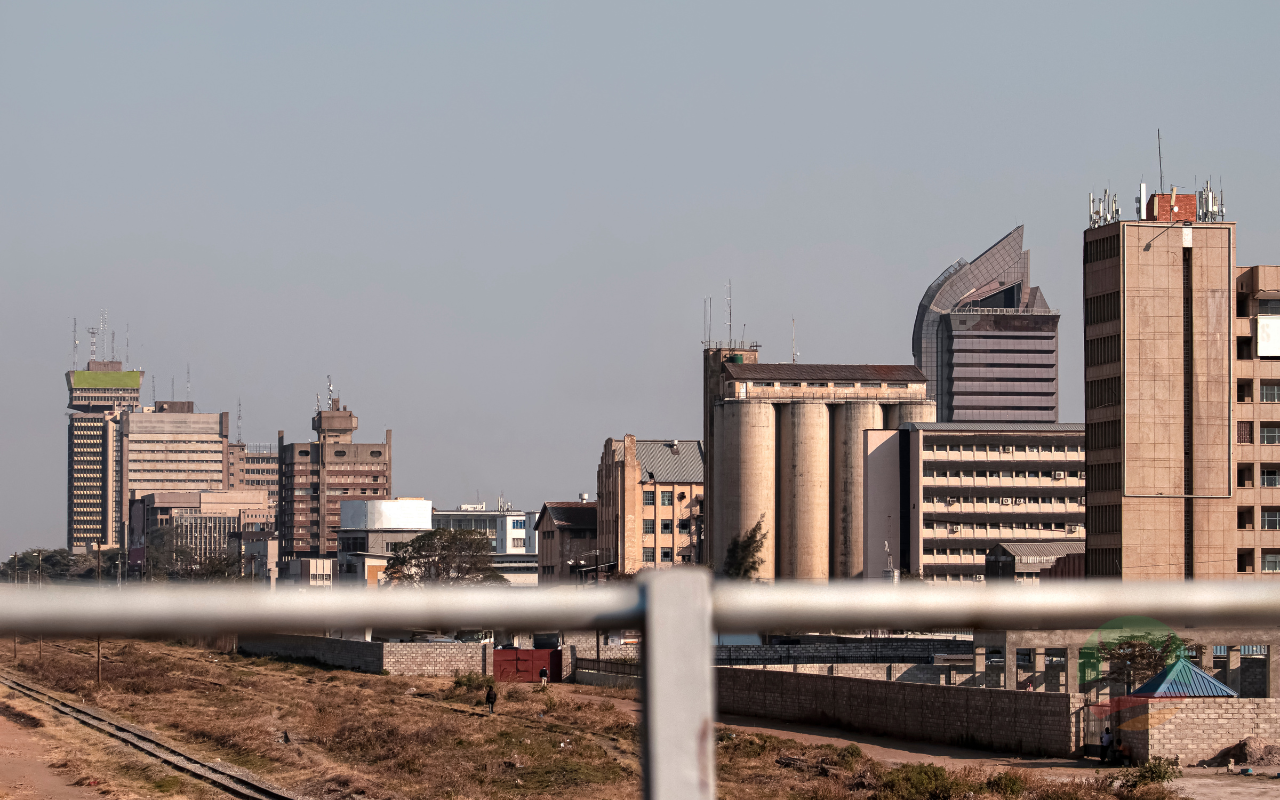
Photo: ZANISzanisGovernment of Zambia — editorial use
LUSAKA, 19 JUNE 2026—Updated 13 Aug 2026
Hakainde Hichilema inherited a bankrupt, defaulted Zambia in 2021 and pulled it back to solvency and growth — yet the cost of living still bites. This is an honest scorecard before the 2026 vote.
Let me give you the tea straight, the way a friend should. There is a mood going around — in the markets, in the minibuses, on the WhatsApp groups — that this government has failed and it is time for change. I understand it. When mealie-meal is biting and the lights keep going off, "change" starts to sound like medicine. But before we hand back the keys, let us actually look under the bonnet, because the honest truth about Hichilema's first term is more complicated than either his praise-singers or his loudest critics will admit. This piece is part of Kwacha News' Elections 2026 coverage and its wider politics reporting.
Here is the short version, up front. HH inherited a broke, defaulted, pariah economy in August 2021 and dragged it back from the cliff edge. On paper, Zambia is in far better shape than he found it. But in the kitchen — at the level of what it costs you to eat, cook and get to work — life got harder before it started getting better. That gap, between the national books and the family budget, is the whole argument of this election.
The mess he walked into
You cannot judge a driver without asking what state the car was in when they got the wheel. In November 2020, before HH was anywhere near State House, Zambia became the first African country of the COVID era to default on its debt. We missed a US$42.5 million payment to our Eurobond lenders, and just like that, the country was a financial pariah. Nobody serious wanted to lend to us. The kwacha had collapsed to around K22 to the dollar. Inflation was sitting above 20 percent, which is a polite way of saying prices were running away from people's wages every single month.
So when the United Party for National Development took over in August 2021, this is what was on the table: a bankrupt government, a currency in freefall, and a debt pile of roughly US$13 billion owed to a tangle of lenders — Western bondholders, the Paris Club of rich-country governments, and above all China. That was the car. Keep that picture in your head, because everything that follows is a story about whether the repair was worth it.
The big win: getting us out of bankruptcy
This is the achievement HH most wants you to remember, and to be fair, it is a real one. Think of it like a family drowning in loans from three different aunties, the bank, and a loan shark, all at once. You cannot pay any of them, so nobody will give you so much as a ngwee more. The only way out is to sit every lender down and renegotiate — longer to pay, smaller instalments, some of it written off. That, in essence, is what Zambia spent four painful years doing, and we were the first country in the world to pull it off under the G20's new "Common Framework" for handling broke nations.
Here is how it went. In 2022 the International Monetary Fund agreed to lend Zambia about US$1.3 billion over three years — later topped up to roughly US$1.7 billion — on condition the government got its books in order; the IMF signed off the final review in January 2026. In 2023 the government reworked about US$6.3 billion with the rich-country lenders and China. In 2024 it reached a deal with the Western bondholders on roughly US$3 billion more, with those lenders giving up around US$840 million in claims and easing the cash squeeze by about US$2.5 billion while the IMF programme ran.
This confirms Zambia has climbed out of default and is rebuilding its name as a credible, investable economy.
— Finance Minister Situmbeko Musokotwane, on the November 2025 S&P upgrade
The gold star arrived on 21 November 2025, when the global ratings agency S&P lifted Zambia out of default, raising its grade and giving it a "stable" outlook — the first such upgrade since 2019 — on deals covering about 94 percent of the US$13.3 billion being restructured. That is not spin. Getting a country out of default is genuinely hard, and most leaders who inherit a mess this deep never escape it.
The wider numbers tell a recovering, if bumpy, story. The economy grew a healthy 6.2 percent in 2021 and 5.2 percent in 2022, then the drought hammered it below 4 percent in 2024, before the IMF reckons it bounced back to around 5.2 percent in 2025. Foreign reserves — the country's savings buffer — were rebuilt to about US$6.4 billion, enough to cover more than four months of imports, where before there was almost nothing.
So yes: on the macro scoreboard, HH delivered. Now here is the catch.
But the numbers got better while the plate got emptier
Here is the part that explains why so many people feel betrayed despite all those good headlines: none of it showed up on the dinner table. In fact, the table got more expensive. The most honest measuring stick we have is the Basic Needs and Nutrition Basket from the Jesuit Centre for Theological Reflection — the monthly cost for a family of five in Lusaka to live a basic, dignified life: food, yes, but also rent, charcoal, transport, soap, the lot. And under HH that basket has climbed almost without pause.
That is a jump of roughly 40 percent in four years. To put it bluntly, what cost you K8,400 a month to survive when HH walked in now costs you more than K12,000. And here is the gut-punch JCTR keeps repeating: the average Zambian earns nowhere near that. National average income sits at about K5,369 a month — less than half the basket. We are, as a country, living below the cost of a decent life, and the gap has been widening.
The single item that decides Zambian elections — let us not pretend otherwise — is mealie-meal, and the ride has been rough. A 25kg bag of breakfast meal that hovered in the low hundreds of kwacha shot up to a national average of about K333 by August 2024, a 35 percent leap in a single year. Here is the fairer part, though: as the kwacha clawed back strength and the 2025 harvest came in strong, prices started falling. By mid-2025 the breakfast average had eased back toward K275, and some millers dropped their bags to around K220. So the trend turned — late, but it turned.
The election in one paragraph
HH fixed the country's books, but for the ordinary person the books are not the same thing as the kitchen. He stabilised the macro picture; the micro picture — your picture — only started to ease near the end. Whether that late relief arrived in time to be believed is exactly what 2026 will test.
When the lights went out
Copper is the bet
Everything HH is gambling on for the future runs through one red metal. After years of ugly fights between the previous government and the mining companies, he reset the relationship — the message to investors was simply: come back, we are open and predictable. And they came. The long-troubled Konkola Copper Mines was patched up with the return of its old owner Vedanta, promising about US$1.3 billion. The struggling Mopani mine landed a new partner from the UAE committing around US$1.1 billion. A major American firm, KoBold, is chasing a huge new copper find at Mingomba; Barrick is expanding Lumwana; First Quantum is pressing on at Kansanshi. You can follow the metal in our markets coverage.
The results are showing. Copper production rose 12 percent in 2024 and another 8 percent in 2025, hitting a record of roughly 890,000 tonnes — though, in honesty, that is still short of the symbolic one-million-tonne mark the government keeps dangling, and a long way from its dream of three million tonnes by 2031. Copper is about 70 percent of what Zambia sells to the world, so this matters enormously. The bet is sound. The question is whether the winnings reach beyond the mine gate and into ordinary pockets — and that is not yet proven.
Where he actually touched your life
If you want the strongest part of HH's record — the part even sceptics struggle to wave away — look at the classroom and the clinic. The headline policy is free education. From January 2022 the government scrapped tuition, exam and PTA fees in public schools. The result, by the government's count, was more than 2.6 million children returning to or staying in school, a feeding programme now reaching millions of learners, and Grade 12 pass rates climbing to a record 80 percent in 2025. To handle that flood of pupils, the government carried out the biggest teacher hiring in our history — over 30,000 in 2022 alone — plus around 18,000 new health workers. Then, so no future government could quietly bring fees back, free education was written into law in 2026.
The second quiet revolution is the Constituency Development Fund — the pot each constituency gets to spend on its own roads, clinics, classrooms, bursaries and skills training. Under the old government it was a measly K1.6 million per constituency. Under HH it leapt to around K30 million, then K36 million, and is set at K40 million for 2026. Say what you like about the politics; that is real money pushed down to the local level, closer to where you live. These are not paper achievements. A child in school, a teacher with a job, a clinic built with CDF money — those are things you can touch.
The part that should worry you
Being fair to HH also means being honest about where he has let the country down — especially on the very thing he was elected to fix. He rose to power partly on a promise of cleaner, freer politics. On some measures the air did get fresher: Zambia climbed the global press-freedom rankings from 95th to 82nd in a single year, and an Access to Information law that activists had begged for was finally signed in late 2023. But several moves went the other way, and they are serious.
First, the cyber laws. In April 2025 Parliament passed cybersecurity and cybercrime laws that digital-rights groups — including the Law Association of Zambia and MISA Zambia — condemned for handing the state sweeping powers to monitor citizens, with offences against "speech" so vaguely worded they could be pointed at almost anyone. Worse, the new cyber agency was placed under the President's own office. When a government that promised more freedom passes laws that look like surveillance, you are allowed to notice.
Second, the constitution. In 2025 the government pushed a set of amendments — Bill 7 — and here is the troubling bit: the Constitutional Court ruled that the rushed, top-down way they were going about it was unconstitutional because the public had not been properly consulted. The government regrouped and pushed it through Parliament anyway, signing it into law in December 2025 and expanding the number of parliamentary seats in the process. Critics across the church, civil society and the opposition accused the government of bulldozing past the courts and rewriting the rules of the game right before an election it intends to win.
Third, and most painful, the saga of former president Edgar Lungu. Lungu died in South Africa in June 2025. What should have been a moment of national dignity instead became an undignified tug-of-war between his family and the government over how and where he would be buried — a dispute that dragged through South African courts and remained unresolved deep into 2026. However you feel about Lungu's own record, the state of a nation is partly measured by how it treats a fallen rival, and this episode left a sour taste.
And on corruption — the issue HH thundered about in opposition — the verdict is genuinely mixed. Zambia's score on the global corruption index improved in his first years before slipping back in 2025. The government set up a special court for financial crimes. But HH also dissolved the entire board of the Anti-Corruption Commission in 2024 amid claims it was being blocked from investigating his own people, and respected figures — including a former head of that commission — have accused the administration of selective justice: hard on opponents, soft on friends. That is the most damaging charge a reformer can face, and it has not gone away.
Zambia on the world stage
One thing HH undeniably did was put Zambia back on the map. The flagship is the Lobito Corridor — a US- and EU-backed railway being built to carry Zambia's copper west through Angola to the Atlantic, opening a faster route to global markets. The Africa Finance Corporation is leading the new roughly 800km line on the Zambian side, with construction hoped to begin in 2026, and the Americans put serious money behind the Angolan stretch.
HH even hosted a visiting US president at the project in late 2024 — a genuine coup for a country that, three years earlier, lenders would not touch. Meanwhile China, never one to be outflanked, signed its own US$1.4 billion deal to modernise the rival TAZARA railway. Zambia has manoeuvred itself into being courted by both Washington and Beijing at once. That is not nothing.
- Out of defaultS&P upgrade Nov 2025; 94% of US$13.3bn debt restructured; IMF programme completed.
- Free education in law2.6m children back in school; record 80% Grade 12 pass rate; entrenched in 2026.
- CDF to K40mFrom K1.6m per constituency — real money pushed to the local level.
- Mines reopenedKCM and Mopani deals; record ~890kt copper; KoBold, Barrick, First Quantum investing.
- Reserves rebuiltAbout US$6.4bn — over four months of import cover, from near zero.
- Cost of living up ~43%JCTR basket above K12,000 against average income of K5,369.
- Up to 21-hour blackoutsOver-reliance on Kariba left the economy hostage to one drought.
- Cyber laws & Bill 7Surveillance fears; the Constitutional Court overruled, then bypassed.
- The Lungu burial sagaAn undignified standoff unresolved deep into 2026.
- The selective-justice chargeACC board dissolved; accusations of hard-on-foes, soft-on-friends.
What the people are actually saying
So if the wins are this real, why is the mood so sour? Because people do not eat GDP. The most credible survey we have, Afrobarometer, found that two-thirds of Zambians felt the country was heading in the wrong direction, and nearly three-quarters rated the economy as bad. Among young people — most of the voters — the gloom is thicker still. A fair caveat: that fieldwork was done in mid-2024, at the depth of the blackouts and before the kwacha and food prices started easing, so the mood today may be a notch less bleak. Tellingly, even in that grim survey a majority still gave the government decent marks on creating jobs and helping the poor — proof that people can hold two thoughts at once: this man has done some good, and life is still too hard.
Heading into 2026, HH starts as the front-runner — incumbency is powerful, his schools-and-clinics record is solid, and the opposition is in disarray, with the once-mighty Patriotic Front torn by infighting and still reeling from Lungu's death. But "front-runner" is not "safe". The real battle, most analysts reckon, will be fought constituency by constituency, in the parliamentary and local races, where the cost-of-living anger lives closest to the ground.
- Nov 2020
Zambia defaults
The first African country of the COVID era to default — the mess HH would inherit.
- 13 Aug 2021
Hichilema wins
UPND takes State House on a promise of recovery and clean government.
- Jan 2022
Free education begins
Tuition, exam and PTA fees scrapped in public schools.
- 2022
IMF programme
About US$1.3bn (later ~US$1.7bn) agreed, conditioned on fiscal reform.
- 2023
Official creditors & China
Roughly US$6.3bn of debt reworked under the G20 Common Framework.
- 2024
Drought and the dark
El Niño empties Kariba; load-shedding reaches up to 21 hours a day.
- 2024
Bondholder deal
About US$3bn reworked; lenders give up ~US$840m in claims.
- Jun 2025
Edgar Lungu dies
A burial dispute drags through the courts into 2026.
- 21 Nov 2025
Out of default
S&P lifts Zambia out of default — the first upgrade since 2019.
- Dec 2025
Bill 7 signed
Constitution amended after a Constitutional Court setback was bypassed.
- 13 Aug 2026
Zambia votes
The verdict on all of the above.
So — should you vote for change?
Here is where I land, friend to friend, and you are free to disagree. The case against rushing to change is strong. HH inherited a bankrupt, defaulted, blacklisted country and, through four hard years, pulled it back to solvency, growth and respectability. He put millions of kids back in school, pushed real money down to communities through the CDF, and reopened the mines that pay our bills. A lot of that work takes years to bear fruit, and ripping it up halfway risks throwing us back into the exact chaos we just escaped. Foundations are boring. They are also the thing the whole house stands on.
Yet the case for demanding much better is equally honest. A government cannot keep waving its credit rating at a mother who cannot afford mealie-meal. The cost of living is still brutal. Young people still cannot find work. The lights still are not guaranteed. And on the clean-governance promise that swept him into office, HH has, in places, started to look like the very thing he ran against.
So if HH wants — and deserves — a second term, here is the homework, and these are the things to actually watch.
One: make the plate cheaper, not just the books. The test is simple and you can check it yourself — does the JCTR family-of-five basket fall back toward K10,000 a month, and does a 25kg bag of breakfast meal settle below K250 and stay there? If the basket keeps climbing past K12,000, the argument for change writes itself.
Two: drought-proof the lights. Get Zambia's reliance on Kariba's water down below 70 percent through solar, coal and power deals with neighbours, so the next dry year does not mean 21-hour blackouts. No more blaming the sky.
Three: turn the copper boom into actual jobs. The mines are humming and the Lobito railway is coming. The only number that matters to a jobless graduate is whether all that activity becomes real, countable employment — and that claim needs to be provable, not just announced.
Four: be the reformer he promised to be. Fix or scrap the cyber law, let the anti-corruption people investigate his own side without interference, bury Edgar Lungu with the dignity the nation owes, and prove that changing the constitution is something done with the people, not to them.
That is the honest score. HH has done genuine, lasting good — more than the angry mood gives him credit for. He has also fallen short on the things people feel most, and grown careless with the very standards that defined him. Do not believe anyone who paints him as either a saviour or a villain. He is a leader who got the big, hard, structural things broadly right, and the close-to-home, human things too often wrong. What you do with that on 13 August is yours to decide — just decide it with the full picture, both sides of the ledger, and not on the empty stomach alone.
Frequently Asked Questions
The questions readers keep asking about Hakainde Hichilema's record, with short answers drawn from the IMF, S&P, JCTR, ZamStats and Afrobarometer.
Has the cost of living improved under Hakainde Hichilema?
In short, no — it rose for most of his term and only began easing late. The JCTR basket for a family of five in Lusaka climbed from about K8,414 in August 2021 to more than K12,000 by 2026, roughly 40 percent. Mealie-meal and fuel prices did start falling in 2025 as the kwacha strengthened and the harvest came in, but average income of about K5,369 a month is still less than half the basket.
What did Hichilema do about Zambia's debt?
He took Zambia through the G20 Common Framework. An IMF programme of about US$1.3 billion (later ~US$1.7 billion) was agreed in 2022; roughly US$6.3 billion was reworked with official creditors and China in 2023; about US$3 billion of bonds was restructured in 2024. In November 2025 S&P lifted Zambia out of default, with deals covering about 94 percent of the US$13.3 billion being restructured.
Did free education work in Zambia?
By the government's count, yes. Scrapping fees from January 2022 brought more than 2.6 million children back to or kept them in school, Grade 12 pass rates reached a record 80 percent in 2025, and over 30,000 teachers were hired in 2022. Free education was written into law in 2026. The figures are largely government-sourced, so treat them as a strong claim rather than independently audited fact.
Why was there so much load-shedding in Zambia?
Because about 84 percent of Zambia's electricity comes from hydropower, mostly Kariba Dam, and a severe 2024 El Niño drought emptied the lake — usable water fell to single digits. ZESCO rationing escalated from eight hours a day to as much as 21 at the peak. The rains in 2025 refilled Kariba and eased the crisis, but the episode exposed Zambia's over-reliance on a single weather-dependent source.
When is Zambia's 2026 election?
Zambia's general election — presidential, parliamentary and local-government races — is scheduled for 13 August 2026. Hakainde Hichilema starts as front-runner, but analysts expect the decisive battles in the tightly contested parliamentary and local seats. Follow it on the Kwacha News Elections 2026 hub.
A note on the numbers
All the cost-of-living figures come from the JCTR Basic Needs and Nutrition Basket: the monthly cost for a family of five in Lusaka, in today's (rebased) kwacha, covering food and non-food essentials including rent, energy and transport. The kwacha was rebased in 2013 (1,000 old kwacha became 1 new kwacha), so these thousands-of-kwacha figures are current money, not old-currency inflation.
The basket measures the cost of a dignified minimum, not what families actually spend — which is why it sits at roughly double the national average income of about K5,369. Lusaka is also the most expensive town; places like Mongu and Chinsali run far lower, so the national picture is less severe than the capital's. Several job-creation and investment totals come mainly from government sources and have not been fully independently audited; where this piece cites a government claim, treat it as a claim, not gospel.
Sources
International Monetary Fund (Extended Credit Facility and reviews); S&P Global Ratings (November 2025 upgrade out of default); the G20 Common Framework record; GDP data from the IMF and the African Development Bank; the JCTR Basic Needs and Nutrition Basket statements; and the Zambia Statistics Agency on mealie-meal and staple prices.
The piece also draws on copper output from the Ministry of Mines and independent mining trackers; free-education and recruitment figures from government statements; the Lobito Corridor partners; Reporters Without Borders on press freedom; the Law Association of Zambia and MISA Zambia on the cyber laws; Transparency International and the Institute for Security Studies on the corruption record; and Afrobarometer on public opinion. Further reading: Politics, Business & Economy and the Elections 2026 hub.
More on Politics

Hichilema wins Zambia's 2026 election for a second term
Zambia's Electoral Commission has declared Hakainde Hichilema president-elect for a second term with about 61 per cent of the vote, over Brian Mundubile's 38 per cent, as the opposition rejects the count.

Press freedom groups urge Zambia to keep the internet on
The Committee to Protect Journalists and the #KeepItOn Coalition urged Zambian authorities and telecoms operators to keep internet access open through the 13 August election, as Amnesty International called for a detained journalist's release.
The Kwacha News briefing.
Business, markets and the Zambian economy — in your inbox.

