

Court to hear M'membe eligibility case on 17 June
A petition by a civil-society consortium and the activist Isaac Mwanza asks the full bench to bar the Socialist Party ticket from the August ballot over a running-mate qualification question.
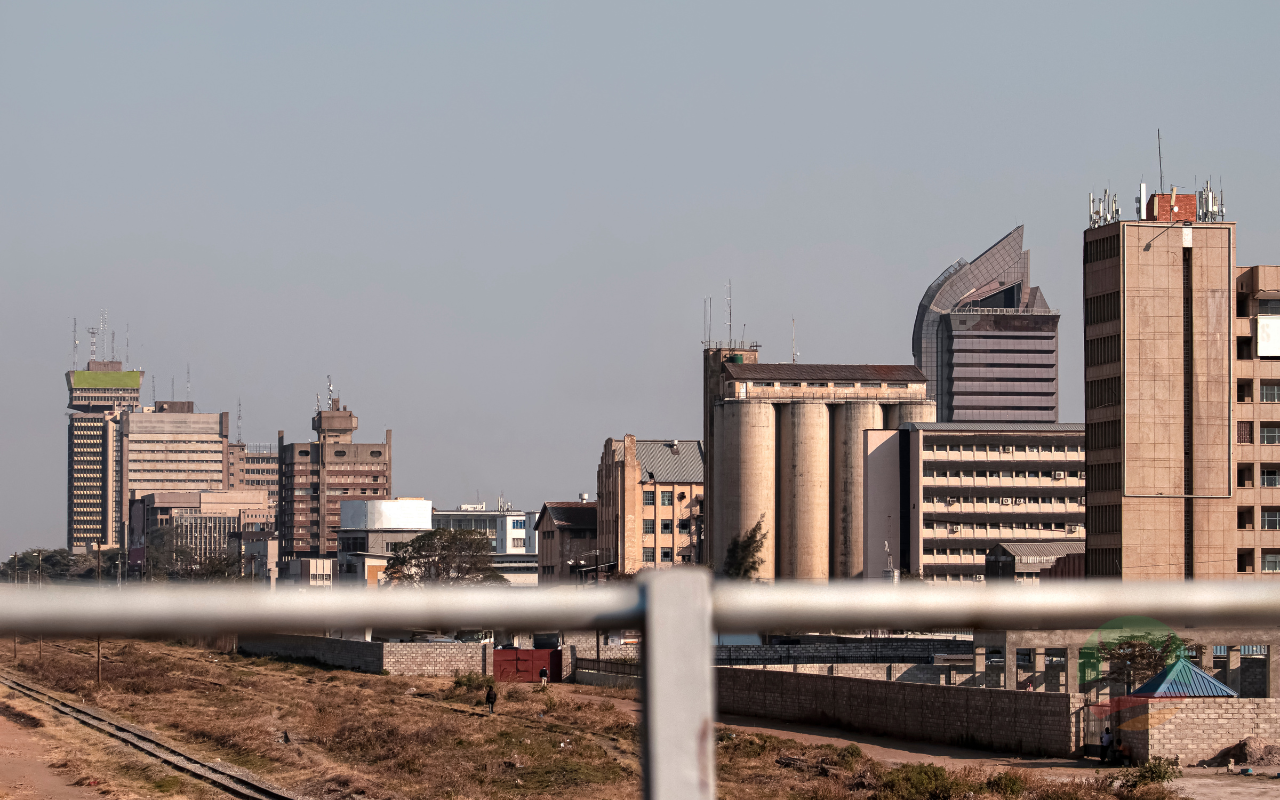
Photo: Sasun BughdaryanUnsplashUnsplash License
LUSAKA, 3 JUNE 2026—Updated 8 Jul 2026
LUSAKA — A petition that seeks to bar Socialist Party leader Fred M'membe and his running mate from the August ballot is set for a full Constitutional Court hearing on 17 June.
The case is one of the first eligibility fights of the 2026 cycle to reach the Constitutional Court, and it turns on a question that has decided Zambian candidacies before: whether a contender holds the Grade 12 school certificate, or a proven equivalent, that the Constitution requires. The petition names M'membe and his running mate, Dolika Banda, as a single ticket. Kwacha News set out how disqualification and withdrawal work in its explainer on candidate withdrawal and the election timetable.
The petition was filed on 28 May by the Consortium of Civil Society Organisations for Good Governance and Constitutionalism, together with the governance activist Isaac Mwanza. It argues that Banda's Cambridge-era school certificate, obtained in 1978, has not been shown to be equivalent to Zambia's Grade 12 School Certificate, and that the gap disqualifies her. Because a presidential candidate and a running mate stand as one constitutionally linked ticket, the petitioners contend that a defect in the running mate's papers reaches the candidate at the top of the ticket.
The Electoral Commission of Zambia (ECZ) accepted nominations for the 13 August general election in May, and the courts are now the venue where contested nominations are tested. A full bench of the Constitutional Court is listed to hear and determine the matter on 17 June. The qualification rule itself is not new: the Constitution sets a Grade 12 certificate, or its established equivalent, as a floor for anyone seeking the presidency, and the requirement has removed candidates in earlier cycles.
M'membe, a former newspaper publisher who has run for the presidency before, is one of the better-known faces in a crowded opposition field. The Socialist Party has not conceded the qualification point, and the petition remains an allegation that the court has yet to weigh. Kwacha News has followed M'membe's recent court appearances, including the detective testimony in his firearm case, a separate matter from the eligibility petition.
What the 17 June listing settles is timing, not outcome. The hearing falls 57 days before polling, inside the window when the ballot paper must be finalised and printed. A ruling that upholds the petition would remove a presidential ticket from that ballot; a ruling that dismisses it would let the Socialist Party campaign run unobstructed. Either way, the court's decision lands while nominations across the field are still being litigated.
Background
Zambia's Constitution, rewritten in 2016, requires candidates for elected office to hold a Grade 12 school certificate or an equivalent qualification. The rule was meant to set a clear, checkable bar. In practice it has generated litigation each cycle, because equivalence — matching an older or foreign certificate to the modern Grade 12 standard — is a question of evidence rather than a simple yes or no.
A running mate matters here because the Constitution treats the presidential candidate and the running mate as a joint ticket: voters elect the pair, and the running mate becomes vice-president. A successful challenge to a running mate's qualification can therefore unseat the whole ticket, which is why the petition frames Banda's certificate as decisive for M'membe's run.
The petitioner, Isaac Mwanza, is a governance commentator who has brought several nomination challenges this cycle. The Consortium of Civil Society Organisations for Good Governance and Constitutionalism filed alongside him. Their petitions form part of a wider wave of pre-election court action testing who may appear on the 13 August ballot.
The presidential candidate and the running mate stand as one ticket; a qualification defect in one is a defect in both.
— The petitioners' central argument, as set out in the eligibility petition filed on 28 May
Snapshot: The Constitutional Court will hear, on 17 June, a petition seeking to disqualify the Socialist Party ticket of Fred M'membe and running mate Dolika Banda. The petition — filed 28 May by activist Isaac Mwanza and a civil-society consortium — argues Banda's 1978 Cambridge-era certificate is not a proven Grade 12 equivalent. A full bench is listed to determine the matter 57 days before the 13 August general election. The Socialist Party disputes the claim.
What to watch
The first marker is the 17 June hearing itself, and whether the full bench determines the matter that day or reserves judgment. Court records show eligibility petitions can be decided quickly when the facts are narrow; the evidence on certificate equivalence is the variable here. A reserved judgment would push the answer closer to the ballot-printing deadline.
The second marker is how the ruling sits alongside the other nomination challenges before the courts. Analysis of the 2026 pre-election docket shows multiple petitions running in parallel, and the data points to a compressed calendar in which several eligibility questions resolve in the same fortnight. This case is part of Kwacha News's continuing politics coverage of the road to 13 August.
Frequently Asked Questions
These are the questions readers have raised since the hearing date was set. Short answers follow, drawn from the eligibility petition, the Constitution's qualification rule and the Electoral Commission of Zambia's nomination process.
What is the M'membe eligibility case about?
In short, the case is a petition asking the Constitutional Court to bar the Socialist Party ticket of Fred M'membe and Dolika Banda from the 13 August ballot. The answer, simply put, is that it challenges whether Banda holds a Grade 12 certificate or a proven equivalent. The key is that the petitioners treat the running mate's papers as decisive for the whole ticket.
How does the Grade 12 requirement work?
Research on Zambia's 2016 Constitution shows it requires candidates for the presidency to hold a Grade 12 school certificate or an established equivalent. Data from past cycles reveals the rule has disqualified candidates before. In other words, the bar is fixed, but proving that an older or foreign certificate meets it is a question the courts decide on the evidence.
Why does a running mate affect the candidate?
According to the Constitution, a presidential candidate and a running mate stand as one joint ticket that voters elect together. The answer is that a successful challenge to the running mate's qualification can remove the entire ticket. Evidence from the petition shows the petitioners rely on exactly this link to reach M'membe through Banda.
Who brought the petition?
The petition was filed on 28 May by the governance activist Isaac Mwanza and the Consortium of Civil Society Organisations for Good Governance and Constitutionalism. Data on the 2026 docket shows the same petitioner has brought other nomination challenges. The key is that these are private petitions, not actions by the Electoral Commission of Zambia.
What happens on 17 June?
A full bench of the Constitutional Court is listed to hear and determine the matter on 17 June. In other words, the court will either rule that day or reserve judgment. Analysis of the calendar shows the hearing falls inside the window when the ballot paper must be finalised, which is why the timing matters as much as the outcome.
Sources
Electoral Commission of Zambia: official site, on the nomination process for the 13 August general election. Constitution of Zambia and the Grade 12 qualification rule, via the National Assembly of Zambia. Constitutional Court of Zambia judgments are published on ZambiaLII. The petition, its 28 May filing date and its grounds are attributed to the petitioners, the governance activist Isaac Mwanza and the Consortium of Civil Society Organisations for Good Governance and Constitutionalism.
More on Politics

Hichilema wins Zambia's 2026 election for a second term
Zambia's Electoral Commission has declared Hakainde Hichilema president-elect for a second term with about 61 per cent of the vote, over Brian Mundubile's 38 per cent, as the opposition rejects the count.

Press freedom groups urge Zambia to keep the internet on
The Committee to Protect Journalists and the #KeepItOn Coalition urged Zambian authorities and telecoms operators to keep internet access open through the 13 August election, as Amnesty International called for a detained journalist's release.

The burial row that made the Zambian election a contest
Edgar Lungu died in June 2025 and was not buried for more than a year while his family and the Zambian state fought through the South African courts. The dispute shadowed the campaign and, the BBC reported, turned an expected walkover into a contest.
The Kwacha News briefing.
Business, markets and the Zambian economy — in your inbox.