

Nalumango says Zambia's economy stabilised, growth next
Vice-President Mutale Nalumango told a Lusaka radio programme that the government has steadied the economy and is now turning to growth and jobs, a message delivered seven weeks before the 13 August general election.
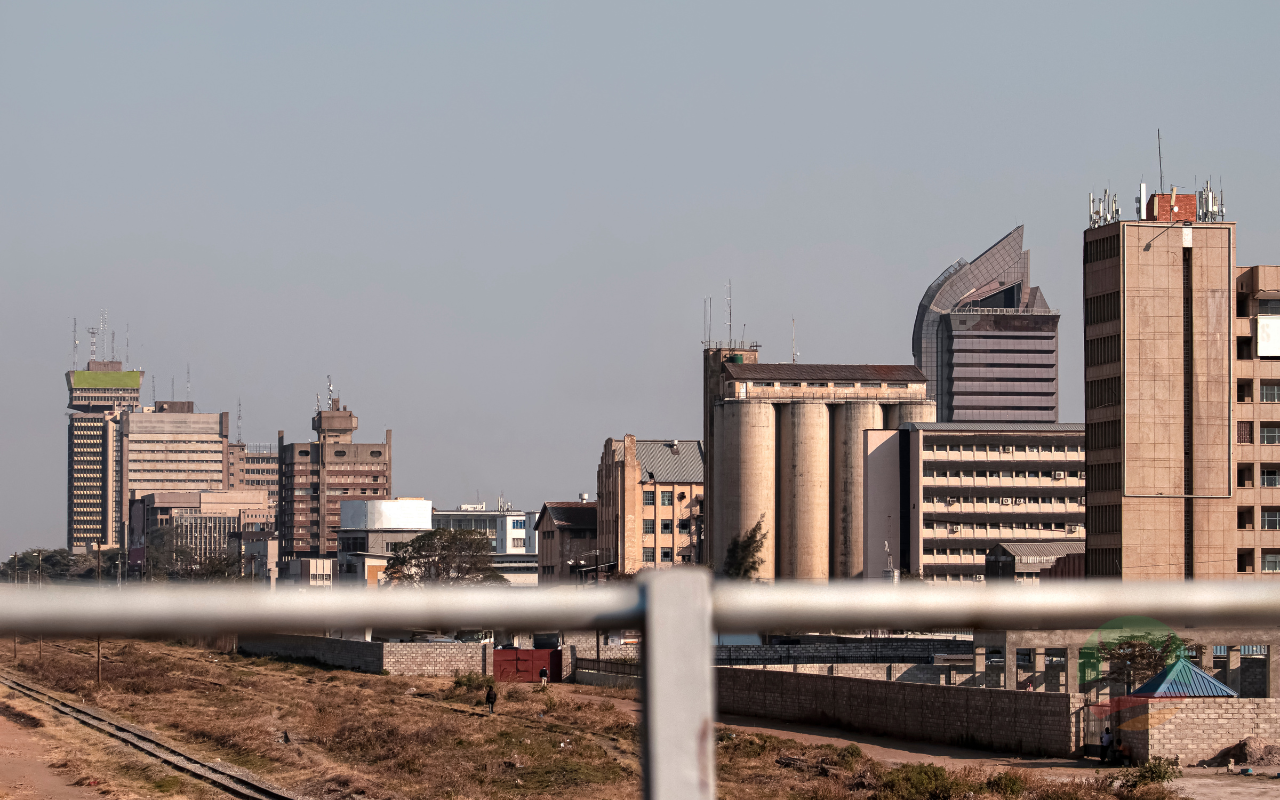
Photo: ChaloNiZambiawikidataCC BY-SA 4.0
LUSAKA, 27 JUNE 2026—Updated 8 Jul 2026
LUSAKA — Zambia’s economy is stabilised and the government’s focus is now shifting to growth so that citizens begin to feel the benefits, Vice-President Mutale Nalumango has said.
The remarks, delivered seven weeks before the 13 August general election, frame the government’s pitch to voters around its economic record and the promise of gains still to come. Part of Kwacha News’s continuing politics coverage, the message lands at a point in the cycle when the United Party for National Development is asking the electorate to judge it on the macroeconomic turnaround it says it has delivered over almost five years in office.
Nalumango said the government had stabilised the economy after inheriting major challenges and that the next phase would focus on expansion and job creation, the Zambia News and Information Services reported. Speaking on the “Let the People Talk” programme on Radio Phoenix in Lusaka, the Vice-President argued that citizens would begin experiencing the benefits of reforms undertaken over the past four years and ten months.
She tied the claim directly to economic output, saying the administration had grown gross domestic product and that the coming term would be the period in which households felt the effect of that work. The framing positions the early years of the government’s tenure as a stabilisation phase and the years ahead as a growth phase, a sequencing the Vice-President said had been deliberate.
Nalumango also addressed the country’s reliance on hydropower, saying the government had decided Zambia would not continue to depend only on that source. The remark follows a stretch in which low water levels at the Kariba Dam constrained electricity generation and forced extended load-shedding, pushing energy diversification up the policy agenda.
On the mining sector, the Vice-President defended the government’s approach, saying the policies were good for the country and that the administration wanted the mines to grow because they create jobs, pay taxes and support many families. She also said the campaign against corruption was not aimed only at the past, describing it as covering the past, present and future, according to the state news service.
The macroeconomic backdrop to the Vice-President’s message has been one of measurable recovery, as previously reported by Kwacha News. The economy expanded strongly at the start of the year, with gross domestic product growing 7.7 percent in the first quarter of 2026 on official figures from the Zambia Statistics Agency, a pace well above the rates recorded earlier in the government’s term.
Public finances have also eased. Kwacha News has reported how public debt has fallen to about 94 percent of gross domestic product as the fiscal position improved and the central bank rebuilt its foreign-exchange reserves, easing the strain that had defined the country’s finances after a 2020 default.
Price pressures have softened in tandem. Inflation eased to about 6.5 percent in June, returning to within the Bank of Zambia’s target band of six to eight percent, as Kwacha News reported when inflation eased to 6.5 percent in June on the back of a firmer kwacha and lower food prices. Together, the growth, debt and inflation figures form the record on which the Vice-President’s claim of a stabilised economy rests.
Those macro figures come from the Zambia Statistics Agency, the Ministry of Finance and the Bank of Zambia, and were reported by Kwacha News at the time; the Vice-President’s contribution is the political reading of them — that stabilisation is complete and growth is the next task. The distinction matters: the data describe the position, while the message frames it for an electorate weeks away from a vote.
We have grown the GDP, now it’s time to build on the gains. The next five years is growth, and that is when the people will start feeling the real effects of the work that has been done in the economy.
— Mutale Nalumango, Vice-President of Zambia — speaking on Radio Phoenix (<a href="https://www.zanis.gov.zm/?p=4745">ZANIS</a>)
Snapshot: Vice-President Mutale Nalumango, speaking on the “Let the People Talk” programme on Radio Phoenix in Lusaka, said the government had stabilised the economy after inheriting major challenges and that the focus was now shifting to growth and job creation, with citizens set to begin feeling the benefits of reforms undertaken over the past four years and ten months. She tied the claim to growth in gross domestic product, defended mining policy as a job creator, and said Zambia would not continue to depend only on hydropower. The remarks, reported by the Zambia News and Information Services, came seven weeks before the 13 August 2026 general election.
Background
The government has built its economic narrative around a recovery from the financial distress that preceded it, including the country’s 2020 sovereign default and the debt restructuring that followed. The Vice-President’s framing — stabilisation first, growth next — maps onto that arc, casting the early years as the work of steadying public finances and the years ahead as the period in which output and incomes rise.
That framing is supported by the recent data. First-quarter growth of 7.7 percent, public debt easing to about 94 percent of gross domestic product, and inflation returning to within the central bank’s target band all point in the same direction, as previously reported by Kwacha News. The Vice-President’s argument is that these are the early dividends of reform and that the larger gains, felt at household level, are still to come.
How much of that improvement reaches ordinary households is the open question. Headline growth and a stronger kwacha do not automatically translate into lower prices at the market or more jobs in a given town, and the gap between aggregate recovery and lived experience is precisely the space in which an election is contested. The Vice-President’s message is an acknowledgement of that gap as much as a claim to have closed it.
What to watch
The 13 August general election is the immediate decision point. Held on the second Thursday of August in line with the constitution, the vote will test whether the electorate accepts the government’s account of a stabilised economy or judges that the gains have not yet been felt where it matters — in the cost of food, the price of fuel and the availability of work.
Beyond the campaign itself, the figures to watch are the ones the Vice-President invoked: whether growth holds above earlier rates, whether inflation stays inside the target band, and whether the debt trajectory continues to ease. Each release between now and polling day will be read as evidence for or against the claim that the economy has turned, and the government will be asking voters to extend its mandate on the strength of that record.
Frequently Asked Questions
These are the questions readers are asking about the Vice-President’s economic message and the figures behind it. Short answers follow, drawn from her remarks and the public record previously reported by Kwacha News.
What is Vice-President Nalumango claiming about the economy?
In short, that the hard part is done. According to the Zambia News and Information Services, Nalumango said the government had stabilised the economy after inheriting major challenges and that the focus was now shifting to growth and jobs, with citizens set to begin feeling the benefits.
How does the recent data support that claim?
Simply put, the figures show a recovery. Official data reveals first-quarter gross domestic product growth of 7.7 percent, public debt easing to about 94 percent of output, and inflation easing to about 6.5 percent in June, all previously reported by Kwacha News and drawn from the Zambia Statistics Agency, the Ministry of Finance and the Bank of Zambia.
Why is the message coming now?
The answer is timing. Analysis of the political calendar shows the remarks landed seven weeks before the 13 August general election, a point at which the governing United Party for National Development is asking the electorate to judge it on its economic record, as the public record on the election cycle shows.
What are the figures the Vice-President is leaning on?
The key is three numbers. Data previously reported by Kwacha News shows growth of 7.7 percent in the first quarter of 2026, public debt at about 94 percent of gross domestic product, and inflation easing to about 6.5 percent in June, evidence the government cites as proof of a stabilised economy.
Which election will test this message?
In other words, the next one. The record shows Zambia goes to the polls in a general election on 13 August 2026, held on the second Thursday of August under the constitution, and the vote will measure whether voters accept the government’s account of the economy, according to the published calendar.
Sources
Primary statement: Zambia News and Information Services — “Govt has stabilised economy, focus now shifts to growth – Nalumango”. Macroeconomic context previously reported by Kwacha News: Zambia GDP grows 7.7 percent in Q1 2026, public debt eases to about 94 percent of GDP, and inflation eases to 6.5 percent in June.
For Zambian households, the Vice-President’s message will be measured against the till slip rather than the data release. A stabilised economy and a stronger kwacha matter most when they show up as steadier prices for mealie meal and cooking oil, as fuel that does not climb week to week, and as jobs for the young people leaving school and college each year. The government’s case is that the macro turnaround — growth above seven percent, debt easing, inflation back in its band — is the foundation on which those everyday gains are built, and that the coming term is when they arrive. For families weighing that promise against the cost of living they face now, the seven weeks to 13 August are when the claim meets the vote.
More on Politics

Hichilema wins Zambia's 2026 election for a second term
Zambia's Electoral Commission has declared Hakainde Hichilema president-elect for a second term with about 61 per cent of the vote, over Brian Mundubile's 38 per cent, as the opposition rejects the count.

Press freedom groups urge Zambia to keep the internet on
The Committee to Protect Journalists and the #KeepItOn Coalition urged Zambian authorities and telecoms operators to keep internet access open through the 13 August election, as Amnesty International called for a detained journalist's release.
The Kwacha News briefing.
Business, markets and the Zambian economy — in your inbox.

