

Zambia election shapes up as HH v Mundubile race
Former ambassador Emmanuel Mwamba says the 13 August general election is increasingly a direct contest between President Hakainde Hichilema and Tonse Pamodzi candidate Brian Mundubile, as polls show UPND leading and the opposition consolidating behind a single challenger.
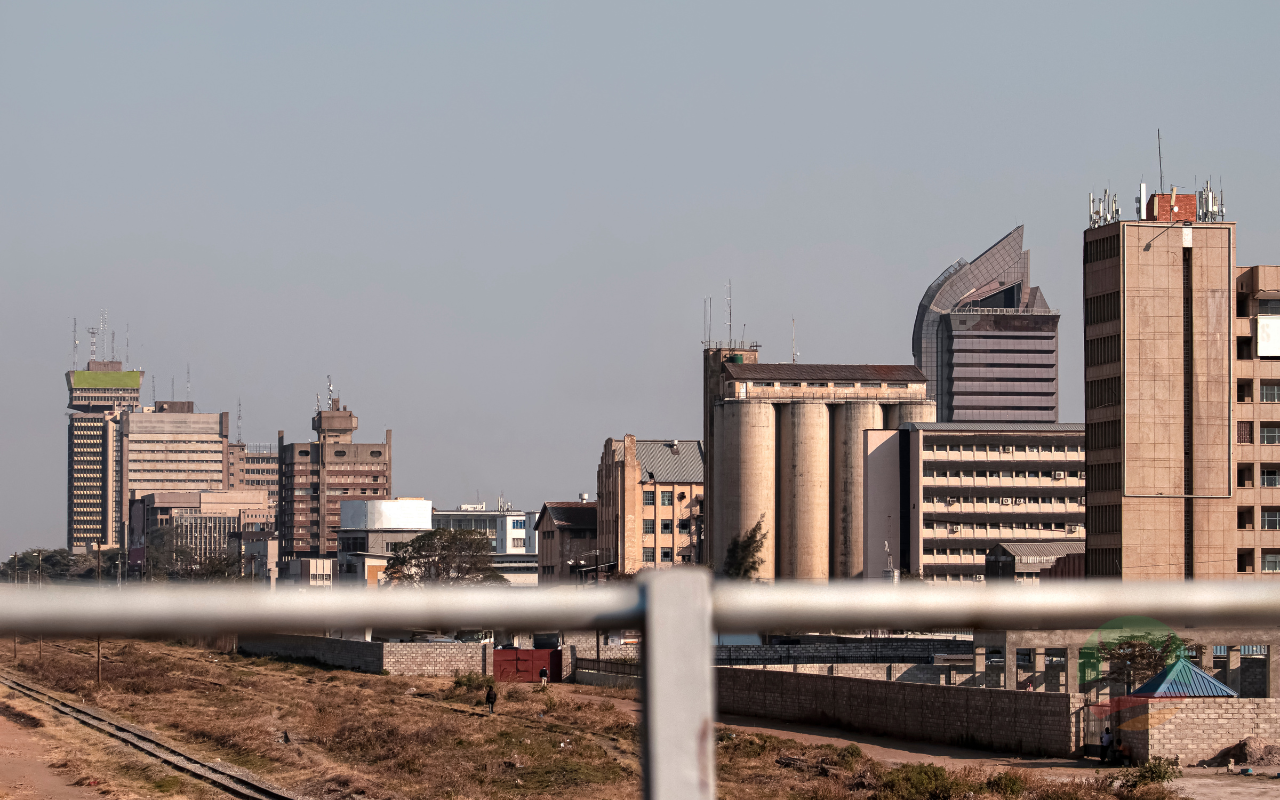
Photo: Ernie JourneysUnsplashUnsplash License
LUSAKA, 17 JUNE 2026—Updated 8 Jul 2026
LUSAKA — Zambia's 13 August general election is crystallising into a two-horse race between President Hakainde Hichilema and Tonse Pamodzi Alliance candidate Brian Mundubile, a senior political figure has said.
Former ambassador to Ethiopia and ex-Patriotic Front spokesperson Emmanuel Mwamba says the contest is taking the shape of a direct duel, with smaller opposition candidacies — Harry Kalaba's Citizens First and the Orange Alliance, Fred M'membe's Socialist Party — struggling to break through against a consolidating field. The framing matters because it shifts the question from whether Hichilema can be beaten to who will carry the opposition's challenge. This story is part of Kwacha News's continuing politics coverage.
A University of Zambia (UNZA) demographer poll has reinforced the picture, placing Hichilema at roughly 60 per cent support and the combined opposition at about 35 per cent. The numbers suggest that while no single challenger is close to the President today, the opposition's best strategy is consolidation rather than fragmentation — exactly the path Mundubile's Tonse Pamodzi alliance has been building since his election as its presidential candidate on 28 January 2026, with Counsel Makebi Zulu as running mate.
Why the race is narrowing
Several forces are pushing the contest towards a binary. The first is arithmetic. In a fractured field, Hichilema's incumbency advantage and the UPND's organisational reach across all ten provinces make a first-round victory likely. The only scenario that makes the race competitive is one in which opposition voters coalesce behind a single candidate — and Mundubile, commanding the largest non-UPND political ecosystem through the former Patriotic Front base, is the obvious vehicle for that consolidation.
The second force is signalling from the candidates themselves. Hichilema has said publicly that the 2026 election is "serious business" and that he needs to "win big," a framing that treats the vote not as a foregone conclusion but as a contest requiring maximum mobilisation. On the other side, Mundubile has pledged to protect and work with Hichilema after the polls — an unusual commitment that positions the Tonse Pamodzi candidate as a statesman challenger rather than a wrecking-ball opponent, and signals confidence that the race is his to contest.
The third is the behaviour of the governing party. The UPND has been suspending members who back independent candidates, a sign that it takes the threat of vote-splitting seriously enough to enforce discipline. That enforcement makes sense only if the party believes the margin matters — which it does when the contest is binary rather than diffuse.
The 2026 general election is increasingly taking the shape of a direct contest between HH and BM8 — this is a two-horse race.
— Emmanuel Mwamba, former Zambian ambassador to Ethiopia
The UPND's case for a second term
Hichilema's re-election pitch rests on economic gains and development delivery. The UPND government points to the restructuring of Zambia's external debt, the return to positive economic growth after the sovereign default it inherited, expanded social cash transfer programmes, and infrastructure investments including road and school construction. The argument is continuity: the hard work of stabilisation has been done, and a second term would deliver the dividends.
The party is also leaning on its alliance arithmetic. As Kwacha News has reported, Hichilema has been urging UPND structures to unite ahead of August, and the ruling coalition has expanded to include more than a dozen smaller parties. The strategy is to make the UPND tent so broad that no space remains for a credible alternative — a mirror image of the opposition's consolidation effort, running in the opposite direction.
The risk for UPND is complacency. Political analyst Neo Simutanyi has warned that voter apathy could become a factor if citizens conclude there is no real alternative to the governing party. A low-turnout election, even one UPND wins, would weaken the mandate Hichilema says he wants. The party needs not just to win but to be seen winning decisively, which is why the President's own language — "I need to win big" — frames the campaign as a mobilisation exercise rather than a victory lap.
Key numbers: A UNZA demographer poll places President Hichilema at approximately 60 per cent support, with the combined opposition at around 35 per cent. Brian Mundubile was elected Tonse Pamodzi Alliance presidential candidate on 28 January 2026, with Counsel Makebi Zulu as running mate. The general election is on 13 August 2026 — voters will choose a president, members of parliament and councillors on the same day. Other declared candidates include Harry Kalaba of the Citizens First and Orange Alliance, and Fred M'membe of the Socialist Party.
Mundubile's challenge
Mundubile's task is consolidation under pressure. The Tonse Pamodzi alliance brings together his Tonse Alliance and a regrouped Patriotic Front bloc, the political ecosystem that governed Zambia from 2011 to 2021. Uniting that base behind a single ticket is the necessary condition for making the election competitive; as Kwacha News has covered, Mundubile has been rallying the Copperbelt as part of that effort, taking the campaign to the swing provinces where the margin will be set.
The challenge is that the former PF's leadership and structures have been contested since the party's 2021 defeat, and rival claims to its name have spilled into the courts. Mundubile and Zulu must hold the coalition together through candidate selection, constituency-level organising and the inevitable pressures of a two-month sprint to polling day. Any defections or public rifts would undermine the central promise of the Tonse Pamodzi project: that the opposition has, at last, produced a single credible alternative.
Mundubile's other challenge is policy differentiation. If the election is framed purely as continuity versus change, the incumbent has the advantage of a record to point to. The Tonse Pamodzi candidate needs to offer a specific, credible alternative programme — on jobs, agriculture, mining revenue and public services — that gives voters a reason to switch rather than simply a vehicle through which to express dissatisfaction.
The independents and the Article 51 question
Beyond the two main camps, a thread of independent and small-party candidacies adds texture to the race. The question of independent candidates and Article 51 eligibility has been a live issue in the courts, testing the constitutional rules under which individuals can stand outside the party system. These candidacies are unlikely to threaten either Hichilema or Mundubile at presidential level, but they could fragment the vote in marginal parliamentary constituencies and shift the composition of the National Assembly.
Harry Kalaba, a former foreign affairs minister, leads the Citizens First party and is associated with the Orange Alliance grouping. Fred M'membe, founder of the Socialist Party, brings an ideological platform that appeals to a distinct slice of the electorate but has not translated into mass support at the ballot box. Both candidates draw from pools of voters who might otherwise consolidate behind either the UPND or Tonse Pamodzi, which is why the two-horse-race framing matters: it is a claim about where the decisive margin lies, and an argument that votes cast elsewhere are, in effect, wasted.
For Mwamba, the picture is clear. The dynamics of alliance-building, polling data and campaign behaviour all point in the same direction: this is a contest between two camps, and the other candidacies are footnotes to the central question of whether Hichilema's economic record or Mundubile's opposition consolidation will prevail on 13 August.
What to watch
The first thing to watch is opposition cohesion. If the Tonse Pamodzi alliance holds together through the campaign, the race stays binary. If it fragments — through court challenges, defections or candidate disputes — the two-horse-race framing collapses and the election reverts to a comfortable UPND win.
The second is turnout. Simutanyi's apathy warning is the quiet risk for both sides. A disengaged electorate benefits the better-organised party, which is currently the UPND, but it also means the winner governs without the strong mandate both candidates say they want.
The third is the Copperbelt and swing provinces. Presidential elections in Zambia are won in the provinces that change hands; the Copperbelt, Luapula and parts of Muchinga are where both campaigns will spend disproportionate time and resources. Early rally sizes, candidate visibility and local endorsements will be imperfect but watched signals of where the margin is forming.
The fourth is the remaining poll data. The UNZA demographer survey is a snapshot, not a prediction. If further polling narrows the gap or shifts the opposition's support distribution, the strategic calculations of both camps — and of voters deciding where their ballot matters most — will change.
Frequently Asked Questions
These are the questions readers are asking about the emerging two-horse race for Zambia's presidency. Short answers follow, drawn from public statements, polling data and the campaign record.
Who are the main candidates in the 2026 Zambian presidential election?
In short, the two leading candidates are President Hakainde Hichilema of the UPND, seeking a second term, and Brian Mundubile of the Tonse Pamodzi Alliance, the main opposition challenger. Other declared candidates include Harry Kalaba of the Citizens First and Orange Alliance and Fred M'membe of the Socialist Party, but polling and political analysis increasingly frame the race as a direct contest between Hichilema and Mundubile.
What do the polls say about the 2026 Zambian election?
Simply put, a UNZA demographer poll places Hichilema at approximately 60 per cent support, with the combined opposition at around 35 per cent. No single opposition candidate is close to the President in the current data, which is why consolidation behind Mundubile is the opposition's core strategy. Polls are snapshots and can shift, but the current numbers give UPND a substantial lead.
When is the 2026 Zambian general election?
The answer is 13 August 2026. Zambians will vote for president, members of parliament and councillors on the same day. The date was set by the Electoral Commission of Zambia and applies to all levels of the election.
What is the Tonse Pamodzi Alliance?
In short, the Tonse Pamodzi Alliance is the main opposition coalition for the 2026 election. It unites Brian Mundubile's Tonse Alliance with a regrouped Patriotic Front bloc, with Counsel Makebi Zulu as the vice-presidential candidate. Mundubile was elected the alliance's presidential candidate on 28 January 2026. The coalition's aim is to consolidate the opposition behind a single ticket to challenge the UPND.
Why is the UPND suspending members who back independents?
The answer is vote-splitting. The UPND has been suspending members who support independent candidates because independent candidacies can fragment the governing party's vote in marginal constituencies. In a two-horse race, every split vote matters, and the party is enforcing discipline to protect its margins in parliamentary and council seats. Kwacha News has covered the suspensions and their implications for party unity.
Sources
Zambian Observer: 2026 general election is between HH and BM8. Zambian Observer: Brian Mundubile the surprise galloping horse in the 2026 presidential race. Wikipedia: 2026 Zambian general election. Kwacha News coverage: Mundubile rallies Copperbelt, Hichilema urges UPND unity, UPND suspends 13 in Mazabuka and independent candidates and Article 51.
More on Politics

Hichilema wins Zambia's 2026 election for a second term
Zambia's Electoral Commission has declared Hakainde Hichilema president-elect for a second term with about 61 per cent of the vote, over Brian Mundubile's 38 per cent, as the opposition rejects the count.

Press freedom groups urge Zambia to keep the internet on
The Committee to Protect Journalists and the #KeepItOn Coalition urged Zambian authorities and telecoms operators to keep internet access open through the 13 August election, as Amnesty International called for a detained journalist's release.
The Kwacha News briefing.
Business, markets and the Zambian economy — in your inbox.

