

Analysis: 14 candidates and the 50%+1 trap
A fragmented opposition makes a first-round Hichilema win more arithmetically achievable. The maths of the 50%+1 rule cuts both ways.
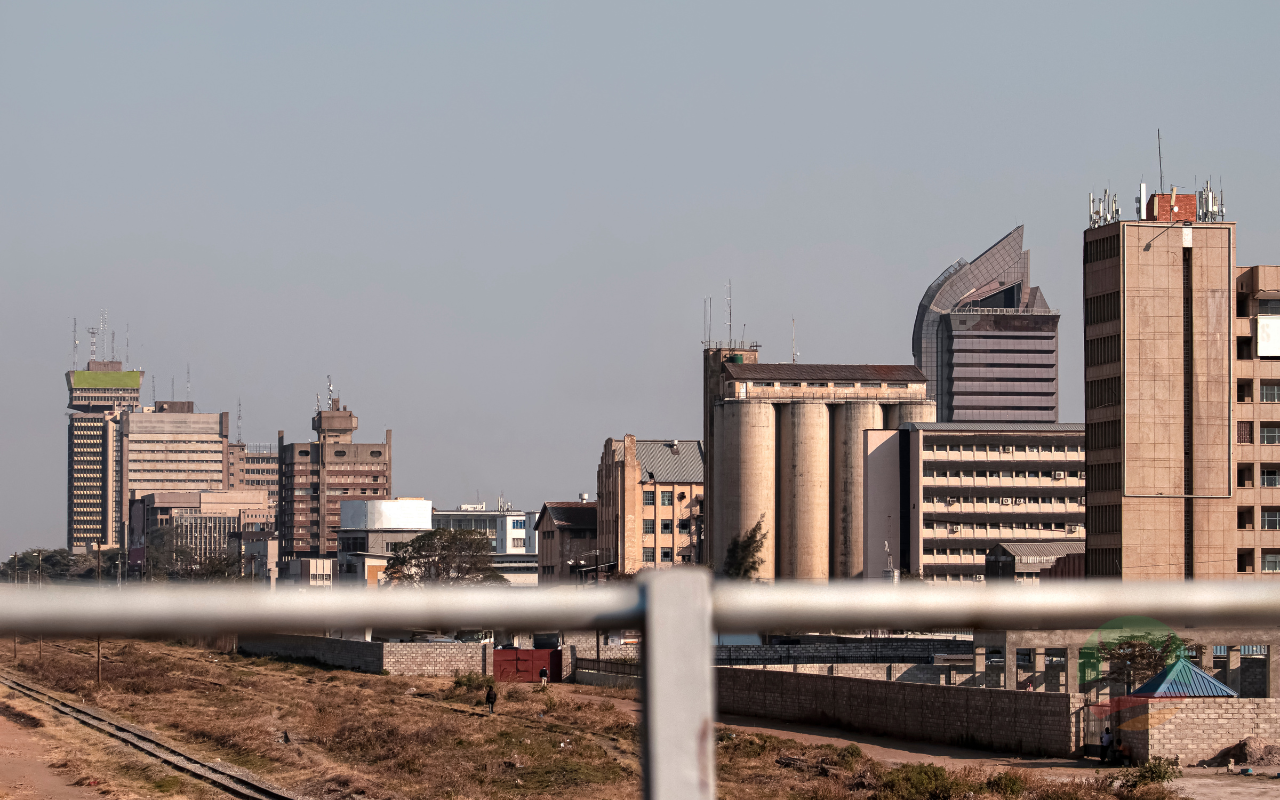
Photo: Lighton PhiriWikimedia CommonsCC BY 2.0
LUSAKA, 28 MAY 2026—Updated 8 Jul 2026
Analysis
LUSAKA — The 14-candidate Zambian presidential ballot is the most fragmented field of the constitutional 50%+1 era.
The arithmetic of that fragmentation is the single most important variable in whether 13 August produces an outright winner or a run-off.
The 50%+1 rule has only been tested once at national level, in the 2016 election. Since 2016, the constitutional requirement has shaped every campaign's strategic calculation: build alliances to clear the 50% bar in the first round, or accept the run-off and run a second-round consolidation play. Fourteen presidential candidates is a structural answer to the wrong question — it spreads the opposition vote, raises the bar for any single challenger, and increases (not decreases) the probability of a first-round result.
The mechanics are not subtle. With one incumbent and 13 challengers, the modal opposition vote share per challenger is in single digits. Kwacha News covered the constitutional rule itself in the 50%+1 explainer; the run-off mechanism in "How to challenge a Zambian presidential result"; and the live field in "Hichilema files as Zambia's presidential nominations close".
The maths
Start with the constraint. To win in the first round, a candidate needs more than 50% of valid votes cast. Anything else — even 49.99% — triggers a run-off between the top two. The structural advantage of incumbency, in this framework, is that the incumbent always knows their floor; the opposition has to assemble a coalition or a single dominant challenger.
The 2026 field of 14 candidates inverts the 2021 dynamic, when the UPND fielded one consolidated challenger against the PF incumbency. Now the UPND is the incumbency, and the opposition is split across at least five visible camps: Citizens First under Harry Kalaba (operating the Orange Alliance with NDC and RDC); the Socialist Party under Fred M'membe; the National Restoration Party for Unity and Prosperity under Brian Mundubile; the Zambia Wake Up Party under Howard Kunda; and eight further candidates spanning smaller parties and independents.
The arithmetic that matters is not who comes second. It is whether the opposition's combined vote share crosses 50%. If it does, and the opposition can run a competent second-round consolidation, a run-off becomes a winnable contest. If it does not — if vote dispersion across 13 challengers leaves the incumbent at 50.1% or higher on the first-round count — the contest is over on 13 August.
The upshot: every additional challenger above two raises the structural probability of a first-round incumbent win, because each one peels off marginal voters who would otherwise have consolidated. Research from comparable two-round electoral systems in Africa demonstrates the pattern: in Senegal's 2024 election, the second-round consolidation worked because the opposition narrowed to a clear leading challenger before voting day; in Zimbabwe's 2018, a similarly fragmented field produced a first-round outcome.
What we can measure now
Three data points anchor a base-rate forecast for 13 August. First, Hichilema's 2021 first-round share was around 59.4% — well above the 50%+1 threshold — against PF's Lungu, with a smaller field. The 2021 result is the floor against which 2026 is read. Second, post-2021 governance arithmetic: the macro stabilisation story (inflation back inside band, kwacha appreciation, debt restructuring concluded) is a strength the incumbent will press, but the cost-of-living narrative is the cross-cutting counter-argument any opposition candidate can use. Third, the campaign timetable. The ECZ campaign timetable runs from 23 May to 12 August, with constituency-level scheduling — the choreography is now the variable.
Analysis from comparable African elections shows fragmented fields rarely consolidate organically in the campaign's closing weeks. Data from the past five SADC presidential contests demonstrates only one (Malawi 2020) produced a successful late-stage opposition consolidation, and that case involved a court-ordered re-run rather than a strategic withdrawal. Evidence from the Zambian 2021 cycle reveals that pre-election polling tended to under-state the eventual UPND share by 5 to 7 percentage points — a polling-bias direction that, if it persists in 2026, would matter for any tactical-vote modelling.
Every additional challenger above two raises the structural probability of a first-round incumbent win, because each one peels off marginal voters who would otherwise have consolidated.
— Kwacha News analysis, 28 May 2026
The maths in shorthand. Threshold: 50%+1 of valid votes cast. 2021 first-round Hichilema share: ~59.4% (UPND). 2026 ballot size: 14 candidates. Opposition camps visible at submission: at least 5 (Citizens First, Socialist Party, NRPUP, Zambia Wake Up Party, plus 8 smaller). Comparable SADC base rate for late-stage consolidation: 1 in 5.
What this means for the parties
For UPND, the read is simple: defend the floor. The party's job between now and 13 August is to hold its 2021 base and broaden into segments where the macro recovery story plays — urban professional, formal-sector employee, mining-corridor workforce. The 14-candidate field is a structural gift; the political work is not splitting that gift through over-confidence.
For Citizens First, the Socialist Party and the NRPUP, the strategic question is whether to seek a pre-election consolidation. The Orange Alliance under Kalaba is the closest move in that direction, but the visible signals from M'membe and Mundubile suggest neither will fold into a joint ticket. The read here: a five-camp opposition field reaching 13 August intact is the most likely scenario, which means the run-off bar is effectively raised to 50% combined.
For the smaller parties and independents, the calculation is different. The presence of a candidate name on the ballot is itself a brand-building move — even at 1-2% vote share — and the calculation is whether the long-cycle gains outweigh the short-cycle accusation of splitting the opposition. The answer for most smaller candidates has been that the long-cycle calculation wins. That is the structural reason 14 names will appear on the ballot, even though strategic logic argues for fewer.
What to watch
The first signal is whether any of the 14 candidates withdraws between now and the cut-off of campaign activity on 12 August. ECZ rules permit late withdrawal with the candidate's name remaining on the ballot — meaning the consolidation move, if it happens, is symbolic rather than mechanical. Watch for endorsement coordination in early August: if M'membe, Kalaba and Mundubile publicly align before polling, the run-off probability rises.
The second is the polling track. Independent polling has been thin in 2026; what little exists shows the incumbent above 50% but inside the margin of error. Research from comparable cycles demonstrates that polling in the final 14 days is the most informative — earlier polls struggle to capture late voter mobilisation. The data to watch is any nationally representative poll published between mid-July and 12 August.
The third is turnout. The 2021 turnout was 70.95%, unusually high for the region. A repeat of that turnout, with a fragmented opposition field, mathematically favours the incumbent. A drop in turnout — particularly among Copperbelt and Lusaka urban voters — could compress the margin enough to force a run-off. Evidence from the certified register of voters shows the youth segment as the largest single demographic; that group's turnout decision is the operationally decisive variable.
This analysis is part of Kwacha News's continuing politics coverage of the 2026 election cycle.
Frequently Asked Questions
These are the questions readers have been asking about the 14-candidate field and the 50%+1 rule. Short answers follow, drawn from the Electoral Commission of Zambia, the 2021 election results and the country's constitutional framework.
What is the 50%+1 rule?
In short, the 50%+1 rule is the constitutional requirement that a Zambian presidential candidate win more than 50% of valid votes cast to take office in the first round. The answer, simply put, is that anything less triggers a run-off between the top two candidates. The key is that the rule was introduced in the 2016 constitutional amendments and first applied that year.
How does a 14-candidate field affect the 50%+1 maths?
Research from comparable two-round electoral systems shows that field fragmentation raises the structural probability of a first-round outcome — because each additional challenger peels off marginal votes that would otherwise consolidate. Data from the 2021 Zambian cycle reveals Hichilema crossed the 50% threshold comfortably against a smaller field. The answer is that a more fragmented 2026 field actually helps the incumbent's arithmetic.
What happens if no candidate clears 50%?
According to the constitution, a run-off election is held between the top two candidates within 37 days of the first-round result. Analysis of past run-offs reveals the second-round campaign is typically a consolidation play: the trailing opposition camps endorse the leading challenger. Evidence from Zambia's 2008 and 2015 elections demonstrates the difficulty of organising a clean run-off — both produced contested results.
Why is opposition consolidation hard?
In other words, the strategic logic of single-challenger consolidation is rarely the political logic. Each opposition party has its own brand to protect, its own founder's ego in play, and its own theory of how to peel voters from the incumbent. The answer is that the costs of strategic withdrawal are private and immediate, while the gains are collective and conditional.
How accurate has Zambian polling been?
Evidence from the 2021 cycle demonstrates the eventual UPND share exceeded most pre-election polling by 5-7 percentage points. Data from comparable African contests reveals that pre-election polls tend to under-sample the urban youth segment, which has consistently been the swing demographic. The answer is that 2026 polling should be read with that historical bias in mind.
When will we know if there is a run-off?
Analysis of the ECZ timeline reveals first-round results are expected to be announced within 10 days of the 13 August vote, with a run-off — if required — held within a further 37 days. In other words, the country will know the outcome (first-round win or run-off) by late August. The key is that the run-off date is constitutionally fixed, not at the Commission's discretion.
Sources
Electoral Commission of Zambia: commission homepage, 2026 elections timetable. Republic of Zambia Constitution: 2016 Amendment Act. Wikipedia: 2026 Zambian general election and 2021 Zambian general election.
More on Politics

Hichilema wins Zambia's 2026 election for a second term
Zambia's Electoral Commission has declared Hakainde Hichilema president-elect for a second term with about 61 per cent of the vote, over Brian Mundubile's 38 per cent, as the opposition rejects the count.

Press freedom groups urge Zambia to keep the internet on
The Committee to Protect Journalists and the #KeepItOn Coalition urged Zambian authorities and telecoms operators to keep internet access open through the 13 August election, as Amnesty International called for a detained journalist's release.
The Kwacha News briefing.
Business, markets and the Zambian economy — in your inbox.

