

The fiscal case for health taxes in Zambia
Taxes on tobacco, alcohol and sugary drinks promise a double dividend — more domestic revenue and fewer non-communicable diseases. The design choices are where the argument turns.
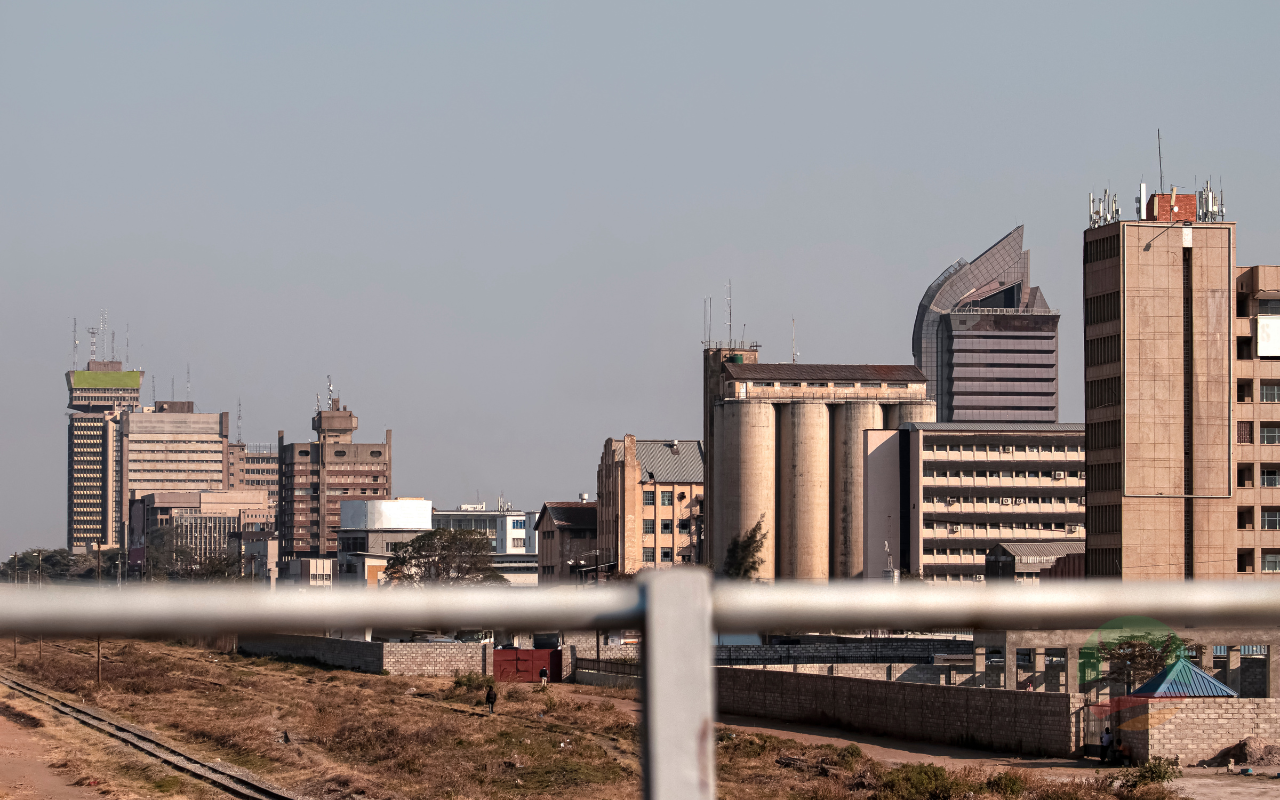
Photo: Robert RuggieroUnsplashUnsplash License
LUSAKA, 2 JUNE 2026—Updated 8 Jul 2026
Analysis
A health tax in Zambia is a single instrument that raises domestic revenue and lowers the consumption that drives non-communicable disease.
Zambia faces a dual squeeze. Debt-service obligations consume a growing share of domestic revenue, while donor support for the health sector is declining — a combination that leaves a financing gap for essential services. A levy on tobacco, alcohol and sugar-sweetened beverages addresses both pressures at once, raising revenue while curbing demand for products that fuel cancer, cardiovascular disease and diabetes, according to the World Health Organization.
The upshot: a health tax sits at the intersection of two policy goals that rarely align so neatly. The Ministry of Finance and National Planning frames the country's fiscal challenge around domestic revenue mobilisation — the effort to fund more of the budget from local taxation rather than borrowing — under the broader programme context set by the International Monetary Fund. A consumption levy on harmful products feeds that mobilisation agenda directly, and the levy does so without the political difficulty of raising broad-based taxes such as VAT.
What this means for the health sector is concrete. Donor financing for health has been a long-standing pillar of the national malaria and disease-control effort, a programme Kwacha News examined in our coverage of the malaria decline. As external funding tapers, a domestically raised health levy offers a more predictable revenue line — one less exposed to the priorities of overseas capitals. The financing pressure is acute during disease emergencies, a strain documented in the cholera-response reporting, where surge spending competes with routine primary care.
The fiscal logic also connects to the wider debt story. The same debt-service burden that constrains the health budget shapes every financing decision the Treasury makes, a dynamic visible in the debt-for-energy arrangement on the power side. A health tax will not resolve a debt restructuring, yet a fresh, ring-fence-able revenue stream strengthens the Treasury's hand at a moment when every kwacha of domestic revenue counts. Readers can follow the broader file through our health coverage.
The World Health Organization describes the mechanism as a double dividend: a well-designed excise reduces the affordability of a harmful product, consumption falls, the disease burden eases over time, and the state collects revenue in the interim. The evidence base, the WHO states, is strongest for tobacco, where a higher excise as a share of the retail price is the single most effective measure to cut use.
The counter-arguments deserve a fair hearing. Critics note that consumption taxes can be regressive, falling hardest on lower-income households who spend a larger share of earnings on the taxed goods. Industry groups warn that steep excises invite illicit trade — smuggled cigarettes and counterfeit spirits that erode both the revenue gain and the health benefit. The regressivity concern, the WHO argues, softens once the health gains and reduced medical costs accrue disproportionately to the same lower-income households, while the illicit-trade risk is a question of enforcement and tax-stamp design rather than a reason to forgo the levy.
Background
Non-communicable diseases — cardiovascular conditions, cancers, chronic respiratory illness and diabetes — account for a rising share of deaths across sub-Saharan Africa, the World Health Organization reports, and tobacco, harmful alcohol use and excess sugar are leading modifiable risk factors. A health tax, in plain terms, is an excise duty set deliberately high enough to change behaviour, not merely to collect money. The Ministry of Health carries the clinical mandate for prevention, while the Ministry of Finance and National Planning sets the duty.
The funding backdrop sharpens the case. For two decades, external partners financed a large part of Zambia's disease-control programmes. As donor envelopes shrink and debt service climbs, the gap between what the health system needs and what the budget provides is widening — the financing squeeze that makes a domestic, behaviour-changing levy attractive to fiscal planners and public-health officials alike.
What to watch
What to watch is the budget cycle and the fine print. The clearest signal will come at the next national Budget, where any new or raised excise on tobacco, alcohol or sugar-sweetened beverages would be announced. Design choices decide the outcome: whether the duty is specific (a fixed amount per unit) or ad valorem (a percentage of price), whether the rate is indexed to inflation so the deterrent does not erode, and whether part of the revenue is earmarked for health. Enforcement against illicit trade — tax stamps, customs capacity and cross-border coordination — will determine how much of the projected revenue actually reaches the Treasury.
The World Health Organization holds that taxes on tobacco, alcohol and sugar-sweetened beverages deliver a double dividend — cutting consumption of products that drive non-communicable disease while raising government revenue — and describes such measures as among the most cost-effective tools available to health and finance ministries.
— Paraphrased from the World Health Organization, <a href="https://www.who.int/health-topics/health-taxes">health taxes</a>
Key points: Zambia faces a financing squeeze as debt service rises and donor health funding falls. Health taxes on tobacco, alcohol and sugary drinks raise revenue and cut harmful consumption — the WHO double dividend. Watch the Budget, the excise design (specific vs ad valorem, inflation indexing, earmarking) and illicit-trade enforcement.
Frequently Asked Questions
These are the questions readers ask when health taxes return to the policy agenda. Short answers follow, drawn from World Health Organization guidance on health taxes, the Ministry of Finance and National Planning's domestic-revenue framing, and the Ministry of Health's prevention mandate.
What is a health tax?
In short, a health tax is an excise duty on tobacco, alcohol or sugar-sweetened beverages set high enough to discourage consumption. According to the World Health Organization, the design intent separates a health tax from an ordinary revenue tax: the data shows the goal is to raise the price of a harmful product until demand falls, with the revenue as a deliberate by-product.
How does a health tax help Zambia's budget?
The answer is domestic revenue mobilisation. Analysis of the fiscal framing from the Ministry of Finance and National Planning shows that as debt service consumes more of the budget and donor support recedes, a consumption levy on harmful goods supplies a fresh, locally raised revenue line. Evidence from the WHO reveals such excises are among the few measures that raise money and reduce future health-system costs at the same time.
Are health taxes regressive?
Simply put, the burden falls more heavily on lower-income households at the point of purchase, which is the core fairness objection. The WHO research reveals a counterweight: data shows the health gains and avoided medical costs also accrue disproportionately to lower-income households, because consumption of the taxed products and the resulting disease burden are concentrated there. The key is whether revenue is directed back to services that reach those households.
Will higher taxes fuel illicit trade?
The answer is that the risk is real but manageable. Industry groups warn that steep excises invite smuggling and counterfeiting, and the evidence shows poorly enforced regimes do leak revenue. According to WHO analysis, the determining factor is enforcement — tax stamps, customs capacity and cross-border coordination — rather than the tax rate alone, which is why design and administration matter as much as the headline figure.
What does the WHO recommend on tobacco?
In other words, tax tobacco hard. According to the World Health Organization, raising excise so that tax forms a high share of the retail price is the single most effective measure to cut tobacco use, and the evidence on price responsiveness is strongest for tobacco among the three product groups. Research shows young and lower-income consumers respond most sharply to price increases.
Sources
World Health Organization: health taxes. Ministry of Finance and National Planning: domestic revenue and fiscal framework. Ministry of Health: non-communicable disease prevention mandate.
More on Health

Ebola deaths pass 2,000 as WHO warns of deadliest outbreak
More than 2,000 people have died since the Ebola outbreak was declared on 15 May, and the WHO says it is on track to be the deadliest on record. Zambia's exposure runs through its northern border.

Zambia restarts radiotherapy after five years offline
Radiotherapy has resumed at Lusaka's Cancer Diseases Hospital after a US$31 million upgrade funded entirely from domestic resources, ending a five-year gap in advanced cancer treatment.

Zambia requires validation before new TB testing rollout
Zambia's tuberculosis laboratories are validating new diagnostic devices, including the swab-based MiniDock, before wider rollout, health officials say, as GeneXpert costs and thin facility coverage strain the testing programme.
The Kwacha News briefing.
Business, markets and the Zambian economy — in your inbox.