

Zambia turns debt savings into grid overhaul plan
A 15-year Grid Resilience Programme worth up to $275 million will channel sovereign debt savings into Zambia’s electricity distribution network, targeting the outages that have plagued homes and businesses.
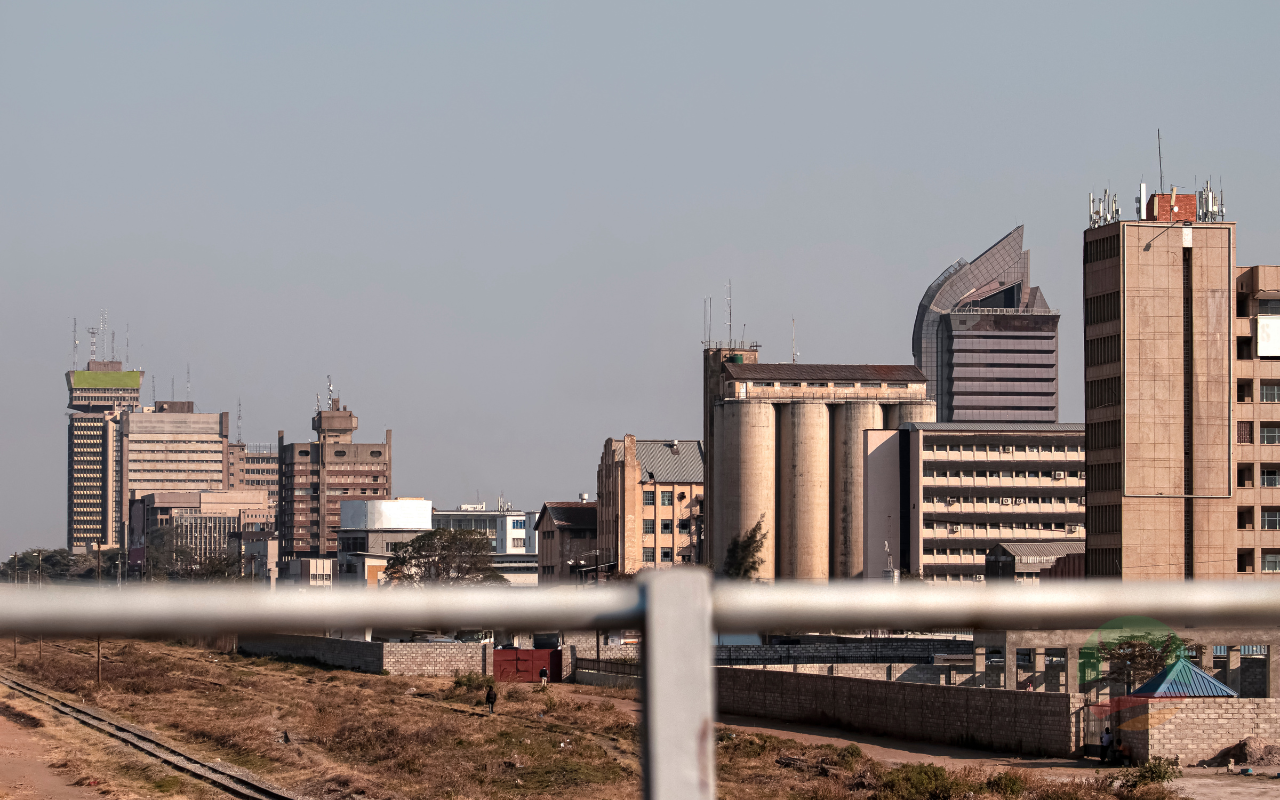
Photo: Unknown authorUnknown authorwikipediaPublic domain
LUSAKA, 17 JUNE 2026—Updated 8 Jul 2026
LUSAKA — Zambia has launched a 15-year Grid Resilience Programme that channels fiscal savings from a sovereign bond buyback into long-term investment in its electricity distribution network, presenting the initiative as a replicable blueprint for African nations grappling with both debt burdens and energy deficits.
The programme, worth up to $275 million over its lifespan, is the centrepiece of a broader fiscal manoeuvre in which the government used a $600 million loan from the African Development Bank on favourable terms to retire $1.36 billion in expensive Eurobonds. The savings generated by that swap — lower coupon payments, longer maturities — are being redirected into the grid rather than consumed by the treasury. It is a rare case of a developing country converting debt management into tangible infrastructure, and it sits at the heart of Zambia’s business and economy trajectory heading into the second half of 2026.
The initiative arrives against a backdrop of severe loadshedding driven by consecutive droughts that depleted the hydropower reservoirs on which Zambia depends for the bulk of its electricity. Households and businesses across the country have endured rolling blackouts lasting up to 18 hours a day, hammering productivity and stoking public frustration. For context on how macroeconomic conditions feed into the real economy, see Kwacha News’s earlier report on the Bank of Zambia tightening lending rules after a spike in worker loan defaults.
The debt-to-energy mechanism
At its core the Grid Resilience Programme rests on a simple fiscal arbitrage. Zambia’s outstanding Eurobonds carried high coupons that reflected the risk premium investors demanded from a country that had defaulted in 2020. By borrowing $600 million from the AfDB at concessional rates and using the proceeds to buy back $1.36 billion of those bonds, the government slashed its annual debt-servicing costs. The difference between what it was paying and what it now owes is the fiscal space that funds the programme.
The early-participation deadline for bondholders was extended to 9 June 2026, giving investors additional time to tender their holdings at the offered price. The buyback itself is significant: Zambian bonds have delivered some of the best returns of any sovereign debt in the world over the past year, meaning bondholders had a strong incentive to hold rather than sell. The terms had to be attractive enough to persuade them to part with an outperforming asset.
The AfDB loan was structured on what the bank calls favourable terms — long tenor, low interest, a grace period that gives Lusaka breathing room. That structure is what makes the whole exercise possible: without concessional money on one side, the savings on the other side would not materialise, and the grid programme would have no funding source.
What the programme will do
Critically, the Grid Resilience Programme targets electricity distribution, not generation. Zambia’s generation challenges — principally the vulnerability of its hydropower fleet to drought — are being addressed through separate solar and renewable procurement rounds. This programme focuses on the wires, substations, transformers and metering infrastructure that carry power from the generators to homes and businesses.
The rationale is straightforward. Even when Zambia has enough generation capacity, distribution losses eat into what reaches consumers. Old transformers blow. Overloaded feeders trip. Unmetered connections bleed revenue. The cumulative effect is that the utility loses power it has already generated and paid for, customers suffer outages that have nothing to do with the water level at Kariba, and prospective renewable-energy projects cannot connect because the local grid cannot absorb their output.
Zambia’s bold approach of linking sovereign debt management with targeted energy infrastructure investment offers a replicable model for other African nations facing similar challenges of high debt burdens and inadequate power infrastructure.
— <a href="https://www.dailymaverick.co.za/article/2026-06-07-zambias-bold-debt-for-energy-blueprint-a-new-model-for-african-development-/">Daily Maverick</a>, 7 June 2026
By investing in strengthening and modernising the distribution network, the programme aims to cut technical and commercial losses, reduce the frequency and duration of outages unrelated to generation shortfalls, create headroom for new customer connections in underserved areas, and make it physically possible for new renewable-energy projects to feed power into the grid. Each of those outcomes has a direct economic payoff: less wasted power, more billable units, wider electrification, and a pipeline of clean energy that can gradually reduce the country’s dependence on rain.
Governance and implementation
The programme will be coordinated by GreenCo Power Services, a subsidiary of the Africa GreenCo Group, which operates as an intermediary buyer and seller of electricity in southern and east Africa. GreenCo’s role is to bring private-sector discipline to a project that sits inside the public-sector energy system.
Implementation will be managed by an independent entity staffed by private-sector professionals. Its board will be led by private-sector representatives together with government appointees, a structure designed to insulate day-to-day decisions from political interference while keeping the government — which ultimately owns the grid — at the table.
Key numbers: The AfDB lent Zambia $600 million at concessional rates. That money retired $1.36 billion in expensive Eurobonds. The annual debt-service savings fund a Grid Resilience Programme worth up to $275 million over 15 years. The programme targets electricity distribution — substations, transformers, feeders and metering — not generation. GreenCo Power Services coordinates; an independent, private-sector-led board governs.
This governance model matters because Zambia’s power sector has a mixed record on large infrastructure programmes. Political cycles, procurement delays and capacity constraints at ZESCO, the state utility, have slowed past projects. By placing the Grid Resilience Programme under a ring-fenced entity with private-sector leadership, the design attempts to sidestep those obstacles. Whether it succeeds will depend on how genuinely independent the board is in practice and whether its procurement processes withstand scrutiny.
A replicable African model
What distinguishes this initiative from a conventional infrastructure loan is the explicit link between debt management and capital investment. Many African governments have refinanced expensive debt in recent years, but the savings typically disappear into general expenditure. Zambia’s decision to earmark the savings for a specific infrastructure programme — with a named coordinator, an independent governance structure and a 15-year horizon — is being presented as a template other sovereigns could follow.
The logic is appealing: if a country can refinance its debt at better rates, it generates fiscal headroom. If that headroom is ring-fenced for infrastructure with measurable returns — fewer outages, lower losses, more connections — the investment should eventually pay for itself through higher utility revenues and broader economic activity. The grid becomes an asset that services the new, cheaper debt, rather than a drain on a treasury still servicing the old, expensive debt.
For Zambia, the stakes are especially high. The country’s electricity system is heavily dependent on hydropower, and consecutive droughts have exposed that vulnerability in painful detail. The Lobito Corridor copper route and mining expansion plans all assume reliable power. A grid that cannot deliver it undermines not just household welfare but the investment case for the copper economy on which the kwacha ultimately depends.
International observers, including the Daily Maverick, have described the approach as bold, noting that it converts a sovereign debt headache into a power grid. The Zambian Observer framed it as a blueprint. Whether it lives up to that billing will depend on execution over the next decade and a half — but the architecture, at least, is more rigorous than most African infrastructure announcements.
Frequently Asked Questions
Readers have been asking how this programme works and what it means for loadshedding. Here are the key questions and short answers drawn from official statements and reporting by the Daily Maverick and the Zambian Observer.
What is the Grid Resilience Programme?
In short, it is a 15-year national initiative worth up to $275 million that invests in strengthening Zambia’s electricity distribution network — the substations, transformers, feeders and meters that carry power to homes and businesses. It is funded by savings generated when the government swapped expensive Eurobonds for a cheaper AfDB loan.
Will this end loadshedding?
Simply put, the programme alone will not end loadshedding caused by drought-driven generation shortfalls. It targets the distribution side — cutting losses, reducing outages caused by ageing infrastructure and creating capacity for new renewable connections. Generation diversification is being handled through separate solar and procurement programmes. Together, they form a two-pronged strategy.
How is the programme funded?
The answer is debt arbitrage. Zambia borrowed $600 million from the African Development Bank at concessional rates and used it to buy back $1.36 billion in high-coupon Eurobonds. The annual savings on debt-service payments fund the programme over 15 years without requiring new taxes or additional borrowing.
Who runs the programme?
In short, GreenCo Power Services coordinates, and an independent entity staffed by private-sector professionals implements. The board is led by private-sector representatives alongside government appointees, a structure designed to keep day-to-day decisions insulated from political cycles while maintaining public accountability.
Can other African countries copy this model?
The answer is yes in principle. Any sovereign that can refinance expensive debt at better rates generates fiscal headroom. If that headroom is ring-fenced for infrastructure with measurable returns, the investment can eventually pay for itself. Zambia’s innovation is the explicit earmarking, the independent governance and the named coordinator — features other nations could replicate if their debt profiles allow a similar refinancing.
Sources
Daily Maverick: Zambia’s bold debt-for-energy blueprint — a new model for African development (7 June 2026). Zambian Observer: How to turn a sovereign debt headache into a power grid. Ministry of Finance and National Planning: official statement on the Grid Resilience Programme. Kwacha News coverage: Zambia bonds deliver world-best returns, Bank of Zambia tightens lending rules, Lobito Corridor copper route.
More on Business & Economy

Guinea bans raw gold exports as Africa pushes local refining
Guinea has banned raw gold exports and now demands local refining, African Business reported. For Zambia, whose copper still leaves largely unprocessed, the move sharpens a long-running question about where the value is captured.

Zambia cuts fuel prices again as shop prices stay high
Zambia's Energy Regulation Board cut pump prices for a third straight month in August 2026, but transport fares and food prices remain high and non-food inflation is rising.
The Kwacha News briefing.
Business, markets and the Zambian economy — in your inbox.

