

Zambia's trade surplus narrows to K4.2bn as imports jump
Exports slipped 1.6% in June while imports rose 10.2%, driven by a 57.1% jump in the consumer goods bill. Total trade for the half year is down 6% on 2025.
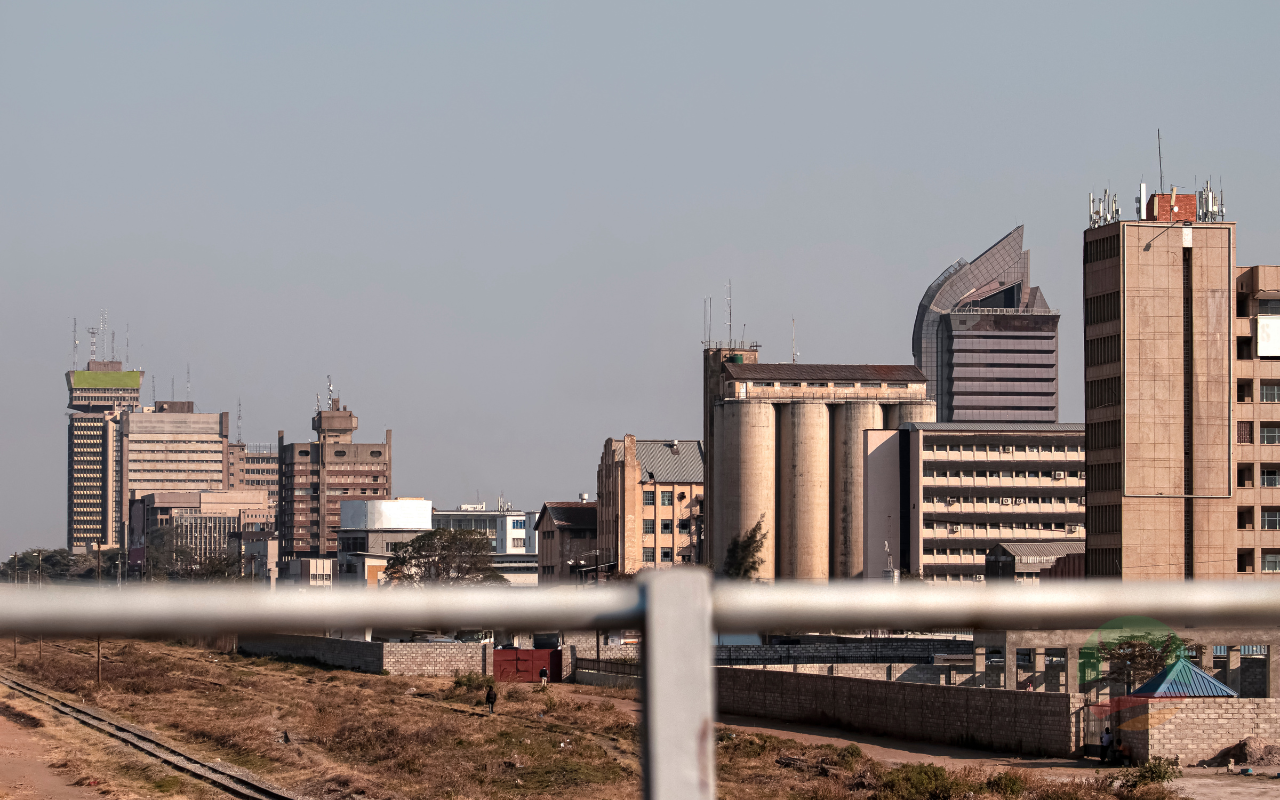
Photo: Hennie StanderUnsplashUnsplash License
LUSAKA, 6 AUGUST 2026—Updated 6 Aug 2026
LUSAKA — Zambia's merchandise trade surplus is K4.2 billion for June 2026, down from K7.0 billion in May, as a rising import bill outpaced a small fall in export earnings.
A narrowing surplus matters beyond the accounts. Zambia's external position is what funds imported fuel, fertiliser and medicines, and it underwrites the exchange-rate stability that has driven inflation down from 13.0% a year ago. A surplus cut by 40% in a single month is a signal worth reading closely eight days before a general election.
What the figures show
The country recorded a trade surplus of K4.2 billion in June 2026 compared to the surplus of K7.0 billion recorded in May 2026.
— Zambia Statistics Agency, <a href="https://www.zamstats.gov.zm/wp-content/uploads/2026/07/Vol-280-of-2026-The-Monthly-July-final-1.pdf">The Monthly, Volume 280, July 2026</a>
Exports, mainly domestically produced goods, decreased by 1.6% from K30.1 billion in May 2026 to K29.6 billion in June. The Zambia Statistics Agency attributed that to lower export earnings from raw materials, down 10.4%, intermediate goods, down 0.3%, and capital goods, down 17.3%.
Imports rose 10.2% from K23.1 billion in May to K25.4 billion in June. The largest single movement was in consumer goods, where the import bill rose 57.1%. Raw material imports rose 19.5% and intermediate goods 1.4%.
Zambia's monthly trade balance, 2026 (K'billion) — Jan: exports 27.6, imports 22.9, balance 4.7. • Feb: 27.2 / 21.6, balance 5.7. • Mar: 25.0 / 24.1, balance 0.9. • Apr: 25.4 / 21.9, balance 3.5. • May: 30.1 / 23.1, balance 7.0. • Jun: 29.6 / 25.4, balance 4.2. • First half total: exports 165.0, imports 139.0, balance 26.1.
The consumer goods question
The 57.1% jump in the consumer goods import bill is the line that stands out. Consumer goods imports rise when domestic demand strengthens, when the currency makes imports cheaper, or when local production fails to meet demand. All three readings carry different policy implications, and the June bulletin does not separate them.
The fall in capital goods exports, at 17.3%, points the other way. Capital goods are a small share of Zambian export earnings, which remain dominated by copper, so a sharp percentage move on that line shifts the total less than the raw materials decline of 10.4%.
A smaller year overall
Cumulative total trade for January to June 2026 was K304.0 billion, against K323.5 billion in the same period of 2025 — a decrease of 6.0%. Total exports across all modes of transport were K165.0 billion for the half year, against imports of K139.0 billion, leaving a first-half surplus of K26.1 billion.
By volume, Zambia moved 5.0 million tonnes of exports and 5.6 million tonnes of imports in the six months. That Zambia ships out less tonnage than it brings in, while still running a surplus in value, is the shape of a copper economy: high value per tonne going out, bulk goods coming in. The second quarter surplus of K14.8 billion was nonetheless wider than the first quarter's K11.3 billion.
Background
Copper is the variable that decides these numbers. Kwacha News has reported on the gap between copper volumes and the returns Zambia captures from them, and on the International Energy Agency's warning of a global copper deficit that would lift the price Zambian exports fetch.
The external position also shapes what Zambia can negotiate. The country is expected to seek a new arrangement with the International Monetary Fund after the vote, as set out in the report on Zambia's IMF programme pivot. This report is part of Kwacha News's business and economy coverage.
What to watch
Watch whether the consumer goods surge is a one-month spike or the start of a trend, because a sustained import bill at that level would eat the surplus within a quarter. Watch the copper price, which sets the export line. And watch the July and August bulletins for whether the 6.0% fall in total trade against 2025 persists into the second half.
Frequently Asked Questions
What is a trade surplus?
In short, a trade surplus means a country exports more by value than it imports. Simply put, more money comes in from selling goods abroad than goes out buying them. The key is that the surplus is what supplies the foreign currency a country needs to pay for the imports it cannot produce.
How much did Zambia's surplus fall?
The answer is from K7.0 billion in May 2026 to K4.2 billion in June, a fall of K2.8 billion. Data from the Zambia Statistics Agency shows imports rising 10.2% to K25.4 billion while exports fell 1.6% to K29.6 billion. The surplus narrowed because the two lines moved in opposite directions.
Why did imports rise so sharply?
According to the bulletin, the consumer goods import bill rose 57.1%, with raw materials up 19.5% and intermediate goods up 1.4%. In other words, the increase was led by finished goods rather than by inputs for industry. The evidence does not by itself distinguish stronger domestic demand from weaker domestic production.
Who is affected by a narrowing surplus?
Importers, borrowers and anyone holding kwacha. Research on small open economies shows the external balance feeding through to the exchange rate, and from there to the price of fuel and fertiliser. The key is that a surplus which narrows gradually is manageable, while one that flips to deficit changes the currency picture quickly.
What are the real risks in these trade numbers?
Analysis of the June data reveals three durable risks. Total trade is already 6.0% smaller than a year earlier, so the economy is transacting less across borders. The import surge is concentrated in consumer goods, which do not build future export capacity. And export earnings remain tied to a single commodity, which means one price move carries the whole balance. Each risk is structural rather than seasonal.
Sources
Zambia Statistics Agency: The Monthly, Volume 280, July 2026, International Merchandise Trade section, and the monthly bulletin series. Trade data are compiled on the General Trade System; June 2026 figures are provisional.
More on Business & Economy

Guinea bans raw gold exports as Africa pushes local refining
Guinea has banned raw gold exports and now demands local refining, African Business reported. For Zambia, whose copper still leaves largely unprocessed, the move sharpens a long-running question about where the value is captured.

Zambia cuts fuel prices again as shop prices stay high
Zambia's Energy Regulation Board cut pump prices for a third straight month in August 2026, but transport fares and food prices remain high and non-food inflation is rising.
The Kwacha News briefing.
Business, markets and the Zambian economy — in your inbox.

