

Ramaphosa impeachment inquiry holds its first sitting
A 31-member parliamentary committee has begun examining whether South Africa’s president should be removed over the Phala Phala scandal — the first time a sitting president has faced the process, and a test of regional stability Zambia is watching.
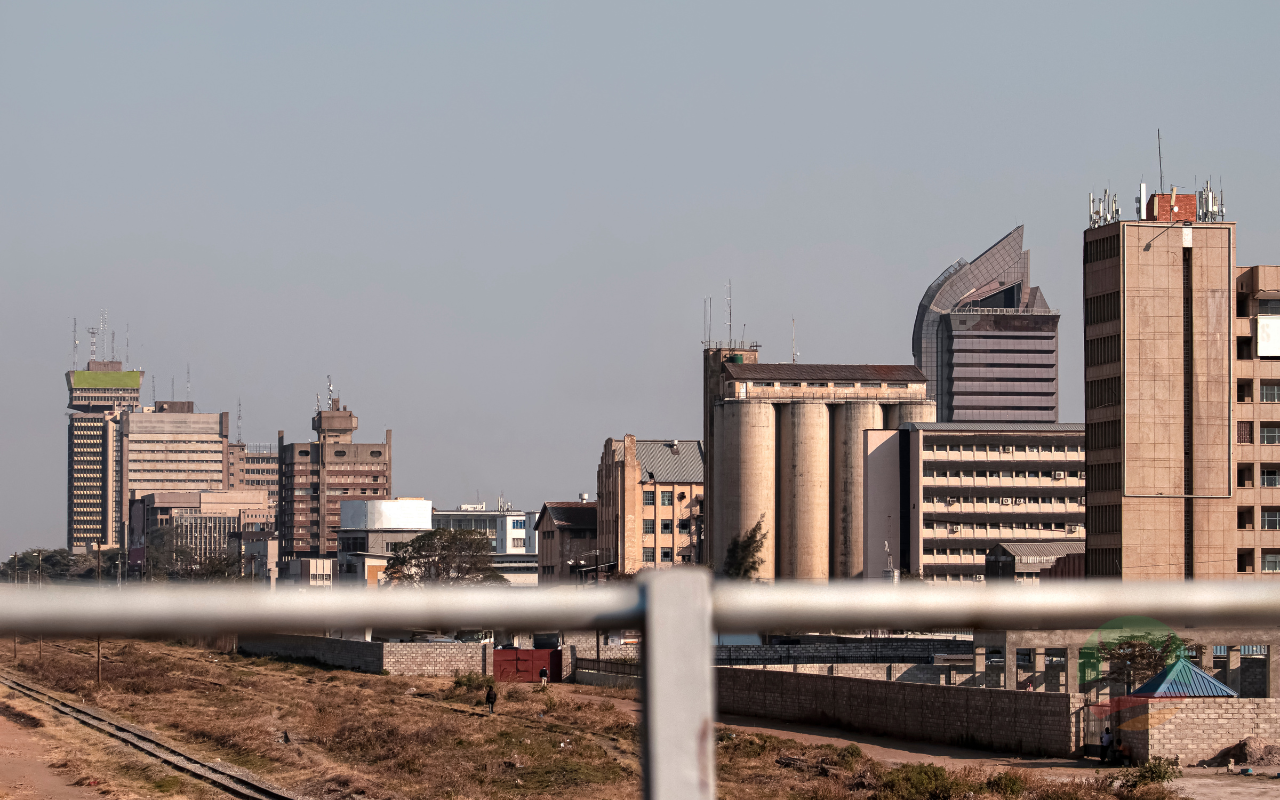
Photo: Diego DelsowikidataCC BY-SA 4.0
LUSAKA, 3 JUNE 2026—Updated 8 Jul 2026
CAPE TOWN — A committee of South Africa's parliament has opened an impeachment inquiry into President Cyril Ramaphosa — the first time a sitting president is being put through the process.
For Zambia, the inquiry is more than a neighbour's drama. South Africa is the region's largest economy and a top trading partner, home to a large Zambian diaspora; political turbulence in Pretoria moves the rand, ripples through cross-border trade and unsettles the wider Southern African market. Kwacha News has tracked the strain in the relationship in its reporting on anti-migrant tensions and SADC free movement.
The 31-member committee held its first sitting on Monday, marking the first occasion in South Africa's democratic era that a sitting president has faced a formal parliamentary impeachment process. The inquiry stems from the Phala Phala affair, in which more than $500,000 was stolen from Ramaphosa's game farm in Limpopo in 2020 — money whose source and concealment opposition parties say the president never properly explained.
The committee exists because the courts ordered it. South Africa's Constitutional Court ruled in May that parliament had to act on the matter, reviving a process the governing party had earlier shut down. Seats on the committee were allocated in proportion to each party's strength in the National Assembly, and the African National Congress (ANC) holds only nine of the 31 — a consequence of losing its outright majority in the 2024 election. The arithmetic means the governing party cannot protect the president on its own.
That is the central fact of the inquiry: the ANC no longer controls the room. To shield Ramaphosa from an adverse finding, it would need votes from outside its own benches; to remove him, the opposition would need to hold together. Al Jazeera, which has followed the case, reported that the committee must now elect a chairperson and set a programme of work before it weighs the evidence. The process is expected to run for months, not weeks.
Impeachment is a high bar. Section 89 of South Africa's Constitution allows removal only for a serious violation of the constitution or law, serious misconduct, or inability to perform the functions of office, and it requires a two-thirds vote of the National Assembly. Reaching that threshold is a steep climb. But the inquiry alone — public, evidence-led, beyond the governing party's control — is a constraint on a sitting president that South Africa has not seen before.
Background
The Phala Phala scandal takes its name from Ramaphosa's farm, where a theft in 2020 exposed large sums of undeclared foreign currency. The affair has shadowed the president since 2022, when a panel found he may have had a case to answer. A first impeachment move stalled in parliament; the Constitutional Court's 2026 ruling forced the question back open.
South Africa's politics changed shape in 2024, when the ANC lost the parliamentary majority it had held since 1994 and entered a government of national unity. The reduced majority is why the impeachment committee is not a formality: no single party commands it, and outcomes depend on shifting alliances rather than a guaranteed bloc.
Zambia and South Africa are bound by trade, migration and finance. South African banks, retailers and mining houses operate across Zambia; Zambian workers and traders move south; the rand and the broader regional market shape conditions at home. Kwacha News has reported on the cross-border mining economy, including illegal mining links between Johannesburg and the Copperbelt.
This is the first time in our democratic history that a sitting president has faced a formal parliamentary impeachment inquiry.
— A characterisation of the committee's first sitting, as reported by Al Jazeera
Snapshot: A 31-member committee of South Africa's parliament held the first sitting of an impeachment inquiry into President Cyril Ramaphosa on Monday, over the 2020 Phala Phala theft of more than $500,000. The committee was convened after a May Constitutional Court ruling. The governing ANC holds just nine of 31 seats. Removal under Section 89 needs a two-thirds vote — a high bar — and the process is expected to take months. Zambia, a major trading partner, is watching.
What to watch
The first marker is the committee's leadership and timetable. Analysis of the process shows the choice of chairperson and the rules of evidence will shape how far the inquiry reaches. Data on parliamentary committees reveals that procedure, not just politics, often decides such cases. A contested chair vote would signal an inquiry the governing party cannot steer.
The second marker, for Zambian readers, is the rand and regional sentiment. Evidence from past South African shocks shows political uncertainty weakens the currency and tightens cross-border conditions. This story is part of Kwacha News's continuing Africa coverage, where the health of the region's largest economy is a standing concern for Zambia.
Frequently Asked Questions
These are the questions readers have raised since the impeachment committee first sat. Short answers follow, drawn from the committee's proceedings, the South African Constitution and reporting by Al Jazeera.
What is the Ramaphosa impeachment inquiry?
In short, it is a parliamentary committee examining whether President Cyril Ramaphosa should be removed over the Phala Phala scandal. The answer, simply put, is the first formal impeachment inquiry into a sitting South African president. The key is that it was convened on the order of the Constitutional Court.
What is the Phala Phala scandal?
Research on the affair shows that more than $500,000 was stolen from Ramaphosa's Limpopo farm, Phala Phala, in 2020, exposing large sums of undeclared currency. Data from a 2022 panel revealed the president may have a case to answer. In other words, the inquiry turns on the source and concealment of that money.
Can parliament actually remove the president?
According to Section 89 of South Africa's Constitution, removal requires a two-thirds vote of the National Assembly for a serious violation, serious misconduct or inability to govern. Evidence shows that is a high bar. The answer is that removal is possible but difficult; the inquiry's immediate effect is scrutiny, not certain removal.
Why does the ANC not control the committee?
Data from the 2024 election shows the ANC lost its parliamentary majority and now holds only nine of the committee's 31 seats. The key is that no single party commands the room. In other words, the governing party would need outside votes to shield the president, and the opposition would need unity to remove him.
Why should Zambians follow this?
South Africa is the region's largest economy and a major trading partner, and analysis shows its political shocks move the rand and regional markets. The answer, simply put, is that instability in Pretoria reaches Zambian trade, finance and the diaspora. The key is regional exposure: what happens to the rand and to SADC stability matters at home.
Sources
Al Jazeera: South African president to face impeachment probe and the Constitutional Court reviving the inquiry. Regional coverage via AllAfrica. The Phala Phala facts, the Section 89 removal procedure and the committee's composition are drawn from these reports and South Africa's Constitution.
More on Africa/World

TAZARA at 50: Zambia weighs two routes to the sea
As TAZARA turns 50, landlocked Zambia is weighing two rival routes for its copper: east to the Indian Ocean via a rebuilt TAZARA, or west to the Atlantic via the Lobito Corridor.

African leaders back trade insurer ATIDI after record year
African leaders endorsed ATIDI — the pan-African insurer Zambia belongs to — as a cornerstone of a new African-led financial architecture, as the body marked 25 years with record 2025 results and a call to recapitalise it to US$2 billion.
The Kwacha News briefing.
Business, markets and the Zambian economy — in your inbox.
