

Railway revival sweeps Southern Africa as Zambia eyes TAZARA
A region-wide push to rebuild rail corridors is reaching Zambia, where President Hichilema has pledged a further $1.6 billion for the Tanzania-Zambia line if voters return him to office in August.
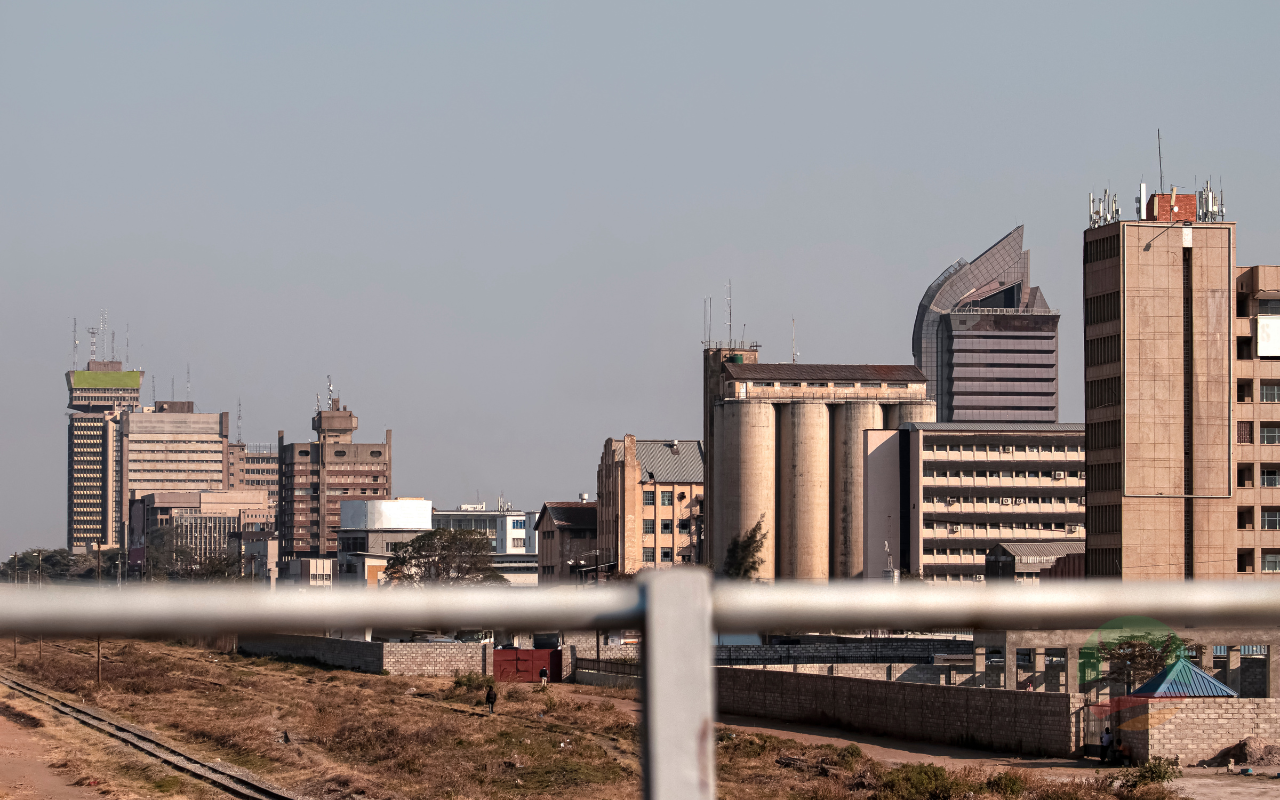
Photo: ZANISzanisGovernment of Zambia — editorial use
LUSAKA, 8 JULY 2026—Updated 8 Jul 2026
LUSAKA — A wave of railway investment sweeps across Southern Africa, and Zambia's TAZARA line is central to the country's share of it.
African Business, the Africa-focused trade publication, mapped the region's rail resurgence in a report published on 8 July. Zambia's own stake in that resurgence had already sharpened on 6 July, when President Hakainde Hichilema pledged a further $1.6 billion recapitalisation of the Tanzania-Zambia Railway Authority (TAZARA) line if voters return him to office at the 13 August general election.
A regional rail wave
South Africa, the Southern African Development Community's biggest economy, opened its freight rail network to private train operators in mid-May, the continent's biggest rail reform in decades, African Business reported. The reform matters well beyond South Africa's own borders. The country runs more than 20,000 km of track, the largest freight rail network on the continent, carrying exports from mining, automotive manufacturing and agriculture.
The North-South Corridor, which links the Democratic Republic of Congo and Zambia to South Africa, has drawn parallel upgrades. Zambia and Zimbabwe have prioritised new rolling stock and track repairs on their sections. Transnet, South Africa's state rail and ports operator, is separately adding signalling systems, cargo-handling capacity and dedicated freight lines on its own northern routes, African Business reported.
Further north and west, the Lobito Corridor — running from the Angolan port of Lobito through the Democratic Republic of Congo to Zambia — has been conceded to a private consortium, the Lobito Atlantic Railway, backed by commodities trader Trafigura, construction group Mota-Engil and rail operator Vecturis. The concession is expected to draw close to $500 million in upgrades. The Africa Finance Corporation (AFC), the project's lead developer, called for contractor proposals on the Zambian leg by the end of May, after completing a feasibility study, according to the report.
This is the most exciting thing I've seen happen in Africa in years.
— Mahesh Kotecha, president, Structured Credit International Corporation, <a href="https://african.business/2026/07/trade-investment/southern-africas-railway-revolution">quoted by African Business</a>, 8 July 2026
The corridor already carries copper. Kamoa-Kakula, the Democratic Republic of Congo's largest and highest-grade copper mine — a joint venture between Canada's Ivanhoe Mines, China's Zijin Mining and the Congolese government — became the Lobito line's first industrial user in 2023 and has since agreed to move up to 240,000 tonnes of copper concentrate a year on it, roughly halving the haul to the coast compared with the previous trucking route to Durban. Zambia's own copper sector is watching closely: KoBold's $2 billion Mingomba project, breaking ground on the Copperbelt, will eventually need the same export capacity that the North-South and Lobito corridors are being built to supply.
Zambia's TAZARA revival
TAZARA is the region's oldest example of rail built as strategic infrastructure. The 1,860 km line between Dar es Salaam in Tanzania and New Kapiri Mposhi in Zambia's Copperbelt was completed in 1975, built with 320 bridges and 22 tunnels by a workforce of 50,000 Africans and 25,000 Chinese labourers. Its original purpose was to give Zambia a copper export route that avoided apartheid-era South Africa and the white-minority-ruled territories then surrounding it.
TAZARA's traffic declined once South Africa's routes opened up after 1994. A tripartite agreement between Zambia, Tanzania and China in 2025 changed that trajectory, committing $1.4 billion to a three-year rehabilitation programme already under way, African Business reported. The programme targets freight growth from a current 400,000 tonnes a year to more than 2.4 million tonnes within four years, alongside a cut in transit time between Dar es Salaam and New Kapiri Mposhi from seven to ten days down to under five, and passenger journeys to under 72 hours.
Hichilema layered a further pledge onto that programme while campaigning at Kapiri Mposhi's TAZARA station on 6 July. He promised a $1.6 billion recapitalisation of the railway if re-elected, plus $65 million for a new dry port at Kapiri Mposhi, according to the Zambia News and Information Services (ZANIS). The president framed the investment as part of a plan to turn Kapiri Mposhi into an economic hub, with a full overhaul of the workshops and renovated operations bringing former TAZARA employees back onto the payroll.
Only those who want to be retired will go, otherwise everyone will be brought back on board.
— President Hakainde Hichilema, addressing former TAZARA workers at Kapiri Mposhi, <a href="https://www.zanis.gov.zm/?p=4802">quoted by ZANIS</a>, 6 July 2026
The pledge sits inside a wider Zambian infrastructure push that has, this year, also covered roads. The Ndola-Lusaka dual carriageway, for instance, is partly underwritten by a $300 million pension-fund stake from NAPSA. Rail and road are being pitched as complements rather than rivals, with TAZARA positioned to carry the bulk minerals and containers that road transport struggles to move cheaply over long distances.
TAZARA in numbers. Length: 1,860 km, Dar es Salaam to New Kapiri Mposhi. Built: completed 1975, with 320 bridges and 22 tunnels. Current freight: about 400,000 tonnes a year. Target freight: over 2.4 million tonnes within four years of the rehabilitation programme. Current transit time: 7 to 10 days. Target transit time: under 5 days for freight, under 72 hours for passengers. 2025 tripartite investment: $1.4 billion, from Zambia, Tanzania and China. Hichilema's 6 July pledge: a further $1.6 billion recapitalisation plus $65 million for a Kapiri Mposhi dry port, contingent on re-election.
Why the region is betting on rail
Investment sweeps well beyond TAZARA and the Lobito Corridor. The Chicualacuala-Dabuka section of the Limpopo Railway, linking Maputo in Mozambique to Zimbabwe, is being upgraded to move Botswana's coal. A proposed Mmamabula-Lephalale corridor would connect Botswana's coal reserves to South Africa's power stations and onward to Zambia and the Congo via the North-South Corridor. The Nacala Corridor, a $4.5 billion Mozambique-Malawi-Zambia project running since 2016, is drawing renewed Japanese interest as an alternative route for the region's minerals to reach Asia, African Business reported.
The Southern African Development Community (SADC) has pitched these upgrades as aligned with the African Continental Free Trade Area's push for cheaper, more reliable regional logistics. For Hichilema, the TAZARA pledge extends a campaign message built around infrastructure delivery: he has made similar pitches elsewhere on the campaign trail, telling voters in Zambezi to judge his government on its economic record. Kapiri Mposhi, a transport and logistics town straddling the line between the Copperbelt and Lusaka, is both a TAZARA terminus and the site of the planned dry port.
Background
TAZARA has always carried strategic weight beyond haulage figures. It was one of China's earliest and largest infrastructure commitments in Africa, built at a moment when landlocked, copper-dependent Zambia had few alternative export routes. Half a century on, the line is being asked to do a similar job: easing Zambia's reliance on congested road corridors and reducing dependence on routes that run through South Africa alone.
TAZARA's own management has said it wants investment beyond track and rolling stock, including manufacturing zones near stations, agro-processing facilities and inland container depots along the corridor, intended to convert a transit line into a competitive economic belt. Some backers see the railway eventually forming part of the proposed Trans-Africa Railway, a $13 billion, 7,800 km line that would connect Dar es Salaam to Djibouti.
What to watch: whether the $1.4 billion tripartite rehabilitation hits its four-year freight and transit-time targets; whether Hichilema's $1.6 billion pledge survives contact with the ballot box on 13 August; and whether the Africa Finance Corporation reaches financial close on the Zambian leg of the Lobito Corridor, targeted for the fourth quarter of 2027. Zambia eyes cheaper freight on both its eastern and western export routes as the recapitalisation moves forward, part of Kwacha News's Africa/World coverage of the region's infrastructure push.
Sources
African Business: "Southern Africa's railway revolution," 8 July 2026. Zambia News and Information Services (ZANIS): "TAZARA recapitalisation to be actualised — President Hichilema," 6 July 2026.
Frequently Asked Questions
These are the questions readers have been asking since Hichilema's Kapiri Mposhi pledge and the African Business report on the region's rail corridors. Short answers follow, drawn from ZANIS and African Business reporting.
What is TAZARA?
In short, TAZARA is the Tanzania-Zambia Railway Authority, which runs a 1,860 km line between Dar es Salaam and New Kapiri Mposhi. The answer, simply put, is that it was built in the 1970s to give landlocked, copper-producing Zambia an export route that bypassed apartheid-era South Africa. The key is that TAZARA remains the most direct rail link between the Zambian Copperbelt and the Indian Ocean.
How does the TAZARA recapitalisation work?
TAZARA's rehabilitation runs on two tracks. A 2025 tripartite agreement between Zambia, Tanzania and China put $1.4 billion behind a three-year rehabilitation programme already under way. Data from African Business shows the programme targets freight growth from 400,000 to over 2.4 million tonnes a year. Hichilema's 6 July pledge of a further $1.6 billion, reported by ZANIS, would extend that work if he wins re-election.
Why is the Lobito Corridor different from TAZARA?
TAZARA runs east, to the Indian Ocean. The Lobito Corridor runs west, to the Atlantic, through Angola. According to African Business, the Lobito line now operates under a private concession, while TAZARA remains under the tripartite Zambia-Tanzania-China authority structure. The answer is that the two corridors are not rivals so much as alternative exits for the same Copperbelt minerals, letting shippers choose the shorter or cheaper route.
Who does Southern Africa’s rail revival affect?
The upgrades affect miners, farmers and manufacturers who need to move bulk freight, in other words anyone shipping copper, cobalt, coal or grain across borders. The immediate winners are exporters near the Copperbelt and inland Southern Africa, while the constraint is timing: most of the projects, including TAZARA's own rehabilitation, are multi-year programmes still under construction.
What are the real risks of the recapitalisation push?
Analysis of the region's rail history shows durable risks. Financing can stall before reaching financial close, as the Lobito Corridor's own Zambia-leg contracting process shows. Political pledges such as Hichilema's are contingent on election outcomes. Evidence from the Nacala Corridor, where an original backer exited the project entirely, reveals that even operating lines can change ownership mid-stream. Each risk is a financing or delivery risk, not evidence that demand for rail capacity is overstated.
More on Africa/World

TAZARA at 50: Zambia weighs two routes to the sea
As TAZARA turns 50, landlocked Zambia is weighing two rival routes for its copper: east to the Indian Ocean via a rebuilt TAZARA, or west to the Atlantic via the Lobito Corridor.

African leaders back trade insurer ATIDI after record year
African leaders endorsed ATIDI — the pan-African insurer Zambia belongs to — as a cornerstone of a new African-led financial architecture, as the body marked 25 years with record 2025 results and a call to recapitalise it to US$2 billion.
The Kwacha News briefing.
Business, markets and the Zambian economy — in your inbox.
