

Bank of Zambia trims policy rate to 13.25% in May
A third consecutive cut, smaller than February’s move, leaned on a favourable maize outlook and a strong kwacha — and surprised economists who expected a hold.
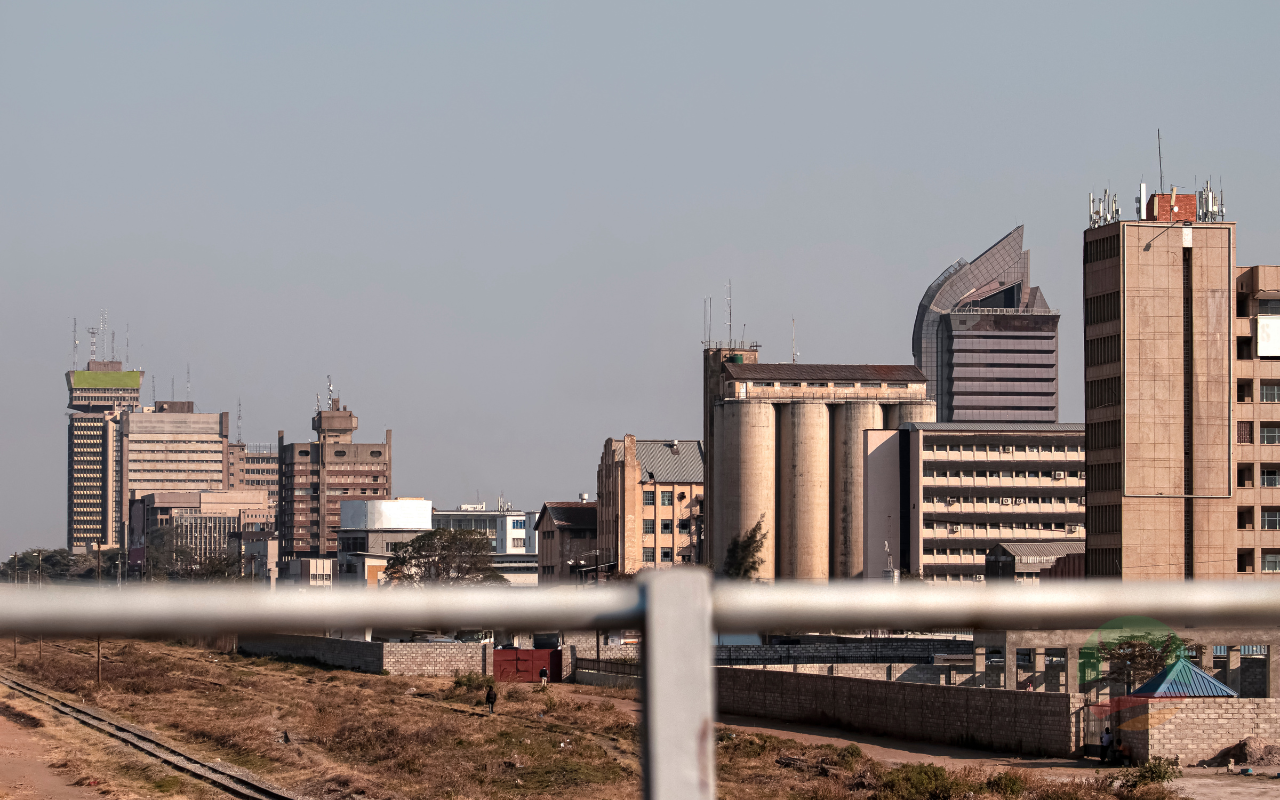
Photo: ChongkianwikidataCC BY-SA 4.0
LUSAKA, 21 JUNE 2026—Updated 8 Jul 2026
LUSAKA — The Bank of Zambia’s policy rate is now 13.25% after the central bank cut it by 25 basis points on 13 May 2026, its third consecutive reduction.
The cut matters because it lowers the benchmark that prices loans across the economy at a moment of relative calm — inflation inside target and the kwacha strong — even as the central bank kept a wary eye on global risks. The move runs against a Reuters poll of economists that had expected the bank to hold, making it a small surprise for Zambia’s markets rather than a foregone conclusion.
The Monetary Policy Committee lowered the rate to 13.25% from 13.50%, the Bank of Zambia said in its May announcement. It was the committee’s third cut in succession, a sequence that signals growing confidence that price pressures are easing rather than building.
A Reuters poll of economists had expected the committee to leave the rate unchanged, according to CNBC Africa, which means the decision caught much of the market leaning the wrong way. The 25-basis-point step was also smaller than the reduction delivered in February, a sign of a more measured pace as the easing cycle matures.
Annual inflation stood at 6.8% in April 2026, down from 7.1% in March and inside the central bank’s 6–8% target band, the Bank of Zambia said. The bank projects inflation to average 6.8% across 2026 and to ease further to 6.1% in 2027 — a return to the band that Kwacha News tracked when Zambian inflation moved back inside the 6–8% range.
The kwacha has been one of the world’s best-performing currencies in 2026, supported by strong copper prices, the central bank noted. That run of strength, charted by Kwacha News as the kwacha broke below K18 to the dollar on copper and harvest gains, has helped cool imported inflation and gave the committee room to ease.
In arriving at this decision, the bank took into account the expected favourable maize harvest during the current crop marketing season and the observed relative stability in the exchange rate of the kwacha.
— Dr Denny Kalyalya, Governor, Bank of Zambia, May 2026 MPC announcement (<a href="https://www.cnbcafrica.com/2026/zambias-central-bank-trims-policy-rate-by-25-basis-points">via CNBC Africa</a>)
Governor Denny Kalyalya framed the cut as a response to two favourable forces: a maize harvest expected to ease food costs through the crop marketing season, and a steady exchange rate. Food and the currency are the two channels through which Zambian inflation most often surprises, so a benign reading on both gave the committee the confidence to move.
The committee did not declare the job done. The Bank of Zambia flagged upside risks to inflation tied to heightened global uncertainty, a caveat that keeps the door open to a pause if the external picture darkens.
Smaller steps carry their own message. By trimming the rate 25 basis points rather than repeating February’s larger cut, the committee signalled that it is easing deliberately, watching each inflation print before committing to the next move. The pacing matters as much as the direction: a slower descent gives the Bank of Zambia time to confirm that the harvest and the currency hold.
The decision lands at a particular point in the calendar. The crop marketing season the governor referred to determines how much maize reaches the market and at what price, so a favourable harvest feeds directly into the food basket that drives much of Zambian inflation. A strong kwacha works on the other side of the ledger, holding down the price of imported goods and fuel.
Snapshot: On 13 May 2026 the Bank of Zambia cut its policy rate by 25 basis points to 13.25% from 13.50%, the third consecutive reduction and one a Reuters poll of economists had not expected. Annual inflation was 6.8% in April, inside the 6–8% target band, and the bank projects 6.8% in 2026 and 6.1% in 2027. A favourable maize harvest and a strong kwacha — among 2026’s best-performing currencies on firm copper prices — underpinned the decision, though the bank flagged upside inflation risks from global uncertainty.
Background
A policy rate is the interest rate a central bank charges commercial banks, and it sets the floor for the cost of credit across the wider economy. When the Bank of Zambia lowers it, borrowing becomes cheaper over time for households and firms, which the bank uses to support growth once it judges inflation to be under control.
The May decision sits inside a broader easing run. With three cuts in a row and inflation back inside the 6–8% band, the central bank has shifted from defending the currency and prices to gently loosening — a posture that depends on the maize harvest landing well and the kwacha holding its 2026 gains.
The target band is the anchor for all of this. The Bank of Zambia aims to keep annual inflation between 6% and 8%, and the April reading of 6.8% sits comfortably within it. With the bank’s own projections pointing to 6.8% in 2026 and 6.1% in 2027, the committee is forecasting that prices will stay inside the band — the condition that lets it keep easing without losing credibility on inflation.
What to watch
The next signal is the Monetary Policy Committee’s following meeting, where the committee will weigh whether the maize harvest and the kwacha have stayed supportive enough to justify a fourth cut or a pause. The bank’s own projections — 6.8% inflation in 2026 and 6.1% in 2027 — are the benchmark against which each new reading will be judged.
Copper is the other variable to track. Because the kwacha’s strength rests heavily on firm copper prices, any sharp reversal in the metal would tighten financial conditions on its own and could stay the committee’s hand, regardless of where domestic inflation prints.
Frequently Asked Questions
These are the questions readers have been asking about the Bank of Zambia’s May rate decision. Short answers follow, drawn from the central bank’s announcement and the data it published.
What did the Bank of Zambia decide in May 2026?
In short, the central bank cut its policy rate by 25 basis points to 13.25% from 13.50% on 13 May 2026. The answer, simply put, is that it was the third consecutive cut, and according to the bank the decision leaned on a favourable maize harvest and a stable kwacha.
Why was the rate cut a surprise?
The answer is that a Reuters poll of economists had expected the committee to hold the rate steady, so the cut went against the consensus. Analysis of the move shows it was also smaller than February’s reduction, suggesting a more cautious pace as the easing cycle matures.
What is the inflation picture in Zambia right now?
Simply put, annual inflation was 6.8% in April 2026, down from 7.1% in March and inside the 6–8% target band. Data published by the central bank projects inflation to average 6.8% in 2026 and 6.1% in 2027, evidence that price pressures are easing.
How does a strong kwacha affect the decision?
In other words, a firmer kwacha lowers the cost of imports and cools imported inflation, giving the committee room to ease. According to the central bank the currency has been among the world’s best performers in 2026, supported by strong copper prices.
What are the risks to the outlook?
The key is global uncertainty: the Bank of Zambia flagged upside risks to inflation tied to the external environment. Evidence from the bank’s own statement shows it is easing while staying alert, which leaves room for a pause if conditions deteriorate.
Sources
Primary reporting on the decision: CNBC Africa — Zambia’s central bank trims policy rate by 25 basis points. Institutional source: Bank of Zambia.
More on Markets

Zambia's inflation holds at 6.5% for a second month
Annual inflation stayed at 6.5% in July 2026, ZamStats said. Food inflation eased to 6.4% while non-food rose to 6.7%, holding the headline rate inside the central bank's target band.

Bank of Zambia cuts kwacha reserve ratio to 21%
The Bank of Zambia cut the statutory reserve ratio on kwacha deposits to 21% from 26%, freeing about K5 in every K100 of deposits for lending. The ratio on foreign-currency deposits stays at 36%.

El Niño returns: a double risk to Zambia’s copper and maize
A powerful El Niño is forming in the Pacific: good for the copper price Zambia’s budget leans on, bad for the rains its maize and hydropower depend on. It points both ways at once.
The Kwacha News briefing.
Business, markets and the Zambian economy — in your inbox.