

Workers’ Compensation Fund rebrands on K6.6bn portfolio
Vice-President Mutale Nalumango officiated the WCFCB relaunch in Chongwe, framing the Fund's road, fertiliser and energy bets as nation-building rather than mere returns.
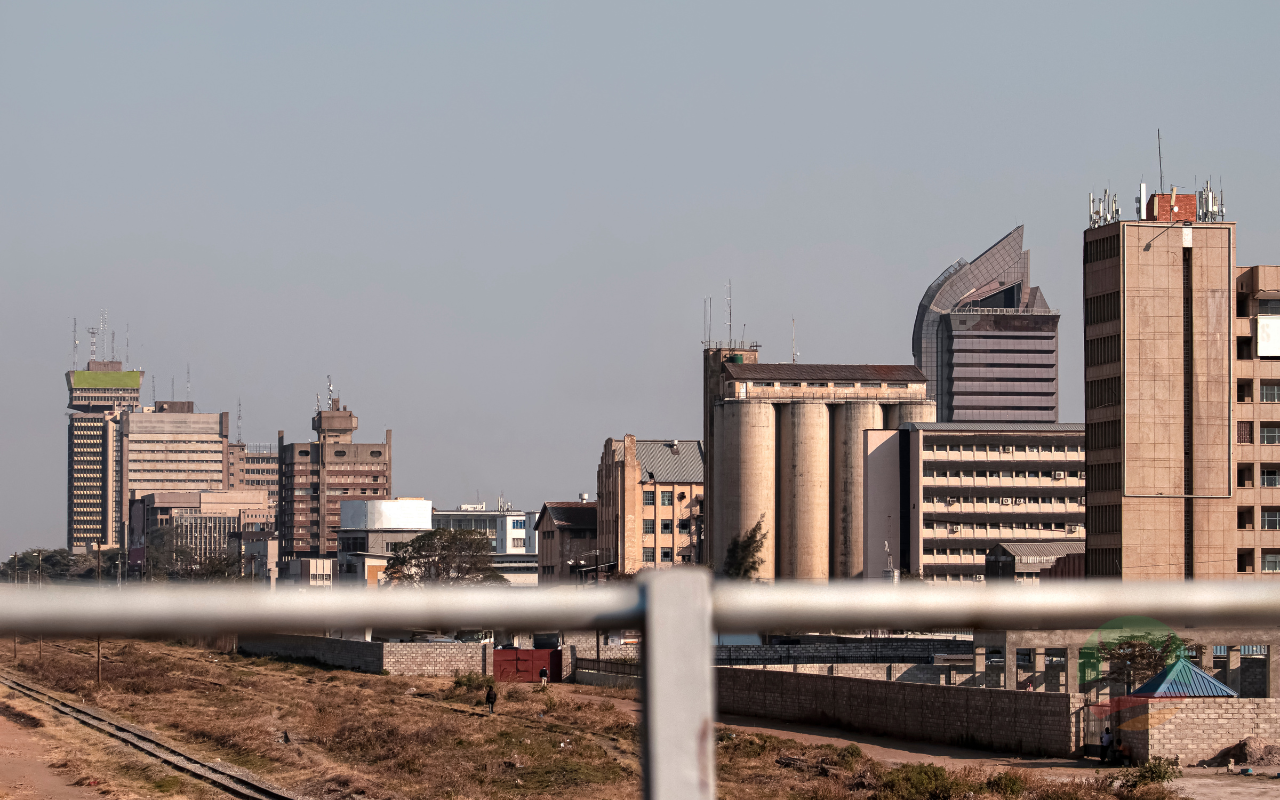
Photo: ChaloNiZambiawikidataCC BY-SA 4.0
LUSAKA, 22 JUNE 2026—Updated 8 Jul 2026
LUSAKA — The Workers’ Compensation Fund Control Board is relaunching under a new brand after its fund grew to K6.6 billion, the Vice-President said in Chongwe.
The rebrand matters because the Fund — the safety net that pays workers injured or disabled on the job — is now also one of Zambia’s larger institutional investors, and where it places K6.6 billion shapes roads, food and power for ordinary households. The relaunch reframes those bets as nation-building, a pitch that lands squarely in Kwacha News’s business and economy coverage as the state leans on social-security funds to bankroll infrastructure.
Vice-President Mutale Nalumango officiated the rebranding of the Workers’ Compensation Fund Control Board (WCFCB) in Chongwe on 19 June 2026, saying the relaunch reaffirms government’s commitment to progress, justice and the welfare of every Zambian worker, the Zambia News and Information Services reported.
The Fund has grown from K2.5 billion to K6.6 billion over the past three years, Nalumango said, with management now targeting K10 billion. That trajectory — a near tripling of assets in 36 months — is the headline number behind the new brand, and the bar against which the K10 billion goal will be judged.
Nalumango highlighted strategic investments the Board has taken on, including the Chingola-Kasumbalesa public-private partnership road, the Lusaka-Ndola Dual Carriageway and an equity stake in United Capital Fertiliser Limited. The mix spans transport corridors on the Copperbelt and a direct holding in domestic fertiliser production.
The road bets place the Fund alongside other Zambian pension and social-security investors backing major corridors; Kwacha News reported how the National Pension Scheme Authority defended its own $300m stake in the Lusaka-Ndola road, the same dual carriageway the WCFCB now names among its holdings.
Planned investments in Samfya, in Luapula Province, include a floating solar plant, an airstrip and a modern convention centre, Nalumango said. The solar component would add generation in a province far from the Copperbelt grid, at a time when the Bank of Zambia has tightened lending as worker loan defaults rise — a reminder that the workers the Fund protects are themselves under financial strain.
WCFCB Chairperson Emmanuel Mbambiko said the Board is modernising its systems to make services more efficient, accessible and transparent. The pledge points at the claims side of the Fund — the speed and ease with which injured workers and their families are paid — rather than the investment portfolio alone.
Taken together, the relaunch sets out a Fund that banks on a single proposition: that contributions collected from Zambian employers can be put to work in the real economy and still be there when a worker is hurt and needs paying. The Vice-President’s framing of roads, fertiliser and energy as nation-building is, in effect, a bet that the returns will fund the welfare promise rather than compete with it.
The fertiliser stake is the piece that reaches households most directly. An equity holding in United Capital Fertiliser Limited ties the Fund’s fortunes to domestic fertiliser supply, the input that determines whether smallholder farmers can plant and whether the price of maize meal — the staple measured in every Zambian kitchen — stays within reach. For the kwacha, more local production means less pressure to import fertiliser in foreign currency, which is a small but real support for the exchange rate.
The rebranding of the Workers Compensation Fund Control Board (WCFCB) reaffirms government’s commitment to progress, justice and the welfare of every Zambian worker and their families.
— Mutale Nalumango, Vice-President of Zambia, Chongwe, 19 June 2026 (<a href="https://www.zanis.gov.zm/?p=4688">ZANIS</a>)
Snapshot: The Workers’ Compensation Fund Control Board has rebranded, with Vice-President Mutale Nalumango officiating the relaunch in Chongwe on 19 June 2026. The Fund has grown from K2.5 billion to K6.6 billion in three years and is chasing K10 billion. Its named investments include the Chingola-Kasumbalesa PPP road, the Lusaka-Ndola Dual Carriageway and an equity stake in United Capital Fertiliser Limited, with a floating solar plant, an airstrip and a convention centre planned for Samfya.
Background
The WCFCB administers Zambia’s statutory workers’ compensation scheme, funded by employer contributions and paying out to workers who are injured, disabled or killed in the course of their employment. When the Board rebrands, the institution behind the new name does not change: it sits on a pool of long-dated liabilities, which gives its managers a mandate to invest contributions for the long term rather than hold them idle.
That mandate is what turns a compensation board into an investor in roads, fertiliser and power. By framing the Chingola-Kasumbalesa and Lusaka-Ndola road stakes and the United Capital Fertiliser Limited equity as nation-building, Nalumango placed the Fund within a wider government push to channel domestic institutional capital into infrastructure rather than rely solely on external borrowing.
What to watch
The clearest marker ahead is the K10 billion target. Whether the Fund reaches it — and how much of the growth comes from contributions versus investment returns on the road, fertiliser and Samfya projects — will show whether the new brand rests on durable performance or a favourable run.
The second is delivery in Samfya. The floating solar plant, airstrip and convention centre are described as planned, not built, so the next decision points are financial close and groundbreaking dates. On the claims side, Mbambiko’s modernisation pledge will be measured by how quickly injured workers are actually paid once the new systems go live.
Frequently Asked Questions
These are the questions readers are asking about the WCFCB rebrand and its investments. Short answers follow, drawn from what Vice-President Nalumango and Chairperson Mbambiko said at the Chongwe relaunch and reported by ZANIS.
What is the WCFCB and why has it rebranded?
In short, the Workers’ Compensation Fund Control Board is the state body that compensates Zambian workers injured or disabled at work. According to Vice-President Mutale Nalumango, the rebrand — launched in Chongwe on 19 June 2026 — reaffirms government’s commitment to progress, justice and worker welfare, and signals a more modern, investment-led Fund.
How much has the WCFCB Fund grown?
The data shows the Fund has grown from K2.5 billion to K6.6 billion over the past three years, with management now targeting K10 billion. Simply put, the Fund has roughly tripled in size, and that K6.6 billion figure is the war chest behind its road, fertiliser and energy bets.
What investments has the WCFCB made?
The answer is a spread of infrastructure and industry. Nalumango named the Chingola-Kasumbalesa public-private partnership road, the Lusaka-Ndola Dual Carriageway and an equity stake in United Capital Fertiliser Limited. Analysis of the relaunch shows the Fund is positioning itself as a long-term backer of corridors and domestic production.
What is planned for Samfya?
According to Nalumango, planned WCFCB investments in Samfya include a floating solar plant, an airstrip and a modern convention centre. In other words, the Fund intends to extend beyond roads and fertiliser into energy, aviation and conferencing in Luapula Province, though these projects are described as planned rather than complete.
What does the rebrand mean for Zambian workers?
The key is the claims side. Chairperson Emmanuel Mbambiko said the Board is modernising its systems to make services more efficient, accessible and transparent. Evidence of success will be faster, easier payouts to injured workers and their families, not just a larger investment portfolio — that is the test the rebrand sets for itself.
Sources
Reporting in this article draws on the Zambia News and Information Services account of the WCFCB rebranding and the Zambia News and Information Services news feed, which confirms publication on 19 June 2026.
More on Business & Economy

Guinea bans raw gold exports as Africa pushes local refining
Guinea has banned raw gold exports and now demands local refining, African Business reported. For Zambia, whose copper still leaves largely unprocessed, the move sharpens a long-running question about where the value is captured.

Zambia cuts fuel prices again as shop prices stay high
Zambia's Energy Regulation Board cut pump prices for a third straight month in August 2026, but transport fares and food prices remain high and non-food inflation is rising.
The Kwacha News briefing.
Business, markets and the Zambian economy — in your inbox.

