

Chingola dump death prompts state rescue-funding warning
A 36-year-old man died in a tunnel collapse at a KCM dumpsite, and the Ministry of Mines says public money will no longer fund rescues of those engaged in illegal mining.
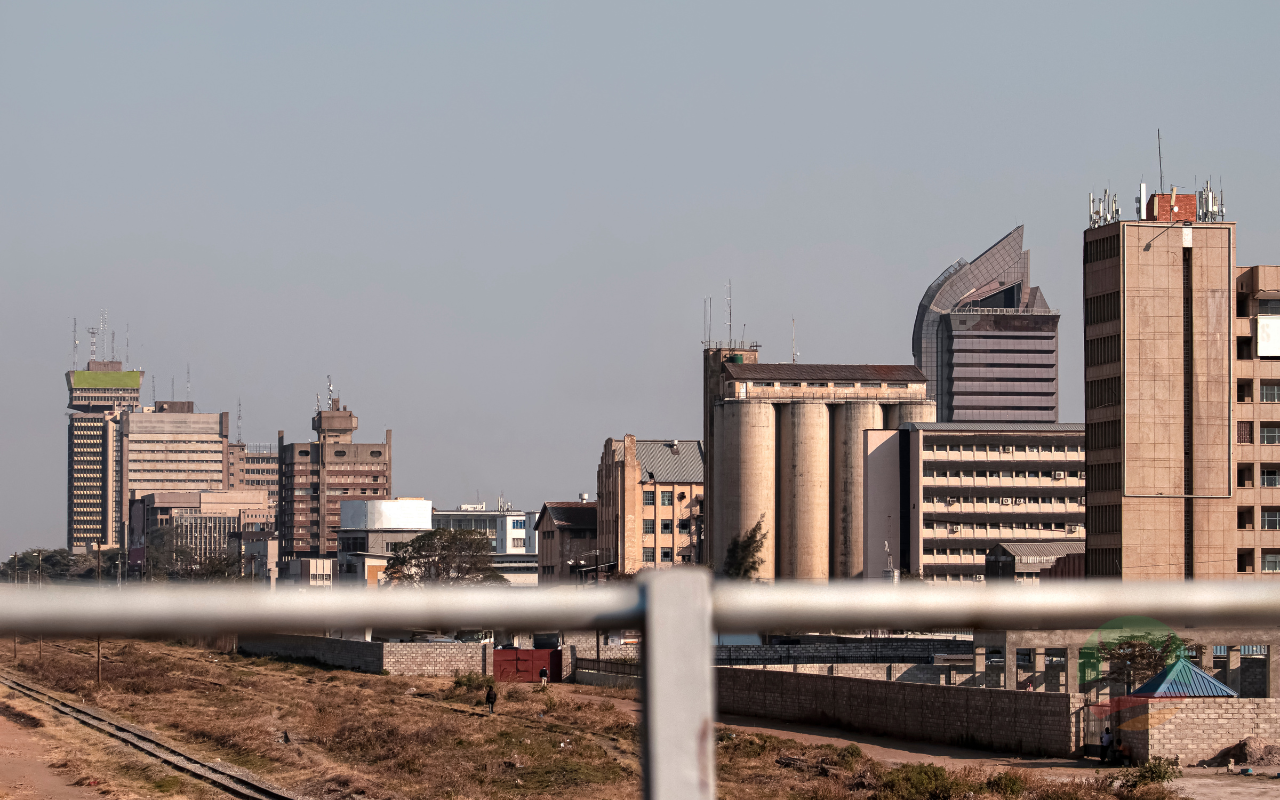
Photo: BlueSaloWikimedia CommonsCC BY-SA 3.0
LUSAKA, 2 JUNE 2026—Updated 8 Jul 2026
CHINGOLA — A 36-year-old man died in a tunnel collapse at a KCM dumpsite, a death the police said is linked to illegal mining as the Ministry of Mines warned the state will not fund such rescues.
The man, named by the police as Kelvin Musebo of Chingola, was working at the OB 13 dumpsite linked to Konkola Copper Mines (KCM) in Chingola District when the ground gave way, Copperbelt Province Police Commanding Officer Mwala Yuyi said. The death has sharpened a long-running safety problem on the Copperbelt, where disused mine dumps and old shafts draw informal miners chasing residual ore. Kwacha News has reported on the same hazard across the border in illegal-mining ground collapses and the zama-zama trade, a warning that maps closely onto Copperbelt conditions.
Separately, the Ministry of Mines and Minerals Development signalled a hardening of the state response. Permanent Secretary Dr Hapenga Kabeta said the government will no longer commit public resources to rescue operations involving people engaged in illegal mining, arguing that the practice places a heavy burden on the state. The statement reframes a recurring emergency — collapses that have repeatedly cost lives — as a policy question about who pays for the response.
The death and the policy shift sit against a formal copper sector that remains the country's economic spine. Kwacha News tracked the production side in the Q1 2026 output review, where national output ran below year-ago levels even as the government held to its three-million-tonne ambition. The informal digging that killed Musebo operates in the shadow of that formal industry, on dumps the licensed operators no longer actively work.
The Zambia Police Service confirmed the fatality through the provincial command. No arrests connected to the OB 13 collapse had been announced at the time of writing, and the allegation that Musebo was engaged in illegal mining remained a police characterisation rather than a tested charge. Enforcement on the Copperbelt corridor has been visible in other areas — Kwacha News covered a recent Kabwe-corridor interdiction — but mine-dump policing presents a different problem, set on private ground and tangled with livelihoods.
Background
Informal and illegal miners on the Copperbelt are commonly known as "jerabos", a term that has entered everyday usage across Chingola, Mufulira and the wider province. The groups range from opportunistic miners to more organised crews, and they concentrate on old dumps and abandoned workings where copper-bearing material can still be recovered by hand.
The dumps themselves are the danger. Decades-old waste piles and backfilled tunnels are geotechnically unstable; rain, undercutting and the removal of supporting material can trigger a collapse without warning. Fatal dump and shaft failures have recurred on the Copperbelt over many years, and the OB 13 death follows that grim pattern rather than breaking from it.
For the licensed operators, the dumps are a liability they cannot fully police. KCM and its peers hold vast surface footprints, and keeping informal miners off marginal ground is a perennial security challenge. The Ministry of Mines has historically leaned on a mix of enforcement, community engagement and rescue response when collapses occur — the element Dr Kabeta now says the state will withdraw where illegal mining is involved.
The livelihoods dimension complicates any crackdown. For some on the Copperbelt, dump digging is a response to scarce formal work, which is why purely punitive approaches have struggled to hold. The policy on rescue funding sharpens the trade-off between deterrence and the duty of care that the state has, in practice, extended to people in danger regardless of how they came to be there.
The government will no longer commit public resources to rescue operations involving people engaged in illegal mining, because the practice places a heavy burden on the state.
— Dr Hapenga Kabeta, Permanent Secretary, <a href="https://www.mmd.gov.zm/">Ministry of Mines and Minerals Development</a> (paraphrased from public remarks)
Snapshot: One man, Kelvin Musebo, 36, of Chingola, died in a tunnel collapse at the OB 13 KCM dumpsite, Chingola District, Copperbelt. The death was confirmed by Copperbelt CO Mwala Yuyi. The Ministry of Mines PS, Dr Hapenga Kabeta, said the state will no longer fund rescues of people engaged in illegal mining. informal miners on the Copperbelt are known as "jerabos".
What to watch
The first test is whether the no-rescue policy holds when the next collapse happens. A stated withdrawal of state rescue resources is one thing; declining to act while people are trapped underground, in full public view, is another. Data from past Copperbelt incidents shows that political and humanitarian pressure has historically pulled the state into response regardless of how victims reached the danger.
The second test is enforcement against livelihoods. Analysis of previous crackdowns reveals that punitive sweeps without an economic alternative tend to displace jerabo activity rather than end it. Whether the Ministry of Mines pairs the funding stance with security measures on the dumps, and whether KCM tightens site control, will shape the practical effect. Evidence from comparable jurisdictions demonstrates that durable change usually requires a livelihoods track alongside the policing one.
The third is the legal framing. Police described Musebo as allegedly engaged in illegal mining; how the authorities treat survivors and any associates — as suspects, as victims, or both — will indicate the direction of travel. This story is part of Kwacha News's continuing local coverage of the Copperbelt and mine-community safety.
Frequently Asked Questions
These are the questions readers have asked since the OB 13 dumpsite death. Short answers follow, drawn from statements by the Zambia Police Service and the Ministry of Mines and Minerals Development.
What is known about the OB 13 dumpsite death in Chingola?
In short, what is known is that a 36-year-old man, Kelvin Musebo of Chingola, died when a tunnel collapsed at the OB 13 dumpsite linked to Konkola Copper Mines in Chingola District. The answer, simply put, is that the police said the collapse happened while Musebo was allegedly engaged in illegal mining. The key fact, according to Copperbelt CO Mwala Yuyi, is that the death has been confirmed.
Who is the official that confirmed the death?
Who is the official confirming the fatality? According to the Zambia Police Service, Copperbelt Province Police Commanding Officer Mwala Yuyi confirmed the death through the provincial command. The data the police provided names Musebo and locates the collapse at the OB 13 KCM dumpsite. In other words, the confirmation comes from the provincial police rather than from the mining company.
What did the Ministry of Mines say about rescues?
Research into the ministry's public remarks shows that Permanent Secretary Dr Hapenga Kabeta said the government will no longer commit public resources to rescue operations involving people engaged in illegal mining. The evidence Dr Kabeta cited is that the practice places a heavy burden on the state. The answer is that this marks a stated shift in how the state funds emergency response on the dumps.
What are the "jerabos"?
What are jerabos? The term is the common Copperbelt label for informal and illegal miners who work old dumps and abandoned shafts by hand. Analysis of the phenomenon reveals the groups range from lone miners to organised crews, and that scarce formal employment is one driver. The key point is that the term describes the wider community within which the OB 13 death occurred.
Why is a mine dump so dangerous?
Why is a dump dangerous? Evidence from years of Copperbelt incidents demonstrates that decades-old waste dumps and backfilled tunnels are geotechnically unstable and can collapse without warning. Data shows that rain, undercutting and the removal of supporting material raise the risk. In short, the hazard is structural to the dumps themselves, which is why fatal collapses have recurred.
How can the state reduce illegal-mining deaths?
How can the authorities cut these deaths? Analysis of past crackdowns reveals that policing alone has not held without an economic alternative for jerabo communities. The answer is that durable change tends to pair enforcement on the dumps, tighter KCM site control and a livelihoods track. The key point, on the evidence, is that the rescue-funding stance addresses cost, not the underlying driver.
Sources
Ministry of Mines and Minerals Development: official website, source of the Permanent Secretary's public remarks on rescue funding. Zambia Police Service: official website, the body whose Copperbelt command confirmed the death.
More on Local

Great East Road to be widened into a dual carriageway
President Hakainde Hichilema pledged to widen the Great East Road into a dual carriageway and build the Chipata-Lundazi road, alongside a 100MW solar project and hospital upgrades in Eastern Province.

Lusaka widens Twin Palm Road into a dual carriageway
The Lusaka City Council says work to widen Twin Palm Road from a single into a dual carriageway is progressing and due for completion in September 2026, part of a 40.17km, K1.8 billion township roads programme funded by the Ministry of Local Government and Rural Development.
The Kwacha News briefing.
Business, markets and the Zambian economy — in your inbox.

