

Brent at $99 — Hormuz crisis reaches Zambian pumps
With Strait of Hormuz traffic at 10% of pre-war levels, the IEA calls it the biggest supply shock in oil history. The kwacha pump-price feedthrough is the next thing.
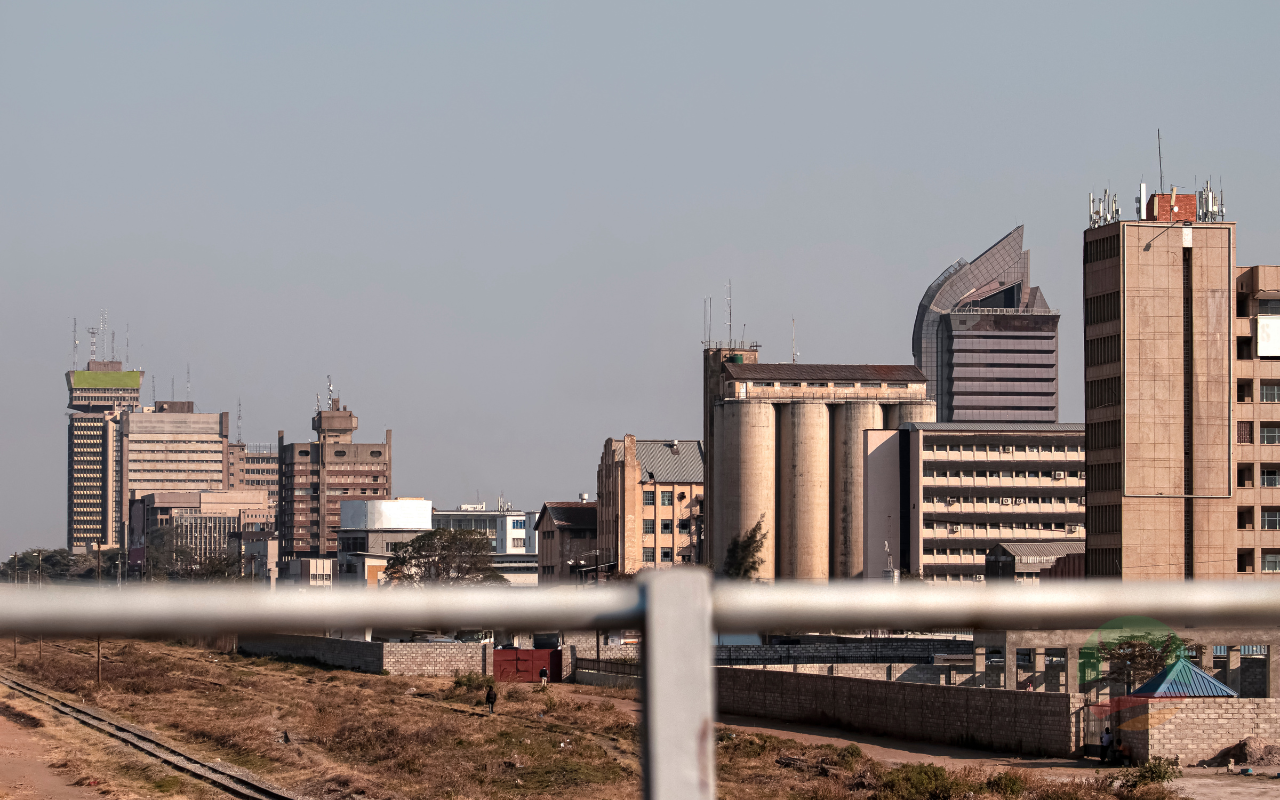
Photo: NASA/Scott KellywikipediaPublic domain
LUSAKA, 28 MAY 2026—Updated 8 Jul 2026
LUSAKA — Brent crude is back above $99 a barrel as the Strait of Hormuz disruption deepens, with the benchmark gaining more than 3% on Tuesday to close at $99.58.
The International Energy Agency (IEA) has described the conflict-driven restriction of traffic through the Strait — through which roughly a fifth of the world's crude normally flows — as the "largest supply disruption in the history of the global oil market". Some ships continue to transit, but traffic is running at about 10% of pre-war levels, with very few crude or product tankers getting through, according to World Bank analysis.
For Zambia, the price story is a kwacha story. The country is a net oil importer, with most refined products entering through the Tanzania-Zambia pipeline (TAZAMA) and via the Dar es Salaam–Lusaka corridor. Higher Brent feeds, with a lag, into pump prices set by the Energy Regulation Board (ERB) under its cost-recovery formula. Kwacha News covered the earlier easing phase in "Brent crude slips on US-Iran signals" on 25 May — the new spike reverses that move.
Brent prices jumped 2.5% earlier in the week to $98.47 a barrel after Iran's Islamic Revolutionary Guard Corps vowed to retaliate against US strikes, then pushed above $99 on Tuesday on signs that any peace deal could come bundled with Iranian transit fees through the Strait. CNBC has reported that Tehran may extract environmental fees or tolls on vessels as part of any lasting resolution, with Iran and Oman possibly jointly regulating the corridor.
The macro context for Zambia is the wider global rate and risk picture: a hawkish Fed posture, record gold, and frontier-market borrowing costs elevated. Energy-price shocks land on emerging-market currencies first.
Background
Zambia's exposure to global oil prices runs through three channels. Pump prices for petrol and diesel adjust through the Energy Regulation Board's cost-plus formula, with typical lags of two to six weeks. Inflation pass-through is direct — transport, food and electricity inputs all carry an oil cost. And the kwacha exchange-rate carries an indirect effect: higher oil import bills mean larger USD demand at the foreign-exchange interbank market, weakening the kwacha at the margin against the dollar.
On the macro path, the Bank of Zambia is positioned for energy shocks. Inflation has returned inside the central bank's 6–8% target band, the kwacha has appreciated about 13% against the dollar in the year to date, and reserves have been rebuilt during the recent copper price strength. The country runs an IMF Extended Credit Facility programme whose inflation and external-balance targets carry an explicit fuel-price assumption — the IEA shock outpaces those assumptions.
Analyst forecasts now bracket the Brent average for 2026 between $95 and $115 a barrel, roughly 10 to 35% above pre-conflict baselines. Goldman Sachs and S&P Global both flag the rally as overextended, with the unwind dependent on whether the US–Iran peace talks resolve cleanly or with the transit-fee mechanism that markets are pricing as a partial outcome. Either way, the cost-curve for Zambian transport and logistics shifts higher this quarter.
Some ships are still moving through the Strait of Hormuz — but traffic is around 10% of normal pre-war levels, with very few crude tankers or product tankers getting through at all.
— International Energy Agency analysis, <a href="https://blogs.worldbank.org/en/opendata/strait-of-hormuz-disruption-sends-oil-prices-surging">World Bank Open Data Blog, May 2026</a>
The numbers: Brent +3% to $99.58 on Tuesday. Strait of Hormuz traffic 10% of pre-war levels. ~20% of global crude normally transits Hormuz. Forecast band 2026: $95-$115/bbl (10-35% above baseline). Zambia pump-price lag: 2-6 weeks via ERB cost-plus formula.
What to watch
The first signal is the next Energy Regulation Board pump-price review. The ERB publishes its cost-plus computation monthly; the lag from Brent to the gazetted retail price has averaged two to six weeks across past cycles. Analysis from the ERB demonstrates the formula is rules-based — meaning a sustained Brent above $95 will be reflected in the next two pump adjustments, irrespective of political pressure to absorb the shock.
The second signal is the kwacha at the interbank market. Research from the Bank of Zambia shows that oil-import demand is one of the largest single USD outflow categories. Data from past energy-price shocks reveals the kwacha typically softens 1-3% in the first three weeks of a Brent move above $90, before stabilising as forward-looking participants price in the new equilibrium. Watch the BoZ's daily indicative exchange rate and the volumes traded on the interbank.
Third, the Treasury's fiscal arithmetic. The IMF programme reference price assumed a more benign Brent path; the shock has revenue and subsidy implications. Evidence from the 2026 budget framework reveals fuel-related taxes and the targeted social-cash-transfer programme as the two most pressure-sensitive lines. The next test is whether the Ministry of Finance signals a supplementary appropriation to absorb the energy-import shock without breaching the primary-surplus target.
This story is part of Kwacha News's continuing world coverage of the global economy and its impact on Zambia.
Frequently Asked Questions
These are the questions readers have been asking since Brent cleared $99 a barrel. Short answers follow, drawn from IEA analysis, World Bank commentary and ERB pump-price methodology.
What is the Strait of Hormuz?
In short, the Strait of Hormuz is the narrow waterway between Iran and Oman through which roughly a fifth of the world's crude oil normally passes. The answer, simply put, is that it is the single most important chokepoint in global oil logistics. The key is that any sustained disruption to the Strait raises the global oil price and feeds inflation everywhere — including in Zambia.
How does the Hormuz disruption affect Zambia?
Research from past energy shocks reveals three transmission channels. Data from the Energy Regulation Board shows pump prices adjust within two to six weeks. Evidence from the Bank of Zambia demonstrates the kwacha typically softens 1-3% on a sustained Brent move above $90. The answer is that fuel, transport, food and electricity input costs all rise — and the kwacha weakens against the dollar at the margin.
Why is the IEA calling this the largest supply disruption ever?
According to the IEA, traffic through the Strait is running at about 10% of pre-war levels. Evidence from shipping data demonstrates very few crude or product tankers are getting through. The answer is that in absolute volume terms, the dollar-value of disrupted flows now exceeds previous benchmark events including the 1973 Arab oil embargo and the 1990 Gulf War — making this the largest supply shock the IEA has on record.
What does the ERB pump-price formula do?
Analysis of the ERB's methodology shows the regulator runs a cost-plus model: international product prices, plus shipping, plus taxes, plus a regulated margin. In other words, the regulator does not arbitrage retail pump prices against international moves — it passes them through with a lag. The answer is that sustained Brent strength will appear at the pump within the next adjustment cycle.
How can businesses hedge the shock?
Research from corporate-treasury practice in similar emerging-market economies demonstrates three options. Data from Zambian corporate filings reveals fuel-cost pass-through clauses, forward-contract hedging with regional traders, and inventory pre-positioning are the three most common defences. The answer is that medium-sized importers and logistics firms typically rely on inventory and pass-through clauses; larger exporters can use forward-contracts where available.
When will the disruption ease?
Analysis of the diplomatic track demonstrates the timing is dependent on whether US–Iran talks reach a clean resolution or settle for a transit-fee mechanism. Evidence from market pricing reveals the forward curve has steepened slightly. The answer is that a clean resolution would see Brent fall back to the $80-$85 range over weeks; a fee-based outcome could keep Brent in the $95-$105 band for months.
Sources
World Bank Open Data Blog: Strait of Hormuz disruption sends oil prices surging. CNBC: Iran threat to Strait of Hormuz and Brent jumps 3% after Iran vows retaliation. Wikipedia: 2026 Strait of Hormuz crisis. Bank of Zambia: monetary policy and FX data.
More on Africa/World

TAZARA at 50: Zambia weighs two routes to the sea
As TAZARA turns 50, landlocked Zambia is weighing two rival routes for its copper: east to the Indian Ocean via a rebuilt TAZARA, or west to the Atlantic via the Lobito Corridor.

African leaders back trade insurer ATIDI after record year
African leaders endorsed ATIDI — the pan-African insurer Zambia belongs to — as a cornerstone of a new African-led financial architecture, as the body marked 25 years with record 2025 results and a call to recapitalise it to US$2 billion.

Railway revival sweeps Southern Africa as Zambia eyes TAZARA
South Africa's freight-rail reforms, the Lobito Corridor and a revived TAZARA line are redrawing Southern Africa's transport map, as President Hichilema pledges a further $1.6 billion recapitalisation of the Tanzania-Zambia railway.
The Kwacha News briefing.
Business, markets and the Zambian economy — in your inbox.