

Zambia steps up DRC border screening after WHO Ebola alert
Border-health posts in Copperbelt, North-Western and Luapula provinces are screening arrivals after the WHO declared the Bundibugyo virus outbreak in DRC and Uganda a public-health emergency of international concern.
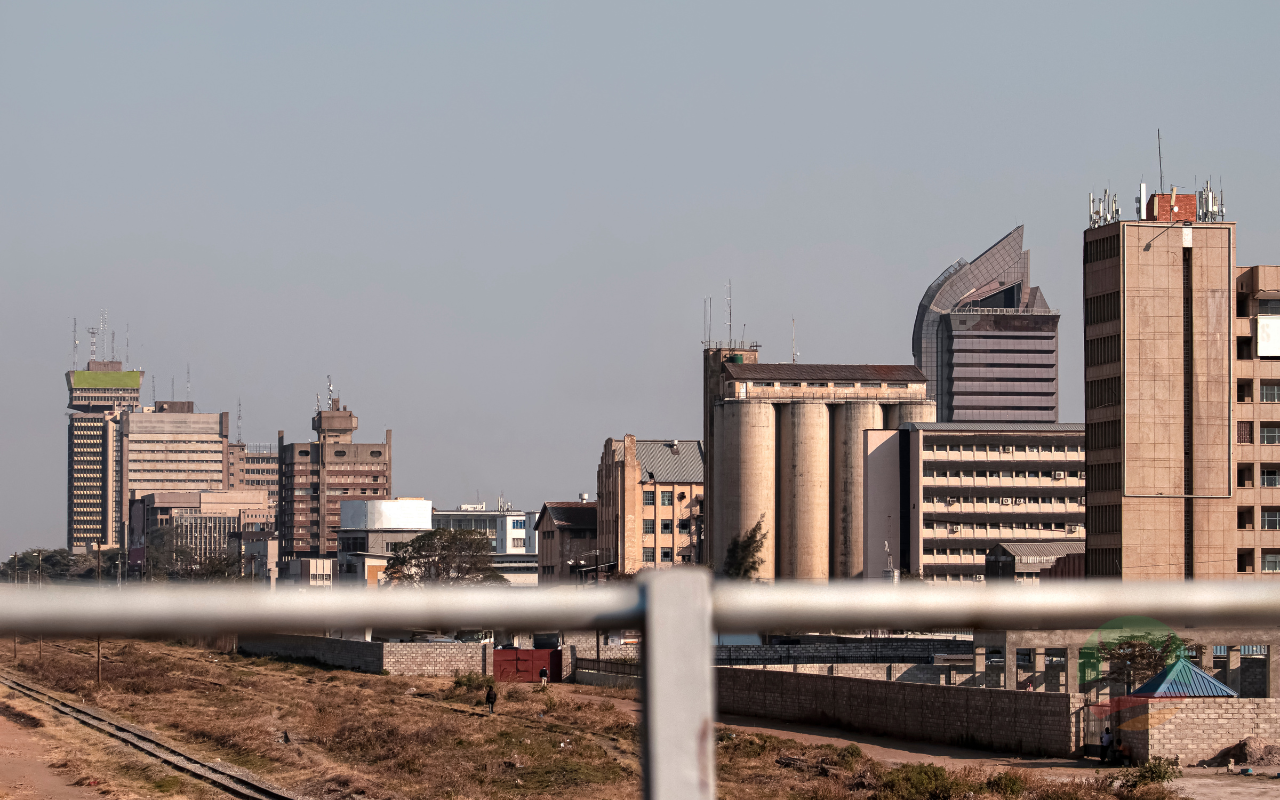
Photo: Jernej Furman from SloveniawikidataCC BY 2.0
LUSAKA, 23 MAY 2026—Updated 8 Jul 2026
LUSAKA — Zambia is screening arrivals at its DRC border crossings after the World Health Organization declares the regional Ebola outbreak a global emergency on 17 May.
The outbreak — caused by the Bundibugyo strain, for which no licensed vaccine exists — has killed 80 people in DRC's Ituri Province, reached Uganda's capital, and put Zambia's 2,326-kilometre border with the DRC at the front line of regional containment. Kasumbalesa, in the Copperbelt, handles most of the copper and cobalt that moves between the two countries.
What the WHO declared
The WHO determined on 17 May that the Bundibugyo virus outbreak in DRC and Uganda is a public-health emergency of international concern, the agency's highest alert. The declaration came after the outbreak crossed an international border into Uganda's capital, Kampala.
As of 16 May the outbreak had produced 8 laboratory-confirmed cases, 246 suspected cases and 80 reported deaths, according to the WHO declaration. Affected health zones in Ituri Province include Bunia, Rwampara and Mongbwalu, with two confirmed cases in Kampala marking the cross-border spillover that triggered the emergency listing.
Bundibugyo is one of four Ebola strains known to cause disease in humans. There is no licensed vaccine or treatment for it, the WHO said in its statement. The ERVEBO vaccine that helped contain the 2018-20 outbreak in eastern DRC targets a different strain, Ebola Zaire.
The numbers, as of 16 May
8 laboratory-confirmed cases. 246 suspected cases. 80 reported deaths across DRC's Ituri Province and Uganda's Kampala. No licensed vaccine for the Bundibugyo strain.
Inside Zambia's screening response
Zambia steps onto familiar ground. The border-health network with the DRC was built out after a 2025 Ebola scare and now covers five formal crossings — Kasumbalesa, Kashiba, Mokambo, Jimbe and Chembe — in Copperbelt, North-Western and Luapula provinces. The WHO Regional Office for Africa described the network as equipped for triage, early case detection, basic isolation and safe sample management, in an October 2025 readout after the previous outbreak.
The Zambia National Public Health Institute (ZNPHI), led by Director General Roma Chilengi, coordinates the screening cordon. Health Minister Alex Katakwe took office in March, after President Hakainde Hichilema reshuffled the portfolio — three months before the current outbreak was declared an emergency.
The United States Embassy in Lusaka issued a health alert on 21 May restating Washington's worldwide caution: American travellers transiting DRC, Uganda or South Sudan within 21 days of an inbound US flight are routed only to Washington Dulles airport for enhanced screening by the US Centers for Disease Control and Prevention and Customs and Border Protection.
What it means for Copperbelt trade
Kasumbalesa is the busiest road crossing between Zambia and the DRC and the artery for copper and cobalt moving down the North-South corridor toward South African ports — and west, increasingly, along the Lobito Corridor to Angola's Atlantic coast. Long queues at Kasumbalesa have been a chronic feature of regional trade for years; layered medical screening risks lengthening them further, with knock-on costs for fuel, food and dollar-denominated input prices.
Border closures are not on the table. The WHO has repeatedly said closures push movement to informal crossings, where surveillance is harder, and the 17 May statement urged member states to share information and coordinate response rather than restrict trade.
Background: why this strain is different
The Bundibugyo virus was first identified in 2007 in Bundibugyo District, western Uganda, where research data shows it caused an outbreak with a case fatality rate of around 30 per cent — lower than Ebola Zaire's 40-90 per cent but still severe. The current outbreak's reported death rate, calculated against suspected cases, sits within that historical band.
I commend the Governments of the DRC and Uganda for their continued efforts to contain these outbreaks.
— Dr Jean Kaseya, Director General of Africa CDC, <a href="https://africacdc.org/news-item/ebola-response-statement-from-the-director-general-africa-cdc/">statement of 17 May 2026</a>
Africa CDC, in the same 17 May statement, said it had activated its Incident Management Support Team and convened more than 130 partners to coordinate the response. The US CDC issued Health Alert Network notice CDCHAN-00530 on 19 May, advising American clinicians to assess patients with fever or haemorrhagic symptoms for recent travel to affected areas and to isolate suspected cases immediately.
What to watch
Two things will shape the next month. First, whether spillover beyond Ituri, North Kivu and Kampala produces a confirmed case in a country bordering the DRC — Zambia, Rwanda, Burundi, Tanzania, Angola, Central African Republic or South Sudan. Second, whether existing investigational therapeutics tested against Bundibugyo in earlier outbreaks can be deployed under emergency-use rules.
Zambia's Ministry of Health is expected to release a public update through ZNPHI in the coming days. Cross-border trade volumes through Kasumbalesa and the smaller crossings will be the first concrete indicator that the screening cordon is functioning without choking the flow of copper and cobalt.
Frequently Asked Questions
These are the questions readers have been asking since the WHO declared the regional Ebola outbreak an emergency on 17 May. Short answers follow, drawn from the WHO, Africa CDC and US CDC notices and the WHO Africa readout on Zambia's border-health network.
What is the Bundibugyo virus?
In short, the Bundibugyo virus is one of four Ebola strains known to cause disease in humans, first identified in western Uganda in 2007. The answer, simply put, is that it sits in the same family as Ebola Zaire but is genetically distinct. The key is that no licensed vaccine or treatment for Bundibugyo exists, according to the WHO.
How does the screening at Zambia's DRC border work?
Border-health teams at Kasumbalesa, Kashiba, Mokambo, Jimbe and Chembe carry out questionnaires, temperature checks and infection-control procedures on travellers entering Zambia. WHO Africa data shows the network has triage and basic isolation capacity at each post. In other words, the response combines symptom screening with sample-collection capability that can move suspected cases into laboratory testing within hours.
Why is this outbreak different from the 2018-20 eastern DRC epidemic?
The 2018-20 outbreak was caused by Ebola Zaire and was contained with the ERVEBO vaccine produced by Merck. According to the WHO, no licensed vaccine exists for Bundibugyo, the strain driving the current outbreak. The answer is that public-health authorities are relying on classical containment — case-finding, isolation and contact tracing — without a vaccine fall-back.
Who is at risk inside Zambia?
Copperbelt, North-Western and Luapula provinces share land borders with the DRC and host the active screening posts. Research from Africa CDC has shown that informal cross-border movement and mining-related travel raise the risk of spread. In other words, traders, miners and border-district residents have the highest exposure, with travellers passing through Lusaka's Kenneth Kaunda International Airport monitored downstream.
What are the real risks for Zambia's copper exports?
Analysis of past regional outbreaks demonstrates two durable risks: longer dwell times at Kasumbalesa as medical checks are layered on, and reputational headwinds if a confirmed case appears in Zambia. Evidence from the 2018-20 outbreak reveals that closures are counterproductive; Africa CDC data shows that screening, surveillance and rapid response keep trade moving while limiting transmission. Each risk is operational, not existential, and is the reason ZNPHI is leading the cordon rather than handing the job to a border agency.
Sources
World Health Organization: Bundibugyo virus disease outbreak in the DRC and Uganda determined a public health emergency of international concern, 17 May 2026.
WHO Regional Office for Africa: Zambia steps up Ebola preparedness following DRC outbreak, October 2025.
Africa CDC: Statement from the Director General, 17 May 2026.
US Centers for Disease Control and Prevention: Health Alert Network notice CDCHAN-00530, 19 May 2026.
United States Embassy in Zambia: Public Health Arrival Restrictions and Enhanced Ebola Screening, 21 May 2026.
State House Zambia: President Hichilema appoints new ministers.
More on Africa/World

TAZARA at 50: Zambia weighs two routes to the sea
As TAZARA turns 50, landlocked Zambia is weighing two rival routes for its copper: east to the Indian Ocean via a rebuilt TAZARA, or west to the Atlantic via the Lobito Corridor.

African leaders back trade insurer ATIDI after record year
African leaders endorsed ATIDI — the pan-African insurer Zambia belongs to — as a cornerstone of a new African-led financial architecture, as the body marked 25 years with record 2025 results and a call to recapitalise it to US$2 billion.
The Kwacha News briefing.
Business, markets and the Zambian economy — in your inbox.
