

Panama at World Cup 2026: small-economy lessons for FAZ
Panama is heading to its second World Cup in eight years. What a four-million-population economy did with football tells Zambian sport administrators something useful.
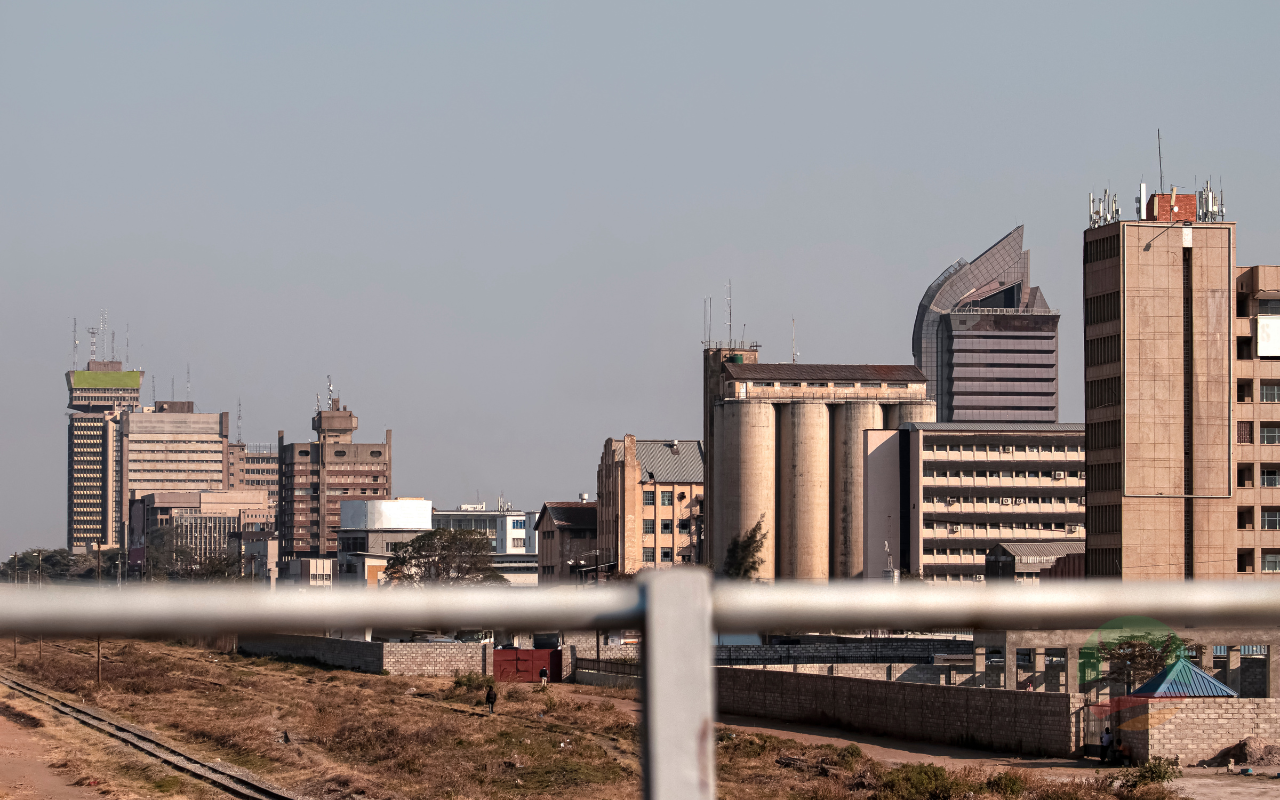
Photo: Hossein ZohrevandwikipediaCC BY 4.0
LUSAKA, 19 MAY 2026—Updated 21 Jun 2026
Analysis
PANAMA CITY — Panama is the small-economy football story now in its second World Cup appearance in eight years, and the model behind that run carries lessons for Zambian sport administrators.
Al Jazeera notes that Panama is not there to make up the numbers in 2026. The country has roughly four million people and a GDP smaller than several African economies — including Zambia's. What it did with the sport is the kind of operational discipline the Football Association of Zambia (FAZ) and the broader sport administration should be reading carefully.
What Panama actually did
Three structural moves. The first is federation governance: Panama's Federación Panameña de Fútbol stabilised its leadership through the past two cycles, with technical staff continuity that most CONCACAF small federations have not managed. The second is the diaspora pipeline: a deliberate scouting and outreach programme into the Panamanian-origin player pool in the United States, Spain and Colombia.
The third is club investment. Research from CONCACAF and FIFA development reports shows Panama steadily upgraded its top-tier league infrastructure, ensuring that domestic-based players could be developed to international level. Data from the country's federation budgets demonstrates the investment was sustained across political cycles — which is the unglamorous condition for any sport system to compound.
Panama are World Cup-bound for a second time in eight years, but in 2026, they're not there to just make up the numbers.
— Al Jazeera, What to know about Panama at the FIFA World Cup 2026, May 2026
What Zambian football looks like by comparison
The Chipolopolo last appeared at the FIFA World Cup never — Zambia has never qualified for the tournament. The Africa Cup of Nations record is stronger, including the 2012 title, but the World Cup pipeline has stalled at the qualification stage in successive cycles. The data shows technical staff turnover, financial pressure on the federation and league-level fragility as the recurring patterns.
Analysis of FAZ's recent activity shows the federation has stabilised somewhat under current leadership, and the women's national team — the Copper Queens — has been the more dynamic story, returning to the Africa Women Cup of Nations under recently confirmed head coach Nora Häuptle. The men's side remains the harder problem.
Panama's small-economy football model
Population: roughly 4 million · Federation governance: leadership continuity across cycles · Diaspora pipeline: scouting Panamanian-origin players abroad · Club investment: sustained domestic-league upgrade · Result: two World Cup appearances in eight years
What this means for Zambia
Three reads. The first is governance: nothing in Panama's playbook requires money Zambia does not have. The continuity move — keeping technical staff in place long enough to build a system — is operationally available. The second is the diaspora pipeline: the Zambian diaspora in the UK, South Africa, Australia and the United States is large enough to scout systematically.
The third is league investment. Research from CAF and FIFA shows the leagues most likely to produce World Cup-quality players are those with stable broadcast rights, competent matchday operations and minimum salary floors. Evidence from Zambian Super League data demonstrates the gap on all three fronts. The good news is the levers are public, identifiable and not unreasonably capital-intensive. The harder question is political continuity — whether each new ministry of sport renews the federation contract on broadcast rights and stadium maintenance rather than treating it as a fresh negotiation each cycle. Panama did the boring work for long enough that the system compounded.
Frequently Asked Questions
These are the questions Zambian football followers and sport administrators have been asking about Panama's World Cup model and what it means here. Short answers follow, drawn from FIFA and CONCACAF reports and Al Jazeera's coverage.
What is the FIFA World Cup 2026?
In short, the FIFA World Cup 2026 is the expanded 48-team men's football tournament jointly hosted by the United States, Canada and Mexico. The answer is that the tournament runs across the three countries in June and July 2026. The key is the expansion — more places mean more small-economy stories like Panama's.
How does Panama compare to Zambia in size?
Simply put, Panama has about four million people; Zambia has roughly twenty million. Data from the World Bank shows Panama's GDP is smaller than Zambia's. The key is that football performance does not track GDP — it tracks organisation.
Why is the diaspora pipeline so important?
The answer is talent depth. In other words, scouting players of Panamanian or Zambian heritage in Europe and the Americas extends the talent pool meaningfully beyond what domestic clubs alone produce. Evidence from prior World Cup squads demonstrates diaspora-pipeline players make up a substantial share of small-economy national teams.
Who is in charge of FAZ?
The key is the current executive committee under elected leadership confirmed at the most recent congress. According to FAZ's published materials, the federation has stabilised governance after a turbulent prior cycle. Research from CAF-supervised federations shows continuity is the strongest predictor of subsequent results.
How can Zambian fans follow the lessons?
Analysis of public reporting shows FIFA, CONCACAF and CAF all publish development reports that benchmark small-federation performance. Evidence from those reports demonstrates that the Panamanian playbook is fully public — federation continuity, league investment, diaspora outreach — and is replicable in principle.
What to watch
Two signals. The first is Panama's group-stage performance — whether the country progresses, the model becomes the case study CAF small federations cite for the next cycle. The second is what FAZ does next: a public five-year plan tied to the 2030 World Cup cycle would be the institutional move that turns lessons into a programme.
Sources
Al Jazeera: What to know about Panama at the FIFA World Cup 2026. FIFA tournament information. CONCACAF federation reports. CAF development reports. Football Association of Zambia.
More on Sports/Entertainment

Samukonga wins Budapest 400m in season's best 44.02
Zambia's Muzala Samukonga ran a season's best 44.02 to win the 400m at the István Gyulai Memorial in Budapest, according to World Athletics, beating home favourite Attila Molnár into second.

Morocco reach World Cup last eight unbeaten in 34 matches
Morocco go into their World Cup quarter-final against France unbeaten in 34 matches, extending the continent's strongest showing at the tournament since the Atlas Lions reached the 2022 semi-final.

Copper Princesses host Ethiopia in World Cup qualifier
Zambia's Under-17 Women's National Team hosts Ethiopia at Levy Mwanawasa Stadium in Ndola on Saturday in the first leg of the final round of 2026 FIFA U-17 Women's World Cup qualifiers, with kick-off at 15h00.
The Kwacha News briefing.
Business, markets and the Zambian economy — in your inbox.