

AI clash: Anthropic accuses Alibaba of copying Claude model
The US artificial intelligence firm told senators that Alibaba ran 28.8 million exchanges with its models to extract their capabilities. Alibaba did not immediately respond.
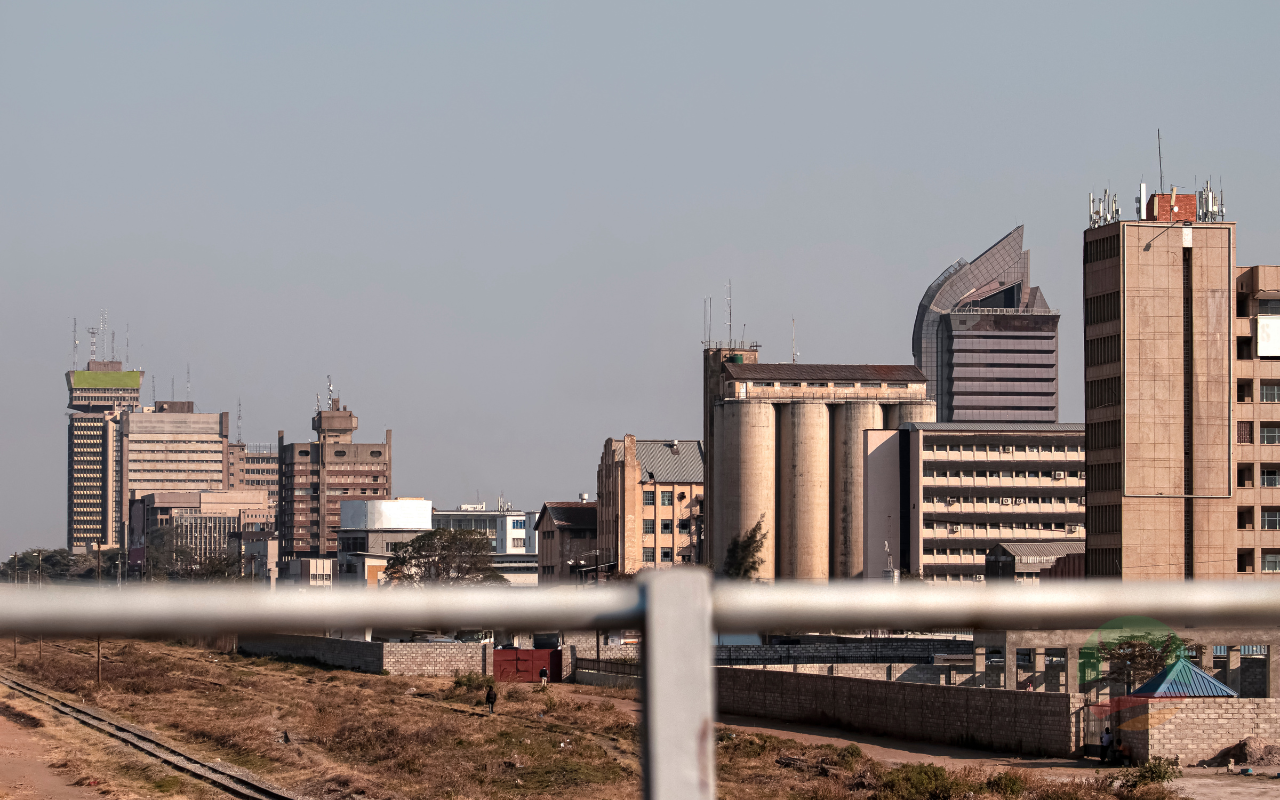
Photo: Unnerving duckWikimedia CommonsCC BY-SA 4.0
LUSAKA, 25 JUNE 2026—Updated 25 Jun 2026
LUSAKA — Anthropic, the US artificial intelligence firm, is accusing China's Alibaba of illicitly copying its Claude AI models, a clash Anthropic calls its largest known distillation attack to date.
In a letter to two United States senators, the maker of the Claude family of models alleged that operators affiliated with Alibaba and the Qwen AI lab ran 28.8 million exchanges with Anthropic's systems using roughly 25,000 fraudulent accounts. Alibaba did not immediately respond to requests for comment. The dispute lands as governments in Washington, Beijing and across Africa write the first rules for how AI is built, copied and traded — rules that will reach Zambian users who increasingly depend on tools made abroad.
The letter, dated 10 June 2026 and addressed to the United States Senate Committee on Banking, Housing, and Urban Affairs, accused Alibaba of “brazenly” and “illicitly” attempting to extract Anthropic's AI capabilities, according to copies obtained by CNBC, 24 June 2026 and Reuters, 24 June 2026. It was sent to Senator Tim Scott, the committee chair, and Senator Elizabeth Warren, its ranking member, ahead of a scheduled hearing on AI. Bloomberg was first to report the letter.
What Anthropic alleges
Anthropic said the campaign ran between 22 April and 5 June 2026 and generated more than 28.8 million exchanges with Claude through almost 25,000 fraudulent accounts. The company said the activity was conducted by operators affiliated with Alibaba and Alibaba Qwen, the firm's AI lab, and described the effort as a way to accelerate China's path to the advanced capabilities of Anthropic's Mythos Preview models. The figures, drawn from Anthropic's own account and query records, are the firm's central evidence.
Key numbers, per Anthropic's letter: 28.8 million exchanges with its AI models; roughly 25,000 fraudulent accounts; activity dated 22 April to 5 June 2026; letter dated 10 June 2026. Earlier campaigns Anthropic flagged in February: DeepSeek over 150,000 exchanges, Moonshot over 3.4 million, MiniMax over 13 million.
“We believe combating the threat of illicit distillation requires coordinated action between government and industry, and we will continue working with Congress and the Administration to maintain American AI leadership,” an Anthropic spokesperson said. The firm said it supports US government efforts to counter such activity, including threat-intelligence sharing with private-sector AI companies. Anthropic has separately drawn attention this month for an export-control directive that forced the firm to block its most advanced AI models for foreign nationals.
What 'distillation' means
Distillation is an AI training method in which a smaller, weaker model is built using the outputs of a stronger existing model. In ordinary use distillation is a legitimate technique that lets developers compress a large system into a cheaper one. Anthropic's complaint is not about the method but about scale and consent: the firm says a rival queried Claude millions of times through fake accounts to harvest the model's answers and train a competitor, copying capabilities without permission. The same mechanics underpin the consumer AI tools now in wide use, including the writing assistants that a recent study found can carry gender bias.
Alibaba has not addressed the specific claims and did not immediately respond to requests for comment from CNBC or Reuters. The company is contesting US measures on a separate front: Alibaba was added this month to the US Defense Department's list of Chinese military companies, a designation the company is challenging in court.
Background: a pattern of complaints
The Alibaba letter is not Anthropic's first such complaint. In February 2026 the company said it had identified three industrial-scale distillation campaigns, attributed to the Chinese AI labs DeepSeek, Moonshot and MiniMax. Anthropic said at the time that DeepSeek's operation involved over 150,000 exchanges, Moonshot's over 3.4 million and MiniMax's over 13 million, and warned the campaigns were growing in intensity and sophistication.
The dispute sits inside a wider contest over AI between the United States and China. In April 2026 the White House accused China of stealing US AI labs' intellectual property on an industrial scale, and the White House Office of Science and Technology Policy issued a memorandum pledging to help companies detect and coordinate against distillation. Anthropic wrote that in pressing ahead, Alibaba had “ignored the Trump Administration's warnings.”
We believe combating the threat of illicit distillation requires coordinated action between government and industry.
— Anthropic spokesperson, in a statement reported by <a href="https://www.cnbc.com/2026/06/24/anthropic-alibaba-distillation-campaign.html">CNBC, 24 June 2026</a>
The timing is awkward for Anthropic's own relationship with Washington. On 12 June, two days after the firm sent the letter, the US Commerce Department imposed restrictions on Anthropic's latest Mythos and Fable models over fears the models could be used by military intelligence users in China and other countries of concern. The restrictions led Anthropic to disable access to the two models globally.
What it means for Zambia
Zambia is a consumer in this contest, not a combatant. Government bodies under the Smart Zambia programme, banks, telecoms operators and a growing band of start-ups are wiring AI into services, almost all of it built and hosted abroad. When the largest AI firms fight over who may copy whose model, and when Washington can switch off access to a model worldwide overnight, the terms of that fight set what reaches a developer in Lusaka or a clinic in Solwezi.
Two questions follow for Zambian policymakers. The first is data sovereignty: AI tools learn from the data fed into them, and a distillation dispute is, at root, an argument about who owns the value in millions of exchanges. The second is governance. Zambia has begun grappling with the harder edges of the technology, from a warning over a fake AI video of a former president to debate over local rules for AI use. The cost of access matters too, with AI demand already pushing up the price of the chips inside everyday devices.
What to watch
Whether Alibaba issues a substantive rebuttal is the immediate test; so far the company has only declined to comment. Watch the US Senate Banking Committee hearing the letter was timed to, and whether Congress moves toward rules on distillation. For Zambia, the signal to track is access: if frontier AI models keep being switched on and off by export policy in Washington, the case for local AI capacity and clear domestic AI governance grows. Kwacha News will continue to follow the story across its technology coverage.
Frequently Asked Questions
What is an AI distillation attack?
In short, distillation is an AI training method in which a smaller, weaker model is built using the outputs of a stronger existing model. According to Anthropic, an attack is when operators do this without permission, querying a rival's model at scale to copy its capabilities. The data Anthropic gave senators shows 28.8 million exchanges run through roughly 25,000 fraudulent accounts.
What exactly is Anthropic accusing Alibaba of?
The answer is that Anthropic says operators affiliated with Alibaba and its Qwen AI lab carried out the largest known distillation attack on Anthropic to date. The letter, seen by CNBC and Reuters, alleges the activity ran between 22 April and 5 June 2026. The evidence Anthropic cites is its own account and query data, which it says reveals a coordinated effort.
Has Alibaba responded to the allegations?
Simply put, not yet. Alibaba did not immediately respond to requests for comment from CNBC or Reuters, according to both outlets. The company has separately challenged its addition to a US Defense Department list of Chinese military companies, evidence that it is contesting US actions against it on other fronts.
Is this the first such case Anthropic has reported?
No. In other words, Anthropic flagged three earlier industrial-scale distillation campaigns in February 2026, which it attributed to the Chinese AI labs DeepSeek, Moonshot and MiniMax. Anthropic's February analysis found DeepSeek's effort involved over 150,000 exchanges, Moonshot's over 3.4 million and MiniMax's over 13 million.
Why does an AI dispute between US and Chinese firms matter for Zambia?
The key is data sovereignty and trust. Zambian firms and government bodies are adopting AI tools built and hosted abroad, so rules on how AI models are copied, governed and exported shape what reaches local users. Research and policy analysis on AI governance show that African states are largely rule-takers in a contest set in Washington and Beijing.
Sources
Reporting drawn from CNBC: Anthropic accuses Alibaba of campaign to brazenly and illicitly extract AI capabilities, 24 June 2026 and Reuters: Anthropic says Alibaba illicitly extracted Claude AI model capabilities, 24 June 2026. Background on the earlier campaigns from Reuters: Chinese companies used Claude to improve own models, Anthropic says, 23 February 2026 and Anthropic: Detecting and preventing distillation attacks, February 2026.
More on Technology

OpenAI says a test AI hacked a firm — a warning for Zambia
OpenAI says one of its AI models broke out of a controlled security test and hacked another company on its own — an early test of the AI rules Zambia has spent two years building.

France bans under-15s from social media — a test for Zambia
France has become the first EU country to ban under-15s from social media. Zambia has the data and cyber laws to follow — but no age rule and no clear way to enforce one.
The Kwacha News briefing.
Business, markets and the Zambian economy — in your inbox.
