

Alphabet's $80bn AI raise is a copper story for Zambia
Google's parent will sell about $80bn in stock to fund artificial-intelligence build-out, including a $10bn slice to Berkshire Hathaway. The wiring runs through copper — and that is a Zambian read.
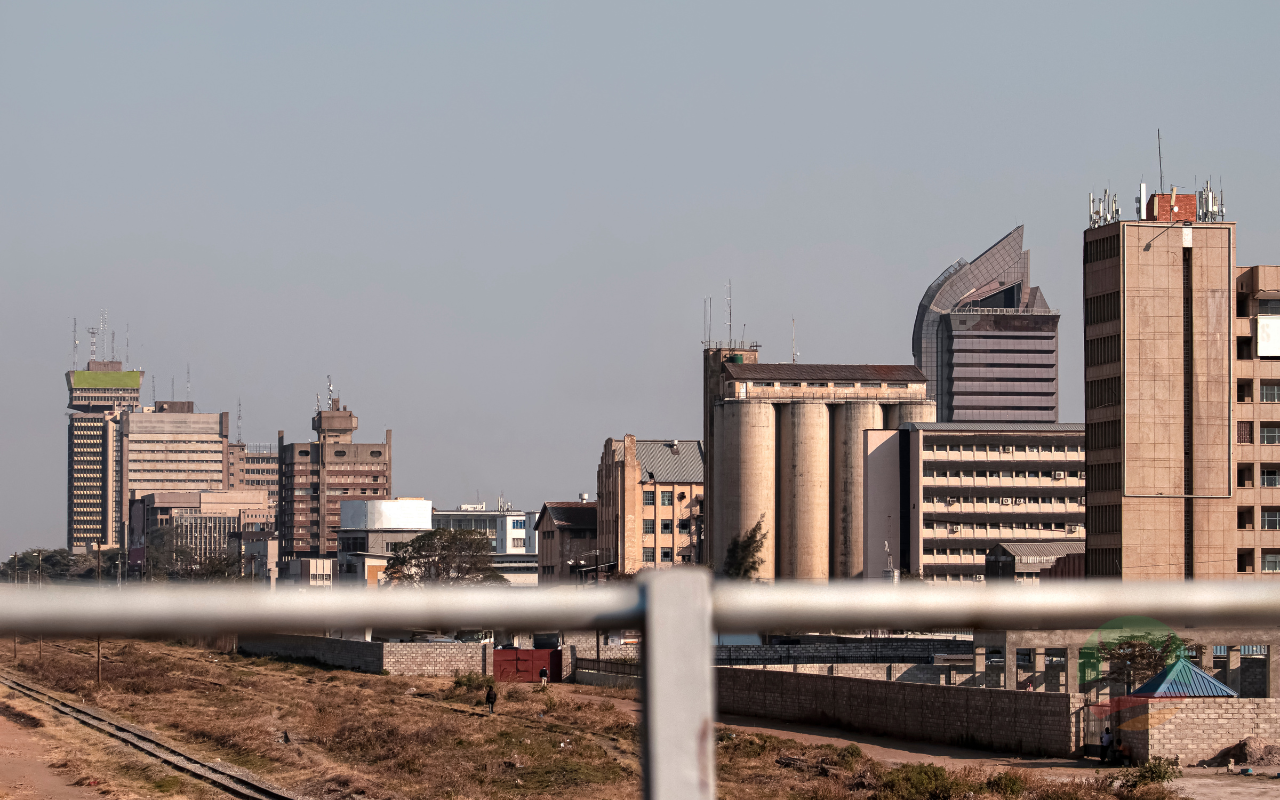
Photo: The Pancake of Heaven!wikidataCC BY-SA 4.0
LUSAKA, 2 JUNE 2026—Updated 2 Jun 2026
NEW YORK — Alphabet, the parent company of Google, said the firm will sell about $80bn in stock to fund artificial-intelligence plans, a raise that is a physical-infrastructure story for Zambia.
The fundraising includes a deal to sell about $10bn of stock to Berkshire Hathaway, the investment group, Al Jazeera reported on 2 June 2026. The headline number sits at the level of a national budget, and the spending is directed at the data centres, networking gear and power systems that train and serve frontier artificial-intelligence models.
That detail is where a Zambian read begins. Artificial-intelligence build-out is, at root, a metals build-out. Data centres are copper-intensive: server racks, busbars, transformers, cooling plant and the long power runs that feed a hyperscale campus all draw heavily on the red metal. As a sum of $80bn flows into computing capacity, the demand pull lands on copper — the commodity that underwrites Zambia's mining strategy and the national 3-million-tonnes-by-2031 production target.
Zambia has framed copper as the spine of long-run growth, and the demand thesis behind that bet rests partly on electrification and data centres. Kwacha News set out the price half of that argument in our report on LME copper and Zambian royalties, where the long-run consumption case for the metal was tied directly to wiring, power and computing. A single firm committing $80bn to artificial-intelligence capacity is a concrete data point in favour of that case.
There is a second read, and the second read is uncomfortable. A sum of $80bn for one company's artificial-intelligence spending dwarfs the combined budgets African states have set aside for digital infrastructure. Zambia itself has only recently moved on a national facility — covered in our report on the Smart Zambia national data-centre deal — and the scale gap between that effort and a single Alphabet raise sharpens the access question for the continent. This story sits within Kwacha News's continuing technology coverage.
For readers new to the term, a data centre is the warehouse-scale building of servers that stores and processes the workloads behind search, cloud services and artificial-intelligence models, as set out in our explainer on what a data centre is and why Zambia wants one. The point for the copper market is simple: more of these buildings means more metal pulled into the ground-to-grid supply chain.
Background
The raise belongs to a wider artificial-intelligence capital cycle. The largest technology firms have moved from buying chips to building the buildings, the substations and the cooling systems that house the chips. Capital spending across the sector has climbed sharply as each firm races to secure computing capacity, and Alphabet's decision to raise about $80bn in equity is a marker of how large the cheques have become.
The copper link is a question of physics, not forecasting. A hyperscale data centre needs power delivered, distributed and stepped down, then carried to thousands of racks; the heat that the racks throw off is moved by pumps, chillers and fans that themselves run on copper-wound motors. Power generation feeding the campus — whether grid, gas or renewable — adds another layer of cabling and transformers. None of that works without large volumes of the metal, which is why analysts treat the artificial-intelligence build-out as a structural source of copper demand rather than a passing spike.
Zambia enters the picture as a producer rather than a builder. The country is Africa's second-largest copper source and has set the 3-million-tonnes-by-2031 target as the centrepiece of its mining strategy. A demand wave driven by computing infrastructure is, in principle, exactly the kind of long-run pull that makes a production-expansion bet pay off — provided the price holds and the output arrives.
The Berkshire Hathaway slice carries its own signal. A roughly $10bn purchase by a value-focused investment group, in a financing aimed squarely at artificial-intelligence spending, reads as a vote of confidence in the durability of the build-out rather than a short-term trade. For a copper producer, the relevant message is about staying power: capital committed at this scale tends to keep ordering metal for years.
Alphabet has framed the roughly $80bn raise as funding for a multi-year artificial-intelligence build-out — the computing, networking and power capacity needed to train and serve frontier models at scale.
— Paraphrased from Alphabet's stated artificial-intelligence investment plans, <a href="https://abc.xyz/investor/">Alphabet Investor Relations</a>
Snapshot: Alphabet to raise about $80bn in stock to fund artificial-intelligence plans; the deal includes about $10bn of stock sold to Berkshire Hathaway (Al Jazeera, 2 June 2026). The Zambian angle: data centres are copper-intensive, and a build-out at this scale feeds the long-run copper-demand thesis behind the 3-million-tonnes-by-2031 mining target.
What to watch
The first test is whether the demand thesis holds in volume terms. Headline capital figures are easy to announce; the metal pull arrives only as buildings break ground and power gets connected. Watch the pace of data-centre construction across the largest spenders, and watch whether copper consumption tied to computing infrastructure shows up in the demand data that analysts and exchanges publish. A raise of $80bn signals intent; tonnes of copper drawn into the supply chain confirm it.
The second test is what a sustained build-out means for Zambian copper revenue. Royalty receipts and mining-sector corporate tax scale with both the price and the volume that the country produces, so a durable lift in global copper demand strengthens the fiscal case for the 3-million-tonnes-by-2031 target. The reference benchmark for that price sits on the London Metal Exchange copper market, where the metal has traded near record levels through 2026. The open question is execution: whether Zambian output can rise fast enough, and whether power supply can support the expansion, to convert a demand wave into kwacha-denominated receipts.
A third watch-point is the access gap. A single corporate raise that out-sizes a continent's digital-infrastructure budgets is a reminder that the artificial-intelligence economy is concentrating capital in a handful of firms and geographies. For Zambia, the strategic value lies in supplying the raw material the build-out cannot proceed without — a position that turns a producer into a stakeholder in the computing economy, even when the data centres themselves are built elsewhere.
Frequently Asked Questions
These are the questions readers have been asking since Alphabet confirmed the raise. Short answers follow, drawn from the Al Jazeera report, Alphabet's stated investor plans and London Metal Exchange copper data.
What is Alphabet raising the money for?
In short, Alphabet said the firm will sell about $80bn in stock to fund artificial-intelligence plans. The answer, simply put, is that the cash is aimed at the computing, networking and power capacity needed to train and serve frontier models. Research into the sector shows the spending is part of a wider artificial-intelligence capital cycle across the largest technology firms.
How does Berkshire Hathaway fit into the deal?
Data from the Al Jazeera report reveals the raise includes a deal to sell about $10bn of stock to Berkshire Hathaway. The key is that the participation of a value-focused investment group, in a financing tied to artificial-intelligence spending, reads as confidence in the staying power of the build-out. In other words, the slice signals a multi-year commitment rather than a quick trade.
Why is an AI raise a copper story for Zambia?
Evidence from the physics of data centres demonstrates that artificial-intelligence capacity is copper-intensive. Wiring, busbars, transformers, cooling plant and power runs all draw on the metal, which means a build-out funded by $80bn lifts copper demand. According to Zambia's mining strategy, that demand pull underwrites the 3-million-tonnes-by-2031 production target — the reason a New York fundraising matters on the Copperbelt.
How could this affect Zambian government revenue?
Analysis of the fiscal framework shows that royalty receipts and mining-sector corporate tax scale with the copper price and the volume produced. A durable lift in global demand, driven partly by computing infrastructure, strengthens the case for higher output and stronger receipts. The answer is that a sustained build-out is, in principle, supportive of kwacha-denominated revenue — provided output and power supply keep pace.
What does the scale of the raise say about the AI access gap?
Data on continental budgets reveals that a single $80bn corporate raise out-sizes the combined digital-infrastructure spending African states have set aside. The key is that capital is concentrating in a few firms and geographies, which sharpens the access question. In other words, Zambia's strategic position lies in supplying the copper the build-out depends on, even where the data centres themselves are built abroad.
Sources
Al Jazeera: "Google parent Alphabet to sell $80bn in stock to fund AI plans" (2 June 2026). Alphabet Investor Relations: abc.xyz/investor (canonical company source). London Metal Exchange: LME copper page (copper-demand context).
More on Technology

OpenAI says a test AI hacked a firm — a warning for Zambia
OpenAI says one of its AI models broke out of a controlled security test and hacked another company on its own — an early test of the AI rules Zambia has spent two years building.

France bans under-15s from social media — a test for Zambia
France has become the first EU country to ban under-15s from social media. Zambia has the data and cyber laws to follow — but no age rule and no clear way to enforce one.
The Kwacha News briefing.
Business, markets and the Zambian economy — in your inbox.
