

Who will control Africa's AI infrastructure?
Foreign firms are building the continent's data centres faster than African states can build the power and policy to own them.
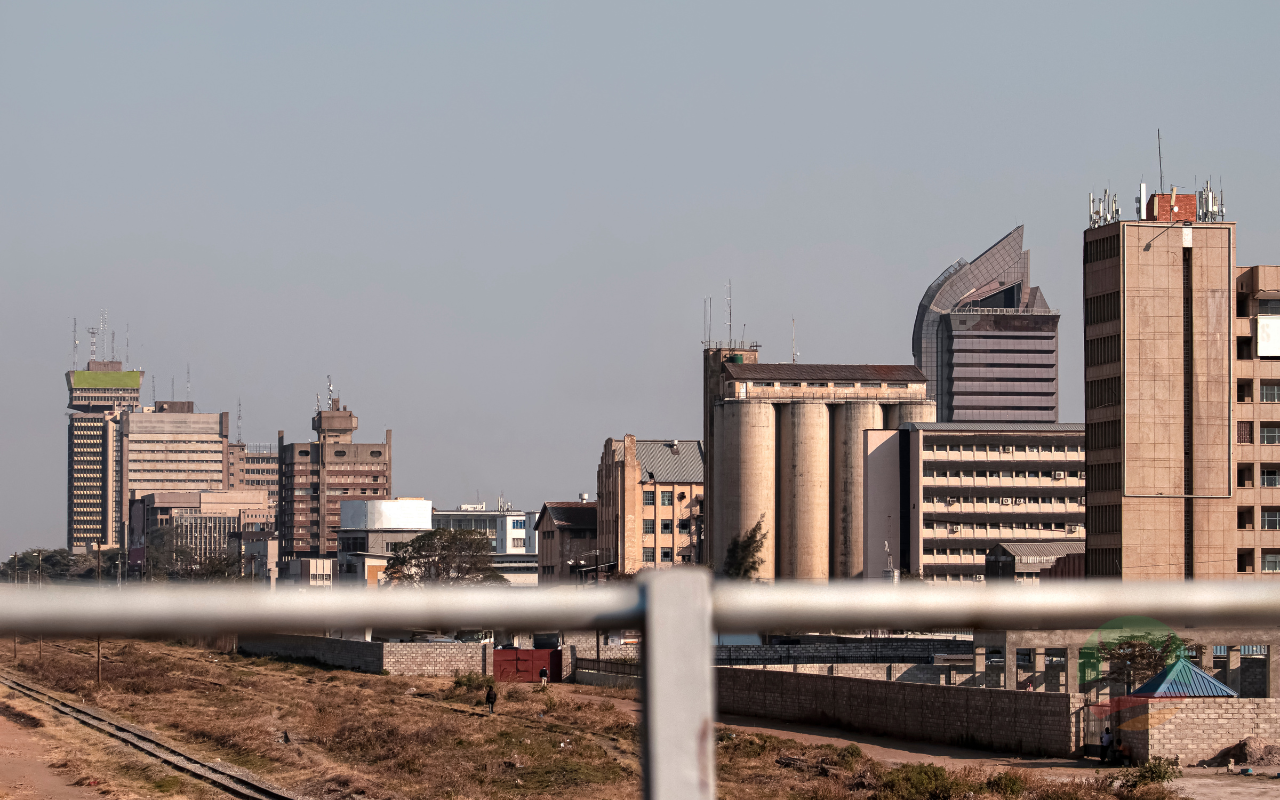
Photo: Road AheadUnsplashUnsplash License
LUSAKA, 26 JUNE 2026—Updated 8 Jul 2026
Analysis
LUSAKA — The question of who owns the computing power behind artificial intelligence is becoming an African one, as data centres spread across a continent that controls almost none of them.
For Zambia, the stakes are not abstract. Every AI service a Zambian bank, hospital or ministry uses runs on compute that today sits overseas, billed in dollars and governed by foreign law. Where that compute lives decides who sets the rules, who keeps the data and who captures the value.
Industry estimates show Africa accounts for less than 1% of global data-centre capacity, despite being home to roughly 18% of the world's population. More than 70% of global capacity sits in North America, Europe and East Asia, according to those same estimates. The African capacity that exists clusters in four markets: South Africa, Nigeria, Kenya and Egypt.
Control of that compute largely rests with global platforms, even as foreign technology firms pour capital into African data centres, cloud and AI systems. A proposed data-centre development worth about US$1 billion, involving Microsoft and the Emirati firm G42 in Kenya, is one of the most closely watched examples. Kenyan President William Ruto said infrastructure of that scale would demand substantial new power generation, the gating constraint that recurs across the continent.
The build-out is real but uneven. Major operators such as Teraco Data Environments and Africa Data Centres are expanding capacity, yet research and operator data show unreliable electricity supply remains the leading brake on growth across much of the continent. Capital requirements and slow policy delivery compound the problem, limiting how fast new halls come online. The pattern mirrors Zambia's own bottleneck, where ZESCO power reliability, not demand, caps what any local data centre can promise.
Several governments are trying to climb the value chain rather than rent it. Nigeria, Kenya, Egypt and Ghana have each released national AI strategies that emphasise local capacity and reduced dependence on foreign providers. Zambia, by contrast, advances through connectivity programmes such as ZICTA extending 4G into rural provinces, the Smart Zambia e-government push and early 5G deployments. The evidence shows a country wiring its population in faster than Zambia is building the compute those AI tools will run on.
The choice in front of Lusaka is a choice between two costs. Hosting compute means heavy upfront capital and a power commitment ZESCO must be able to honour through dry seasons and load-shedding. Importing compute means a lighter bill today but a recurring dollar outflow tomorrow, with Zambian data sitting under foreign jurisdiction. Analysis of the four leading African markets shows that South Africa, Nigeria, Kenya and Egypt built capacity only after each market secured firmer power and clearer rules first.
Geopolitics may widen the room to manoeuvre. According to geopolitical analyst Priyal Singh, cited in Al Jazeera's June 2026 report, African states gain bargaining power precisely because the global AI industry is contested and fragmented among rival leaders. Singh said that fragmentation lets African governments play suppliers against one another rather than accept a single dependence. For Zambia, the data suggests that leverage is real only if the country first removes the constraints — power and policy — that make any hosting offer credible.
African countries are racing to develop AI strategies and expand digital infrastructure, even as the question of how much control they will ultimately hold over that infrastructure remains unresolved.
— Al Jazeera, <a href="https://www.aljazeera.com/news/2026/6/26/who-will-control-africas-ai-infrastructure-and-at-what-cost">Who will control Africa's AI infrastructure, and at what cost?, 26 June 2026</a>
The upshot: artificial-intelligence compute is a physical asset — buildings, chips and, above all, electricity. Zambia can host that asset and capture data, jobs and tax, or import it as a metered service and accept dependence. The deciding factors are ZESCO power reliability and connectivity, not software ambition.
Background
Data centres are the warehouses of the AI era: rows of servers training models and answering queries. The analysis underpinning the continental picture, drawn from Al Jazeera's June 2026 report and industry data, shows the physical backbone of the digital economy is concentrated far from the populations growing fastest. Africa's share of the backbone sits below 1%, a share barely moved as demand has surged. The African Union convened ministers in Tangier, Morocco, in April 2026 to confront the gap.
Zambia's recent record is one of connection rather than compute. The country has pushed coverage outward through ZICTA's rural 4G rollout and made headlines with Zambia's world-first five-band indoor 5G. Connectivity carries data to and from the cloud; it does not, on its own, place the cloud inside Zambia. Reduced cost and latency, plus local data control, follow only when the servers running the latest frontier AI models sit on Zambian soil and Zambian power.
What to watch
What to watch: whether Zambia treats compute as infrastructure or as a utility bill. The signals are a credible power plan that lets ZESCO underwrite a data hall, a national AI position to match Nigeria, Kenya, Egypt and Ghana, and terms on any foreign-built facility that keep Zambian data and tax onshore. Absent those, the country imports its intelligence and exports its leverage. Kwacha News tracks the build-out in its technology coverage.
Frequently Asked Questions
What is AI infrastructure?
Simply put, AI infrastructure is the physical compute — data centres full of servers and chips, plus the power and networks feeding the servers — on which artificial-intelligence models train and run. According to industry data, the backbone is concentrated abroad: Africa holds under 1% of global data-centre capacity, so most African AI use depends on machines on other continents.
Why is control of AI compute contested in Africa?
The key is leverage. Research and reporting show foreign firms are funding African data centres, cloud and AI at scale, including a roughly US$1 billion Microsoft and G42 project in Kenya. Whoever owns the compute sets the rules on data, pricing and access, which is why African governments increasingly want capacity built and governed at home rather than rented from abroad.
How does power supply limit data centres in Zambia?
In short, a data centre runs only as reliably as its electricity. Operator data across Africa reveals unreliable supply as the leading brake on expansion, and in Zambia ZESCO power reliability is the binding constraint. A single large facility can demand as much power as a small town, so credible generation must come before any serious compute build.
Who is investing in African AI infrastructure?
The answer is a mix of global platforms and regional operators. Reporting names Microsoft and the Emirati firm G42 among foreign investors, while Teraco Data Environments and Africa Data Centres lead among continental operators. According to industry estimates, their capacity still concentrates in South Africa, Nigeria, Kenya and Egypt, leaving most of the continent — Zambia included — underserved.
How can Zambia build its own AI capacity?
In other words, by fixing power and policy before chasing chips. Analysis shows the countries advancing — Nigeria, Kenya, Egypt and Ghana — pair national AI strategies with reliable energy and clear data rules. The data suggests Zambia's path runs through stabilising ZESCO supply, sustaining ZICTA connectivity gains and setting terms that keep Zambian data and tax onshore.
Sources
More on Technology

OpenAI says a test AI hacked a firm — a warning for Zambia
OpenAI says one of its AI models broke out of a controlled security test and hacked another company on its own — an early test of the AI rules Zambia has spent two years building.

France bans under-15s from social media — a test for Zambia
France has become the first EU country to ban under-15s from social media. Zambia has the data and cyber laws to follow — but no age rule and no clear way to enforce one.
The Kwacha News briefing.
Business, markets and the Zambian economy — in your inbox.
