

Analysis: Zambia 'must own 60% of mines' to make China tariff waiver pay
Economist Trevor Hambayi says Beijing's zero-tariff offer to 53 African states is worth little to Zambia under current ownership patterns. Bright Chizonde puts Africa's 2025 China trade deficit at US$102bn.
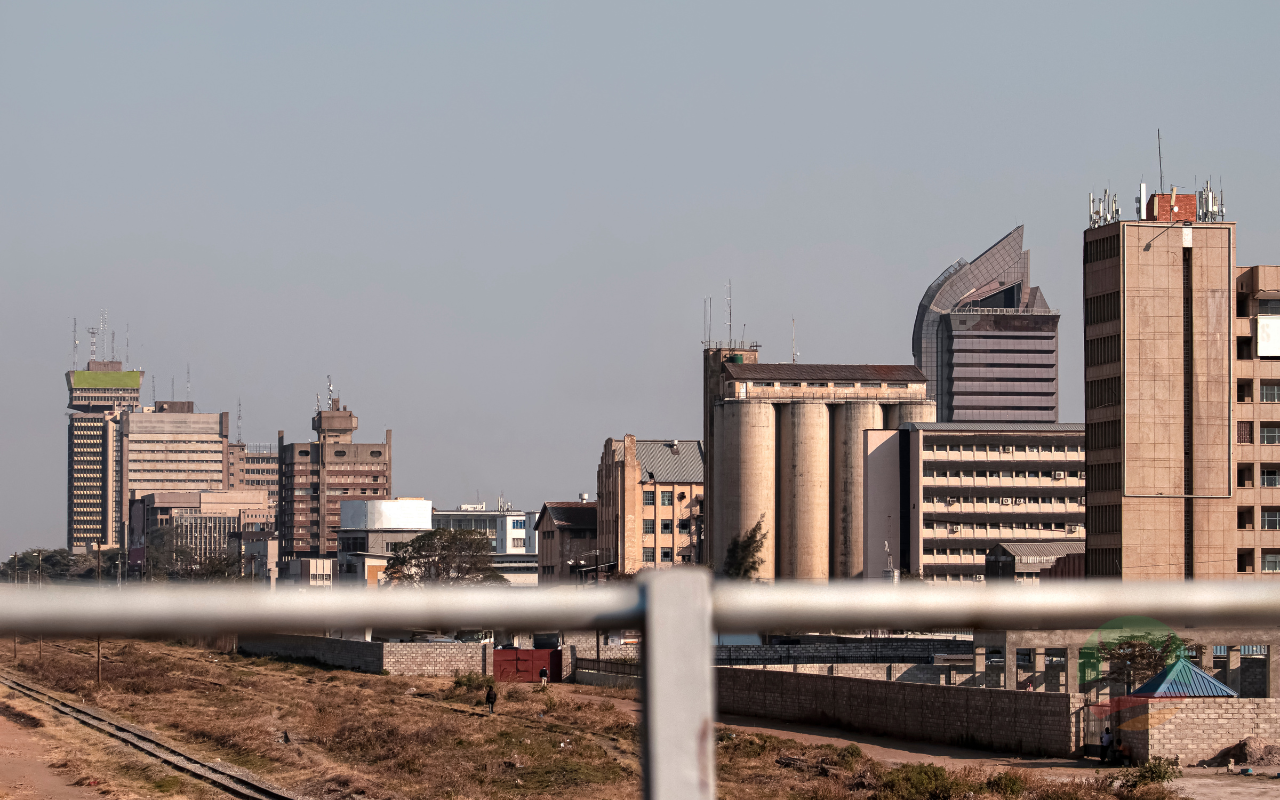
Photo: Sikwe ScarterUnsplashUnsplash License
LUSAKA, 14 MAY 2026—Updated 20 Jun 2026
Analysis
LUSAKA — Economist Trevor Hambayi says Zambia must own at least 60% of its mines and find direct marketing-trade links to the Chinese market to benefit meaningfully from Beijing's new zero-tariff policy on imports from 53 African states.
The upshot: tariff-free access is worth little if the exporting entity sits offshore or the goods route through European intermediaries. Hambayi's argument, in remarks earlier this week, reframes the policy as one whose distributive effect depends entirely on who owns the export base and which port the cargo clears.
Beijing's zero-tariff policy applies to all 53 African nations with which China has diplomatic ties — Eswatini, which recognises Taiwan, is the sole exclusion. The waiver runs through April 2028.
We must have a trade balance that is speaking to us exporting greater than we're importing out of China at the moment. As it is, we're importing a lot more out of China, so the benefit is not immediate. What we must be working on as a country is to be able to increase our exports towards China.
— Dr Trevor Hambayi, economist, in remarks earlier this week
Hambayi was explicit about the routing problem. "One of the key products which we export to China is copper, but it doesn't go directly to China. So, we pay taxes when we export it through Europe," he said. "The key aspect is for us to build a situation where we own a huge component of the mines, at least 60 percent and then find direct marketing trade links to China from the mines, then our copper will be going into China without duty."
Beyond ownership, Hambayi flagged the export mix. "If we've got copper, we must then find other products which include agriculture products and finished products to export to make sure we take advantage of the zero tax," he said.
What this means: Chizonde puts a number on the deficit
Fellow economist Bright Chizonde framed the policy in geopolitical terms, calling it a "significant political and economic development" against the backdrop of US tariffs of 10–30% on African countries.
While the US is imposing tariffs ranging from 10 to 30 percent on African countries, China's zero rate positions it as a viable alternative for the continent's international trade. In considering the impact, it is important to note that this is not a new policy, but an extension. China already had a duty-free policy for 33 least-developed African nations. I suspect that Zambia was already on this list, given the huge volume of copper and other materials exported to China.
— Bright Chizonde, economist
Chizonde put a number on the imbalance: Africa's 2025 trade deficit with China was about US$102 billion. The asymmetry, in his framing, means China stands to gain more access to critical and transition minerals while exporting high-value goods to Africa.
He drew a sharp contrast between industrialised and raw-exporter African economies. "Countries like Zambia that are exporting raw copper and other materials to China will not benefit as much as countries such as South Africa and Morocco that are relatively more industrialised," he said. The policy prescription that follows is value addition — local mineral processing and local production of some of China's import-substituted goods.
Chizonde gestured at a neighbour. "The strong policy stance taken by Zambia's neighbour in suspending the export of raw materials should be considered, as this is the only way to address the trade imbalance," he said.
Background
Zambia's copper sector is dominated by foreign-owned concessions. ZCCM-Investments Holdings retains minority stakes in several majors but operational ownership of the largest mines is held by entities including First Quantum, Vedanta and Chinese state-linked firms. Data from the Zambia Chamber of Mines shows the foreign-share dominance is structural, not a recent shift.
Past mining-policy interventions show ownership-rule changes are politically delicate. Resource-nationalist policies under previous Zambian presidencies — windfall taxes, mineral-royalty hikes — drew investor pushback and arbitration claims. Any move toward a 60% local-ownership floor would have to navigate that history.
What to watch
Whether the next government — the August election will set it — interprets Hambayi's argument as a directional steer or as an electoral talking point. The Ministry of Mines has not publicly responded to the 60% framing. Beijing's tariff waiver runs to April 2028; the question of who captures the gain has a defined deadline.
Frequently Asked Questions
These are the questions readers have been asking since the analysis. Short answers follow, drawn from public mining-sector data.
What is China's zero-tariff offer?
In short, Beijing has waived tariffs on imports from all 53 African nations with diplomatic ties, running through April 2028. Eswatini, the continent's only diplomatic ally of Taiwan, is excluded. The key is that the waiver extends a pre-existing duty-free regime that previously covered only 33 least-developed African countries.
What does Hambayi say Zambia needs to do?
Simply put, he argues Zambia must own at least 60% of its mines and ship directly to China rather than through European intermediaries. According to him, the current Europe-routing means Zambia pays taxes that would otherwise be avoided.
What does Bright Chizonde say?
Analysis from Chizonde shows Africa's 2025 trade deficit with China at about US$102 billion. The answer is that without value-addition reforms — local mineral processing, local production — the waiver mainly benefits the more-industrialised African economies (South Africa, Morocco) and gives China deeper access to critical and transition minerals.
Why does ownership matter under a tariff waiver?
According to Hambayi's argument, the tariff saving accrues to whoever holds title at the point of export. Research from commodity-trade economists confirms that tariff incidence falls on the title-holder — not on the host country. Hence the 60% local-equity threshold.
How does the policy interact with the existing duty-free regime?
In other words, China's 33-country duty-free regime almost certainly already covered Zambia. Analysis of the underlying policy shows Chizonde's expectation that the expansion to all 53 will have limited practical impact for Zambia without value-addition reforms.
Sources
Zambia Chamber of Mines: public ownership data.
More on Markets

Zambia's inflation holds at 6.5% for a second month
Annual inflation stayed at 6.5% in July 2026, ZamStats said. Food inflation eased to 6.4% while non-food rose to 6.7%, holding the headline rate inside the central bank's target band.

Bank of Zambia cuts kwacha reserve ratio to 21%
The Bank of Zambia cut the statutory reserve ratio on kwacha deposits to 21% from 26%, freeing about K5 in every K100 of deposits for lending. The ratio on foreign-currency deposits stays at 36%.
The Kwacha News briefing.
Business, markets and the Zambian economy — in your inbox.

