

US and South Africa minerals talks shift the board around Zambia's copper
Washington's new dialogue with Pretoria changes the regional minerals calculus, but Zambia is already inside the trilateral and the Lobito Corridor that the wider US strategy still runs on.
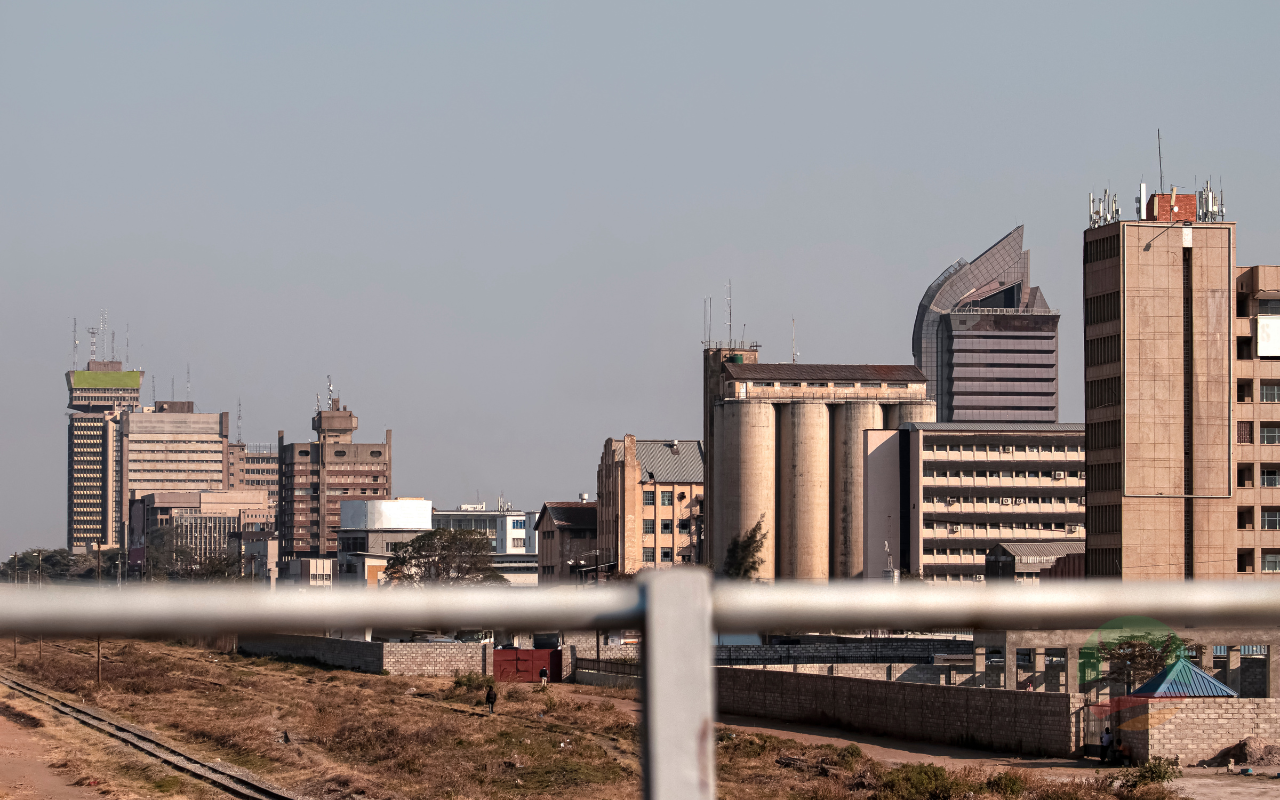
Photo: SimonP at English WikipediawikidataCC BY-SA 3.0
LUSAKA, 18 MAY 2026—Updated 8 Jul 2026
Analysis
LUSAKA — The new US dialogue with South Africa on critical minerals is a fresh entry on a board where Zambia is already a named player, through the trilateral memorandum and the Lobito Corridor.
The upshot: Pretoria is the entrant in this round. Lusaka and Kinshasa are the incumbents. The real test for Zambia is not whether the South African dialogue happens, but whether the United States moves any of the capital it has already committed to Lobito and the trilateral into Johannesburg instead.
On 6 and 7 May, about 25 US and South African officials met in Johannesburg in what one participant called the highest-level minerals engagement between the two countries this year. The closed meeting covered up to nine minerals of mutual interest — manganese, vanadium, platinum, chromium and rare earths most prominent among them — and the early-stage Phalaborwa Project by Rainbow Rare Earths, which is already drawing US funding.
What South Africa is bringing to the table
South Africa's pitch is the metals the US battery and defence supply chains do not have at scale: platinum-group metals (PGMs), manganese (close to 80 per cent of identified global reserves sit in the Kalahari Manganese Field), chromium, and rare earths from new producers such as Rainbow. The country is a clean fit for the part of the US critical-minerals list that has nothing to do with batteries — magnets, alloys, catalytic converters, defence electronics.
The complication is political. US-South African relations have been frosty since US President Donald Trump's return to the White House and the public dispute over the country's land policy. Despite that, technical engagement has continued. Officials describe the May meeting as deliberately structured around projects rather than communiqués, which is why no joint statement was issued.
Where Zambia already sits
Zambia is not in the South African dialogue, and it does not need to be. Lusaka is already named in two of the most consequential US critical-minerals instruments in southern Africa.
These are the assets Zambia is defending in this round, not new positions it is trying to win. The trilateral is the document that signals the United States accepts an integrated DRC-Zambia value chain. The Lobito Corridor is the infrastructure that makes the trilateral physically possible. Together they amount to the United States having already made the most ambitious minerals bet in the region. Anything Pretoria does sits on top of that bet, not next to it.
Why the copper number matters
Zambia's leverage in the trilateral is the trajectory of national copper output. The Ministry of Finance and National Planning has built its 2026 fiscal framework around copper production crossing 1 million tonnes this year and reaching 1.2 million tonnes in 2027, on the back of capital programmes at First Quantum's Kansanshi expansion (S1) and the recapitalisation of Mopani and Konkola Copper Mines.
Hitting that number is the practical condition for the trilateral to work as advertised. A processing facility in Ndola or Solwezi that depends on a steady ore feed cannot be built ahead of the ore. Each missed quarter at Mopani or KCM is one quarter the United States and its battery-supply-chain partners spend looking elsewhere, including at the new South African PGM-and-rare-earths arrangement.
Cobalt: where DRC sets the price
The cobalt half of the trilateral runs through the DRC, which produces roughly three-quarters of global supply. Kinshasa imposed a cobalt export ban in February 2025 that converted to strict quotas later in the year. The effect on prices, which had been deeply oversupplied, was sharp and persistent. Battery-grade cobalt is now structurally tight.
Our cobalt market shifted from deep oversupply to structural tightness after the Democratic Republic of Congo, responsible for roughly three-quarters of global supply, imposed an export ban in February 2025; it was later replaced by strict quotas.
— Investing News Network market report, cobalt forecast, 2025–2026
That tightness is the reason the United States needs the trilateral to land. The Kingsville-style cobalt refining the US Inflation Reduction Act and Defense Production Act provisions are designed to fund cannot run on speculative non-DRC supply at current prices. The US bet on DRC volumes, refined or partially processed in Zambia, was the cheaper route to scale. South Africa does not offer cobalt at meaningful volume.
What it means for Zambia
What this means: the South African talks do not displace Zambia from the US critical-minerals architecture. They sit alongside it. The risk is not loss of the US relationship; it is dilution of the US dollar that flows into Zambian processing rather than into South African PGM and rare-earths capex. The signal Lusaka has to send through the rest of 2026 is that the copper trajectory holds and that the regulatory framework for downstream investment — duty-free movement of intermediate product between Zambia and the DRC, electricity supply reliability, the implementation of the Mineral Resources Development Policy — is operational, not aspirational.
The Zambian counter-pitch writes itself: cobalt and copper at scale, processing capacity already half-built, and a corridor partly paid for. The South African pitch is necessary because the US needs PGMs. The Zambian pitch is structural because the US needs batteries. The two propositions are complementary on paper, and competitive only for the marginal infrastructure dollar.
What to watch
What to watch: three signals in the coming quarter will tell editors how the chessboard is moving. First, whether the next DFC commitment to Lobito Corridor construction lands on schedule, or whether US capital begins to fragment toward Johannesburg-routed projects. Second, whether Mopani or KCM publish operational results that confirm the production ramp the fiscal framework needs. Third, whether the Trump administration's State Department issues a formal follow-up to the trilateral that names processing investments inside Zambia, not just upstream ore offtake from the DRC.
Frequently Asked Questions
These are the questions readers have been asking about the May talks and what they mean for Zambia. Short answers follow, drawn from the public record on US critical-minerals policy and the Zambian fiscal framework.
What is the US–DRC–Zambia trilateral minerals MoU?
In short, the trilateral is the 2022 memorandum of understanding under which the United States agreed to support an integrated electric-vehicle battery value chain that runs from raw material extraction in the DRC and Zambia through processing, manufacturing and assembly. The answer, simply put, is that the trilateral represents Washington's most ambitious minerals bet in southern Africa. The key is that it treats Zambia as a downstream destination, not just an ore producer.
How does the Lobito Corridor change Zambia's mineral export route?
The Lobito Corridor connects mineral-rich regions of the DRC and Zambia to the Angolan port of Lobito by rail. According to the US DFC, a US$553 million loan supports the project, with co-financing from the European Union. Data from the African Finance Corporation reveals that the corridor cuts the time and cost of moving copper concentrate to global markets versus the traditional Durban route. The Zambian side connects through Solwezi and the Copperbelt.
Why are the US and South Africa now talking minerals?
The talks reflect Washington's broader strategy to secure alternatives to Chinese-controlled critical-minerals supply chains. Research from US trade publications shows that the meeting in Johannesburg on 6 and 7 May was the highest-level engagement of the year and focused on up to nine minerals of mutual interest, with rare earths and PGMs most prominent. The answer is that the United States needs the metals South Africa produces — PGMs, manganese, chromium — that Zambia does not.
Who benefits from a US push into critical minerals in Africa?
The push benefits the African producers who can package processing capacity alongside upstream production, and the multinational miners who can absorb the capital. In other words, Zambia stands to benefit if it can convert ore into precursor materials before export. South Africa stands to benefit from rare-earths and PGM expansion. The countries that benefit least are those that remain ore-only exporters with no domestic processing layer.
What are the real risks of the US strategy shifting toward South Africa?
Analysis of the US capital-allocation record shows three durable risks for Zambia. Evidence from the past three years of DFC and EXIM Bank deal flow reveals each is operational, not theoretical. The first is dilution: the same pool of US public capital backing Lobito and the trilateral now has more competing African destinations. The second is signalling: a high-profile Johannesburg deal could draw private capital away from less established Zambian processing projects. The third is timeline: any slip in Zambian copper output during 2026 strengthens the case for refocusing on PGMs.
Sources
Daily Maverick: US and SA begin promising neutral dialogues on jointly developing critical minerals, 17 May 2026. Discovery Alert briefing: US and South Africa mining deals talks, 2026. Brookings: unlocking Africa's critical minerals. The Africa Report: what will drive African copper in 2026. Investing News Network: cobalt forecast 2025–2026. International Growth Centre: can Zambia harness critical minerals for broad-based development? Via Daily Maverick reporting, 17 May 2026.
More on Business & Economy

Guinea bans raw gold exports as Africa pushes local refining
Guinea has banned raw gold exports and now demands local refining, African Business reported. For Zambia, whose copper still leaves largely unprocessed, the move sharpens a long-running question about where the value is captured.

Zambia cuts fuel prices again as shop prices stay high
Zambia's Energy Regulation Board cut pump prices for a third straight month in August 2026, but transport fares and food prices remain high and non-food inflation is rising.
The Kwacha News briefing.
Business, markets and the Zambian economy — in your inbox.

