

How a single call from Lusaka unwound RightsCon 2026
RightsCon director Nikki Gladstone says a late-April call from a Zambian official conveyed Beijing's objection to Taiwanese delegates. The trail leads back to China's growing leverage over African governments.
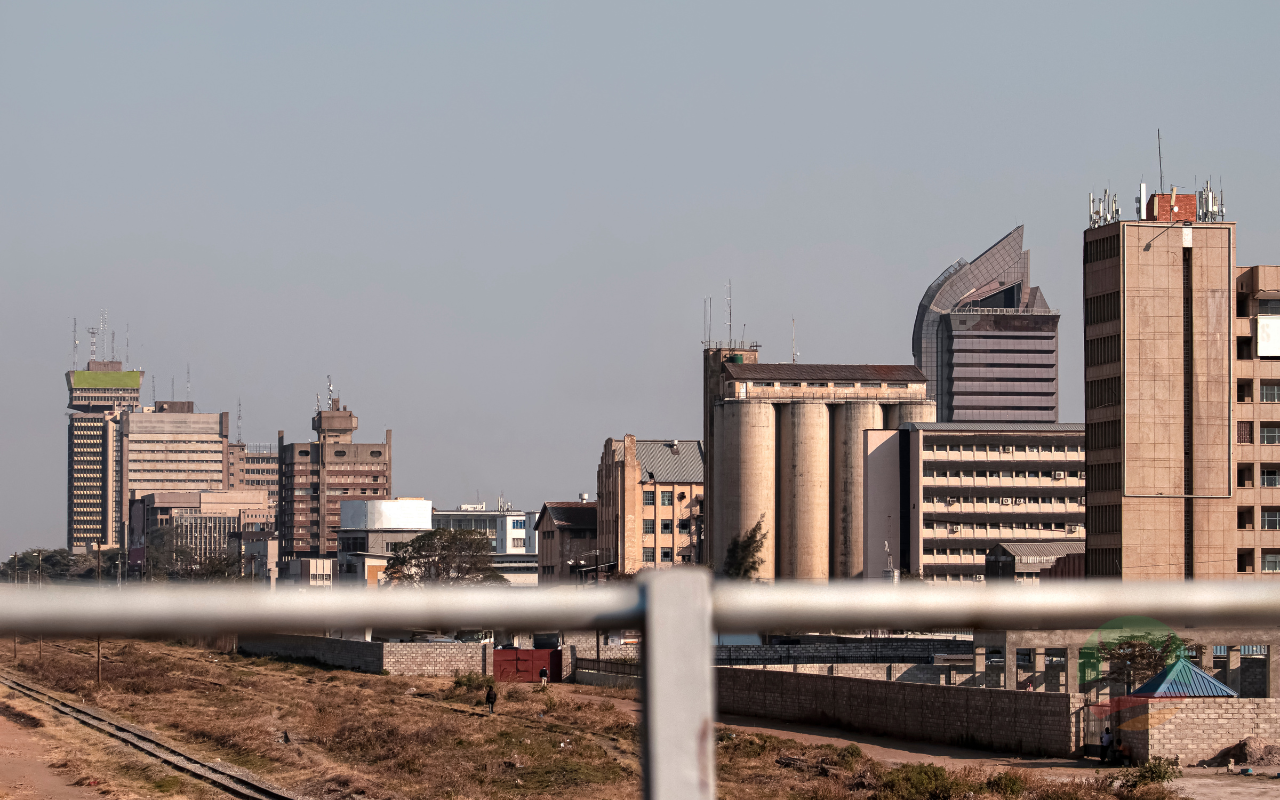
Photo: Emna MizouniwikidataCC BY-SA 4.0
LUSAKA, 8 MAY 2026—Updated 8 Jul 2026
Analysis
LUSAKA — RightsCon director Nikki Gladstone says a single phone call from a Zambian official in late April unwound the world's biggest digital-rights conference. The official, she told NPR, conveyed that diplomats from the People's Republic of China were pressuring Lusaka over Taiwanese civil-society participants.
What this means: the cancellation, formally announced by Access Now days later, is not a one-off scheduling row. It is the most public example yet of Beijing using its accumulated leverage in Africa to shape who gets to meet on the continent.
In that call, they let us know that diplomats from the People's Republic of China were putting pressure on the government of Zambia because Taiwanese civil society participants were planning to join us in person.
— Nikki Gladstone, RightsCon director, speaking to NPR's Emily Feng
More than 2,500 people had visas and tickets to fly to Zambia, NPR reports. Among them was Hong Kong political activist Samuel Chu, who said the disruption reached far beyond travel logistics.
You're not just canceling the travel. You are disrupting a global civic space and network.
— Samuel Chu, Hong Kong political activist, NPR
China's embassy in the United States said it was unaware of what happened when NPR asked for comment. The Zambian presidential office said in a statement that it was postponing RightsCon because it needed more disclosure of what it called critical information.
The upshot: a more confident Beijing
Bonnie Glaser, a China-Taiwan expert at the German Marshall Fund in Washington, told NPR that Beijing's pattern of recent moves reads as growing confidence rather than a single tactical play.
I think the Chinese are emboldened. This [is] leverage that it has used over the United States and other countries to deter policies it opposes, to coerce specific policy outcomes that are more favorable to China — they're weaponizing this dependence.
— Bonnie Glaser, German Marshall Fund, via NPR
Glaser links the boldness to two factors: Beijing's dominance of rare-earth processing — inputs for everything from defence equipment to smartphones — and a sense that Washington has stepped back. President Donald Trump is scheduled to visit China this month, and once-routine U.S. arms sales to Taiwan have been delayed.
Research from Stanford's Kharis Templeman points to a parallel domestic shift inside Taiwan. A senior politician from the Kuomintang opposition party met Chinese leader Xi Jinping in April, the first such meeting in years. Beijing, Templeman told NPR, now believes it has a Taiwanese partner it can work with.
What to watch
The read here is that RightsCon is the visible end of a quieter pattern. In just the past month, China leaned on three countries — Madagascar, Mauritius and Seychelles — to revoke airspace permissions for Taiwan's president Lai Ching-te. It warned Canada that engagement with Taiwan would hurt the bilateral relationship. It revoked credentials to an American journalist whose outlet interviewed Taiwan's president.
For Zambia, the immediate question is whether the government publicly addresses Access Now's foreign-interference framing. For Africa more broadly, the question is which government in the region pushes back next — and at what cost to its China ties.
Frequently Asked Questions
These are the questions readers have been asking since NPR's report aired. Short answers follow, drawn from the NPR account and analyst commentary cited within.
What did the Zambian official tell RightsCon?
In short, the official told RightsCon director Nikki Gladstone in a late-April call that Chinese diplomats were pressuring Lusaka because Taiwanese civil society participants planned to attend. The key is that the call came directly from a government official, not through a public statement.
How big was the RightsCon Zambia roster?
Data from Access Now shows more than 2,600 in-person and 1,100 online delegates were registered from over 150 countries. NPR reports 2,500-plus had visas and tickets in hand when the cancellation came.
What did the Chinese embassy say?
China's embassy in the United States told NPR it was unaware of what happened. According to public records, Beijing's foreign ministry has not formally commented on the Zambia cancellation.
Why are analysts saying China is emboldened?
Analysis from Bonnie Glaser at the German Marshall Fund argues that Beijing is using countries' dependence on Chinese rare-earth exports as coercive leverage. Evidence from recent moves — Madagascar, Mauritius, Seychelles, Canada — reveals a pattern, not a one-off.
Does the United States have any say here?
Glaser told NPR Beijing senses reluctance from the Trump administration to advocate for Taiwan, citing delayed arms sales. In other words, analysts read Washington's posture as permissive in ways China is willing to test.
Sources
NPR: Organizers of a canceled human rights conference in Zambia say China intervened, 8 May 2026. Associated Press: Rights summit in Zambia is cancelled after Chinese pressure, 2 May 2026.
More on Technology

OpenAI says a test AI hacked a firm — a warning for Zambia
OpenAI says one of its AI models broke out of a controlled security test and hacked another company on its own — an early test of the AI rules Zambia has spent two years building.

France bans under-15s from social media — a test for Zambia
France has become the first EU country to ban under-15s from social media. Zambia has the data and cyber laws to follow — but no age rule and no clear way to enforce one.
The Kwacha News briefing.
Business, markets and the Zambian economy — in your inbox.
