

Oil at $110 puts the kwacha and Zambian inflation in the firing line
Brent crude at the top of a closed-Strait-of-Hormuz cycle is the variable Zambia's monetary and fuel-pricing framework cannot insulate the kwacha from.
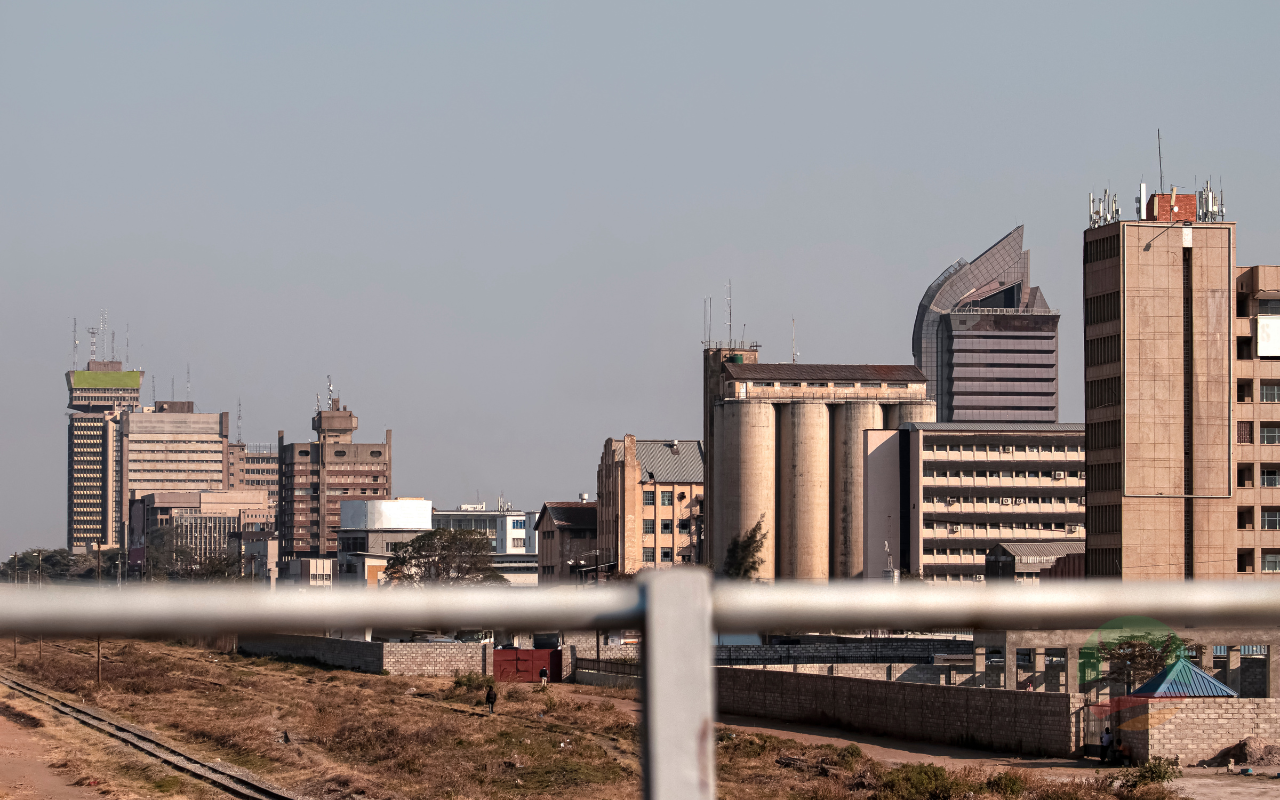
Photo: ChongkianwikidataCC BY-SA 4.0
LUSAKA, 18 MAY 2026—Updated 8 Jul 2026
Analysis
LUSAKA — Brent crude is back above $110 a barrel after Donald Trump's latest warning to Iran, and that is the variable Zambian fuel prices and the kwacha will struggle to absorb.
The upshot: the Strait of Hormuz is still effectively closed, global oil inventories are draining at record pace, and Zambia is a landlocked, fuel-importing economy. Each $10 a barrel of sustained Brent feeds through to the kwacha within a quarter, and to the consumer price index within two.
International benchmark Brent futures for July delivery rose 0.66 per cent to $109.98 a barrel on 18 May after Trump posted on Truth Social that the clock was ticking for Iran and that time was of the essence, signalling that the impasse between Washington and Tehran over a peace deal and the reopening of Hormuz could escalate into renewed armed conflict. The contract was on track for a weekly gain of around 8 per cent, according to CNBC's market report.
What the IEA is saying
The supply backdrop is the second compounding variable. The International Energy Agency warned this month that global oil inventories are depleting at a record pace as the Strait of Hormuz remains closed, and that rapidly shrinking buffers amid continued disruptions may herald future price spikes.
Rapidly shrinking buffers amid continued disruptions may herald future price spikes ahead.
— International Energy Agency, monthly oil market report, May 2026, as cited by CNBC
Translation: the cushion that has kept Brent below $120 through previous escalations is thinner now. If Trump moves from rhetoric to action against Iranian assets, or if Iran retaliates against shipping in the Persian Gulf, the spike is bigger and faster than the previous round.
How oil reaches the kwacha
The transmission is mechanical. Zambia imports refined petroleum products at world prices, denominated in US dollars, mostly through the TAZAMA pipeline from Dar es Salaam and by road tanker from South African and Mozambican depots. A higher Brent price means a larger import bill and a wider current-account deficit. A wider deficit means more dollars demanded for the same volume of imports. That demand pushes the kwacha down.
The mechanism is not theoretical. The kwacha has spent 2026 trading in a relatively tight range against the dollar, supported by copper export earnings and a friendlier external financing environment after the debt restructuring. That support is conditional on the import bill staying manageable. A sustained quarter at $110 Brent tears a hole in it.
What the ERB price build-up shows
The Energy Regulation Board (ERB) already moved in May. Petrol stayed at K27.15 per litre because wholesale movements were inside the 2.5 per cent trigger band. Diesel jumped from K29.78 to K33.99 per litre — an increase of 14.14 per cent. Kerosene went from K32.26 to K35.05 and Jet A-1 from K34.74 to K37.98.
Diesel is the headline number for the economy. Diesel moves haulage, mining, agriculture and most generator load. A 14 per cent step is a cost shock that lands on every Lusaka–Ndola truck and every farmer pumping irrigation water. The petrol number is the headline for the household budget, but diesel is the headline for the basket of everything diesel moves.
What this means for inflation
What this means: the fuel pump pass-through is the most direct route to consumer prices, but it is not the only route. Higher diesel feeds into food prices through input costs and transport, into building costs through cement haulage, and into electricity through any diesel-backed generation when ZESCO load is constrained. The Bank of Zambia (BoZ) does not target the exchange rate, but its monetary policy committee does target inflation. A sustained oil-driven surge brings the committee back to a tightening conversation that the central bank has spent a year easing out of.
The standard textbook estimate for a small open economy is that a 10 per cent rise in retail fuel prices adds 0.5 to 1.0 percentage points to headline inflation within two quarters. Zambia's last published annual inflation print sat at 11.2 per cent. The May diesel move alone is closer to a 2-percentage-point input under that elasticity. If Brent settles even higher and pump prices follow, the BoZ's path back to single-digit inflation gets harder.
What Zambia can actually do
The lever set is short. The government can absorb part of the price shock through the strategic fuel reserve or fiscal subsidy, at the cost of fiscal space the supplementary budget needs for other things. The BoZ can hold or raise the policy rate to defend the kwacha, at the cost of growth and the cost of servicing local-currency debt. The ERB can let pass-through proceed, at the cost of household real incomes. None of these is a clean win. All three are being discussed.
What to watch
What to watch: three signals in the next four weeks will tell editors how serious the shock is going to be. First, whether Brent settles above $110 or pulls back below $100 — a sustained week above $115 is the operational definition of a crisis. Second, whether the ERB's June price build-up holds diesel at the May level or moves it again. Third, whether the BoZ's monetary policy committee statement at its next sitting flags the imported-inflation channel explicitly. A central bank that names the channel is a central bank preparing to move.
Frequently Asked Questions
These are the questions readers have been asking since Brent climbed back above $110. Short answers follow, drawn from ERB price build-ups and the public record on Zambian monetary policy.
What is the Energy Regulation Board's fuel-price trigger band?
In short, the trigger band is the 2.5 per cent threshold of wholesale price movement that the ERB uses to decide whether to revise retail pump prices in a given month. The answer, simply put, is that smaller moves are absorbed by margins and larger moves are passed through. The key is that the band shields households from monthly volatility but does nothing once a sustained oil rally pushes the wholesale price beyond it.
How does a higher Brent oil price reach Zambian inflation?
A higher Brent price reaches Zambian inflation through three transmission channels. Research from emerging-market monetary policy shows the most direct channel is the fuel pump itself: petrol and diesel are CPI items. Data from past oil shocks reveals the second channel is transport and haulage, which carries food and consumer goods. The third channel is the exchange rate: a wider import bill puts downward pressure on the kwacha, which raises the local-currency cost of every other imported good.
Why is the kwacha sensitive to oil prices?
The kwacha is sensitive because Zambia is a landlocked net importer of refined petroleum products denominated in US dollars. According to the Bank of Zambia framework, the central bank does not target the exchange rate; it targets inflation. The answer is that when the oil bill widens the current-account deficit, the dollar demand pressure on the kwacha rises and the BoZ's only counter-measure is the policy rate.
Who pays when fuel prices rise in Zambia?
In other words, the burden lands on three categories of payer. Households pay at the pump and through the consumer price index. Businesses pay through diesel haulage, irrigation and generator costs. The state pays through any subsidy it absorbs and through the fiscal cost of slower growth. The split between the three is the central political question in any oil-price shock and was the same question Zambia faced in 2022.
What are the real risks of a sustained Brent rally for Zambia?
Analysis of past oil-price episodes shows three durable risks for Zambia. Evidence from the 2008 and 2022 cycles reveals each is structural, not transient. The first is currency depreciation that erodes the gains from copper export earnings. The second is renewed inflation that pushes the Bank of Zambia back into rate-hike territory and slows credit growth. The third is fiscal pressure from any cushioning measure that the Ministry of Finance and National Planning chooses to absorb at the pump.
Sources
CNBC: oil jumps as Trump warns the clock is ticking for Iran, 18 May 2026. Energy Regulation Board: May 2026 petroleum pump prices, press statement and price build-ups; price build-up archive. Bank of Zambia: historical series of daily ZMW/USD exchange rates. International Energy Agency monthly oil market report, May 2026, as cited.
More on Markets

Zambia's inflation holds at 6.5% for a second month
Annual inflation stayed at 6.5% in July 2026, ZamStats said. Food inflation eased to 6.4% while non-food rose to 6.7%, holding the headline rate inside the central bank's target band.

Bank of Zambia cuts kwacha reserve ratio to 21%
The Bank of Zambia cut the statutory reserve ratio on kwacha deposits to 21% from 26%, freeing about K5 in every K100 of deposits for lending. The ratio on foreign-currency deposits stays at 36%.

El Niño returns: a double risk to Zambia’s copper and maize
A powerful El Niño is forming in the Pacific: good for the copper price Zambia’s budget leans on, bad for the rains its maize and hydropower depend on. It points both ways at once.
The Kwacha News briefing.
Business, markets and the Zambian economy — in your inbox.